


Key Takeaways
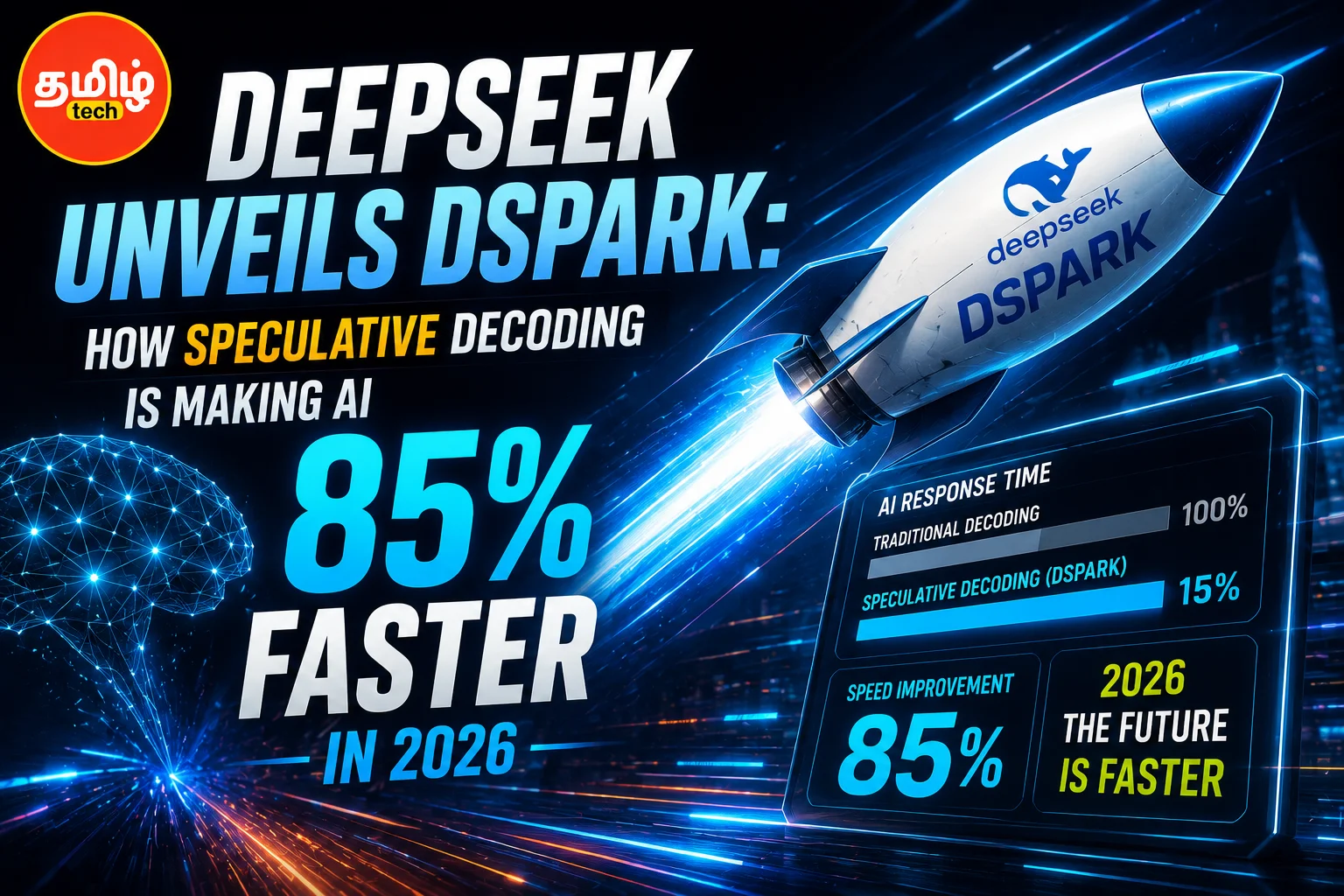
- DeepSeek DSpark framework increases AI inference speed by up to 85% through optimized speculative decoding.
- The technology has been successfully validated on popular open-source models including Google's Gemma and Alibaba's Qwen.
- DSpark significantly reduces the GPU compute costs for Indian tech startups by making high-end LLM performance possible on mid-range hardware.
- This update specifically targets the upcoming DeepSeek V4 architecture, setting a new benchmark for efficiency in 2026.
If you have been using AI models lately, you know the frustration of waiting for those little dots to finish generating a long response. Even in 2026, as AI gets smarter, it often feels like it is getting slower because the models are becoming massive. But the team at DeepSeek just dropped a bombshell that might change the game for everyone. They have detailed a new framework called DSpark, designed specifically for their upcoming V4 models, and the numbers are honestly staggering. We are talking about an 85% speed boost in inference. That is not just a small tweak; that is the difference between a sluggish chatbot and an instant AI assistant.
The Problem with AI Speed in 2026
To understand why DSpark is a big deal, we need to talk about why AI is slow in the first place. Most Large Language Models (LLMs) work on something called auto-regressive decoding. Think of it like a person typing one letter at a time, but they have to think really hard before every single character. The GPU (the brain of the AI) has to load the entire model's weight for every single token it generates. This creates a massive bottleneck. Even if you have a top-tier NVIDIA H200 or the newer 2026 chips, you are often limited by memory bandwidth rather than raw compute power. This is where speculative decoding comes in, and DeepSeek has taken it to a whole new level with DSpark.
What is DSpark and How Does it Work?
DSpark is a speculative decoding framework. If that sounds like Greek to you, let me break it down. Imagine you have a genius professor and a smart student. Speculative decoding uses a smaller, faster "draft" model (the student) to guess the next few words in a sentence. Then, the massive, super-smart "target" model (the professor) looks at those guesses all at once. If the guesses are right, the AI just saved a ton of time because the big model didn't have to think from scratch for every word. DSpark optimizes this process by making the communication between the student and the professor incredibly efficient. It uses a "tree-based" approach where the draft model doesn't just guess one path, but multiple possible paths, and the big V4 model verifies them in one single pass.
The Numbers: Gemma and Qwen Benchmarks
DeepSeek didn't just claim these numbers out of thin air. They tested DSpark on some of the most popular models we use in the industry today, specifically Google’s Gemma and Alibaba’s Qwen series. In their internal testing, they saw latency reductions of up to 85% for certain tasks. For coding and mathematical reasoning—tasks that usually take a long time to process—the speedup was consistently above 60%. This means if a complex Python script used to take 10 seconds to generate, DSpark could potentially cut that down to just 1.5 seconds. For developers in India building real-time applications, this is the holy grail of performance.
Why This is a Game Changer for India
In the Indian tech ecosystem, we are always looking for ways to optimize costs. Running high-end AI models is expensive. Most Indian startups are burning through their cloud credits on AWS or Azure just to keep their chatbots running. DSpark changes the ROI calculation. Because the inference is 85% faster, you are essentially getting more "tokens per second" out of the same hardware. This means you can serve more users with fewer GPUs. Whether you are building a customer service bot for a fintech app in Bengaluru or a localized education tool for rural India, DSpark makes the 2026 AI era much more affordable and accessible.
How to Implement DSpark: A Quick Look
For the techies out there, implementing DSpark isn't as daunting as it sounds. DeepSeek has designed it to be compatible with standard inference engines. Here is a conceptual look at how the integration works in a Python environment:
from dspark import DSparkEngine
from transformers import AutoModelForCausalLM

# Load your target V4 model and the draft model
target_model = AutoModelForCausalLM.from_pretrained("deepseek-ai/deepseek-v4")
draft_model = AutoModelForCausalLM.from_pretrained("deepseek-ai/deepseek-v4-draft")

# Initialize DSpark
engine = DSparkEngine(target=target_model, draft=draft_model)

# Generate with 85% speed boost
response = engine.generate("Explain quantum computing in Tamil", max_tokens=512)
print(response)
The beauty of this framework is that it handles the complex tree-verification logic behind the scenes, so you don't have to rewrite your entire backend architecture.
Comparison: DSpark vs. Standard vLLM
How does this stack up against what we already have? Most of us have been using vLLM or HuggingFace's TGI for deployment. While those are great, they often struggle with the overhead of speculative decoding. DSpark reduces the "verification overhead." In standard setups, sometimes the big model spends so much time checking the small model's work that you don't actually save much time. DeepSeek has optimized the kernel-level operations so that the verification is almost "free" in terms of compute time. Compared to a standard vLLM setup without speculative decoding, DSpark is a night-and-day difference in responsiveness.
TamilTech’s Verdict: What to Expect Next
We think DeepSeek is currently leading the race in AI efficiency. While others are just building bigger models, DeepSeek is figuring out how to make those models run on the hardware people actually own. As the DeepSeek V4 models roll out later in 2026, DSpark will likely become the standard way to run them. If you are a developer or a business owner in India, our advice is to start looking into speculative decoding now. Don't just throw more money at more GPUs; use smarter frameworks like DSpark to get the most out of what you have. The future of AI isn't just about being smarter; it's about being faster and cheaper, and DeepSeek is proving that today.


Comments (0)
Be the first to comment!