


Key Takeaways
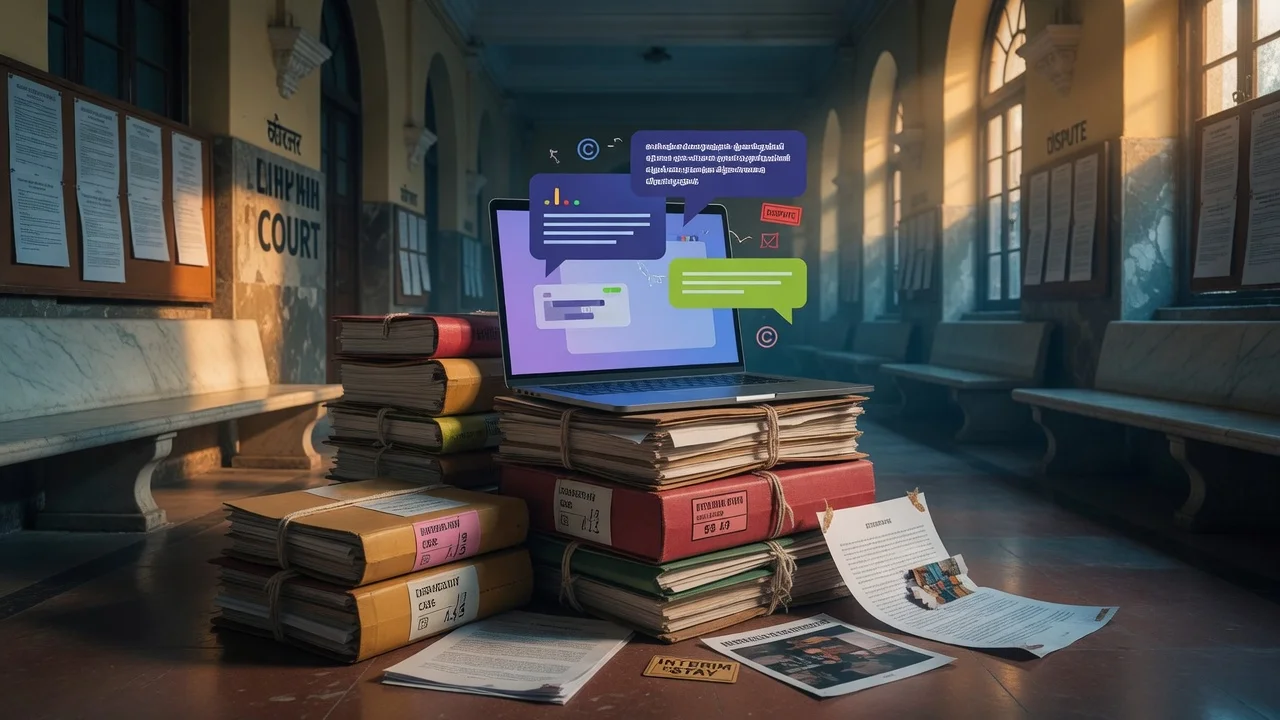
Delhi High Court has asked OpenAI to file its response to ANI’s plea for a temporary injunction blocking use of ANI news content in ChatGPT training.
ANI, one of India’s largest news agencies, claims its copyrighted reports were scraped and used without licence to train the AI model.
This case is a 2026 litmus test for how Indian copyright law treats AI training data scraped from newsrooms.
A temporary injunction, if granted, could force OpenAI to scrub or licence Indian agency content before further model updates.
Other Indian publishers and wire services are quietly tracking the outcome for their own future claims.
What just happened?
The Delhi High Court has told OpenAI to put its reply on record.
Asian News International wants a temporary injunction. Stop using our news stories, videos and wire copy to train or fine-tune ChatGPT, ANI is saying — at least while the bigger suit runs.
This is not a final judgment. It is a procedural step. OpenAI now has to explain, on affidavit, whether and how ANI material entered its training pipeline.
For Indian newsrooms that have watched global AI firms vacuum up their work for years, this order feels like the first real pushback that actually lands in a courtroom.
ChatGPT is still everywhere on Indian desks — newsrooms, student groups, corporate research teams. If the court eventually freezes ANI content, you will still see the chatbot. The underlying training set could shrink or get cleaned. That is why the hearing matters beyond these two parties.
How does this actually work?
Here is the timeline as it stands in September 2026, without the courtroom fog.
ANI approaches the Delhi High Court. It alleges OpenAI used its copyrighted news content without permission or payment to train ChatGPT. The agency asks for a temporary injunction — restrain further use of that material while the larger suit continues.
The matter gets listed. The court examines the plea and directs OpenAI to file its response. That direction is the latest public development.
No final injunction yet. No damages figure. The court simply wants OpenAI’s version on the record before it decides the interim prayer.
ANI’s core claim is simple. Its reports are original literary works under Indian copyright law. Feeding those works into a large language model without a licence, ANI says, is infringement.
Think of it this way. You publish a report. Someone feeds it into an AI. The AI starts answering in your style. No payment. No permission. That is the situation ANI is describing.
OpenAI has historically argued that training on publicly available text is fair use or transformative in other jurisdictions. Indian courts have not settled that question for news agencies. So this case is being watched as a possible first marker.
The temporary injunction is the sharp end. If granted, OpenAI would have to stop ingesting ANI content immediately and possibly show that existing models do not rely on it. If refused, ANI still has the main suit — but the leverage of an interim freeze disappears.
No exact next hearing date is locked in the public notes available to us. We are not inventing one. What is clear: the court clock is now running on OpenAI’s reply.
What changes for people in India?
Indian news agencies run on thin margins. Wire copy, video feeds, political reporting — that is the product. When that product becomes free training fuel for a global chatbot, the business model takes a hit.
ANI is the first big Indian player to drag this fight into the Delhi High Court. Others are measuring their own archives against the same legal template.
For Indian startups building local language models or news summarisers, the case creates both risk and opportunity. Risk, because any training set that quietly includes agency copy could face similar notices. Opportunity, because a clear court signal might push global AI firms to start paying for licensed Indian data feeds.
That money, if it ever flows, would land in INR. It could fund better journalism — not just better prompts.
Everyday Indian users already lean on ChatGPT for exam notes, cricket updates and policy explainers. If the training data loses high-quality Indian wire copy, answers about local politics, court judgments or market moves could get thinner or more hallucinated.
Accuracy for Indian queries is not a side issue. It is the product.
Regulators in India have talked about AI guidelines and deepfake rules. Copyright for training data still sits in a grey zone. This case is one of the first real tests of that grey zone in an Indian courtroom.
What should you do now?
If you are a regular ChatGPT user in India, nothing changes today. Keep using it. No ban is in force.
If you run a newsroom or a content business, watch this docket. The interim order — grant or refuse — will set the tone for how hard you can push on licensing talks with AI firms.
If you are building an Indian AI product, audit your training sources now. Agency wire copy without a clear licence is the exact risk this case is putting under the light.
And if you just want the story straight: OpenAI has to reply. ANI wants a freeze. Indian publishers are watching. September 2026 is when the reply clock started ticking.



Comments (0)
Be the first to comment!