


What’s the headline?
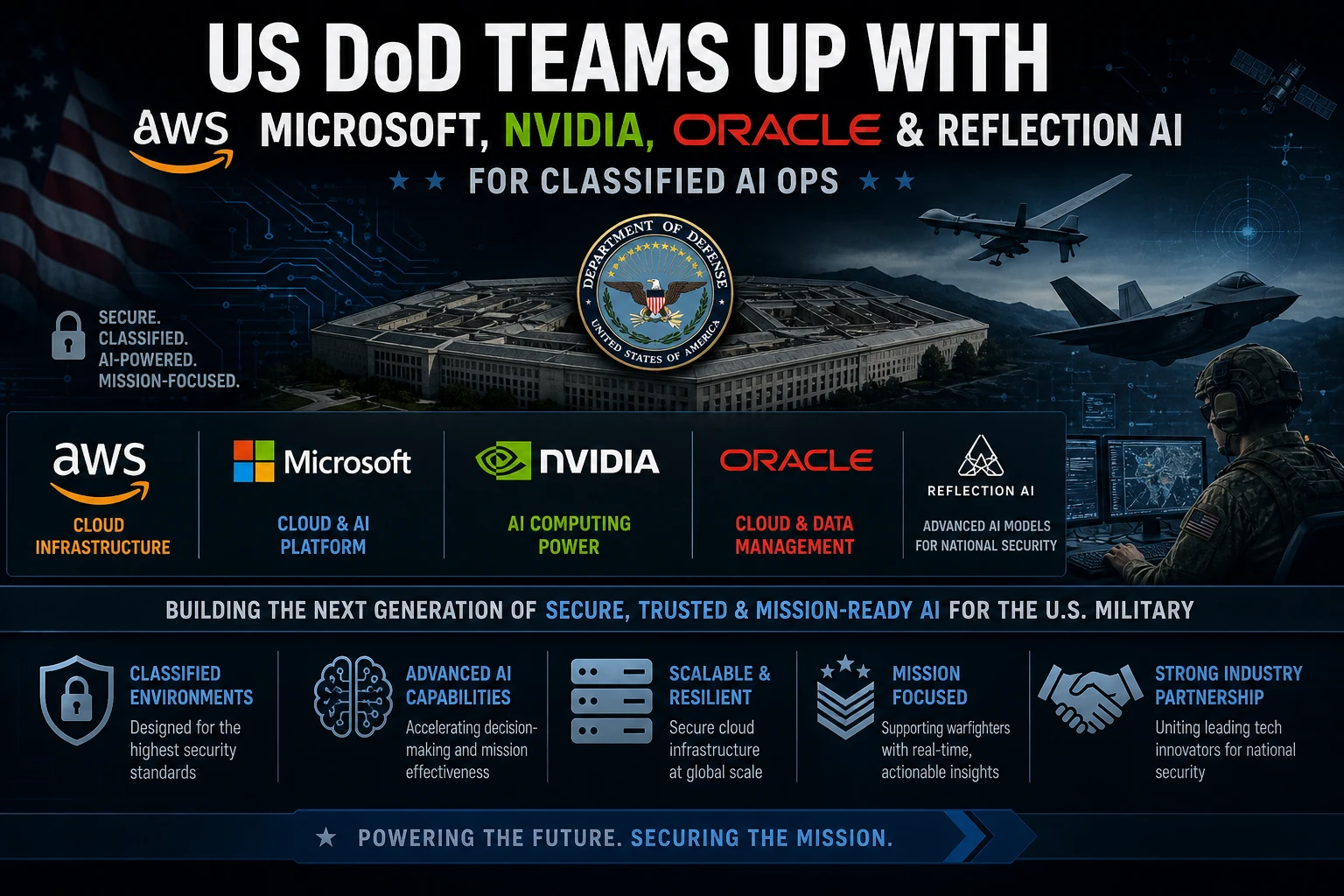
The US Department of Defense (DoD) has signed a series of contracts with five tech giants – Amazon Web Services, Microsoft, Nvidia, Oracle, and a newcomer called Reflection AI – to run artificial‑intelligence tools on classified, air‑gapped networks. The goal is to let the military use the same generative‑AI models that power ChatGPT, Gemini, or Nvidia’s DGX‑SuperPOD, but inside a secure environment that meets the toughest clearance standards.
Why now?
After a year of frantic AI‑arms‑race chatter, the DoD realised that its own AI stack was lagging. While private firms were sprinting from LLM‑as‑a‑service to real‑time image analysis, the Pentagon was still stuck with legacy hardware and siloed data. The new contracts lock in up to $10 billion over five years, giving the military guaranteed access to the latest GPUs, cloud‑scale storage, and pre‑trained models – all vetted for classified use.
Who’s doing what?
- AWS – will provide a hardened version of its GovCloud with custom‑built Nitro hypervisors that isolate AI workloads from the public internet.
- Microsoft – is rolling out Azure Government with Azure OpenAI Service, letting analysts run GPT‑4‑style models on secret‑level data.
- Nvidia – supplies the H100 GPU clusters and the DGX‑SuperPOD AI supercomputer, tuned for high‑throughput inference on satellite imagery and radar feeds.
- Oracle – brings its Autonomous Database and Fusion Cloud to store massive training datasets while ensuring tamper‑proof audit logs.
- Reflection AI – a stealth‑mode startup that built a secure LLM‑wrapper, enabling the DoD to fine‑tune models without ever exposing raw data to the vendor’s own servers.
How does it work?
All five vendors will run their services inside the DoD’s “Joint Artificial Intelligence Center” (JAIC) enclave – a physically isolated data centre on a US‑based military base. Think of it like a private cloud that talks only to internal networks, with multi‑factor authentication, hardware‑root‑of‑trust, and continuous monitoring. The AI models stay inside the enclave; only the inference results – for example, a target‑identification tag – flow out to end‑users.
What can the military actually do with it?
Here are three concrete use‑cases:
- Rapid intelligence analysis – an analyst can upload a batch of satellite photos and get AI‑generated annotations (e.g., "possible missile site") within seconds, cutting intel turnaround from hours to minutes.
- Predictive maintenance – AI models ingest sensor streams from aircraft engines, flagging wear‑and‑tear patterns before a part fails, saving both lives and money.
- Decision‑support chatbots – field commanders can ask a secure chatbot for the latest rules‑of‑engagement or logistics status, with the answer drawn from classified databases.
India angle – why should Indian readers care?
We might not have a DoD, but the Indian Armed Forces are already experimenting with AI for border surveillance, drone swarms, and cyber‑defence. The contracts show a clear roadmap: secure‑cloud + high‑end GPUs = battlefield‑ready AI. Indian defence labs could partner with local cloud providers (like NxtGen or Tata Communications) to replicate a similar enclave, using the same Nvidia H100 GPUs that are now being shipped to US bases.
On the commercial side, the same AI services are being rolled out to enterprise customers worldwide. If you’re a startup building AI‑driven analytics for, say, oil‑&‑gas or telecom, you can now buy a “government‑grade” cloud tier from Azure or AWS that meets ISO‑27001 and FedRAMP standards – a strong selling point for Indian enterprises that need extra compliance.
TamilTech‑ஓட கருத்து
We think this is a double‑edged sword. On one hand, giving the military access to cutting‑edge AI could make operations faster, safer, and less costly. On the other hand, the sheer scale of the contracts – billions of dollars – raises questions about oversight and the risk of vendor lock‑in. For India, the lesson is clear: if we want AI on the battlefield, we need home‑grown cloud infrastructure that can meet the same security bar.
Another point: the involvement of Reflection AI is a hint that niche security‑focused startups can punch way above their weight if they solve the “data‑privacy‑in‑the‑cloud” problem. Indian founders should watch this space – a similar product could become a must‑have for any defence contractor.
What’s next?
All five vendors will start a phased rollout next quarter, beginning with pilot projects in the US Indo‑Pacific Command. Within a year we should see full‑scale deployment across all combatant commands. Expect a wave of follow‑on contracts for specialized models – think LLMs trained on maritime law or nuclear‑reactor data.
For Indian tech players, the next step is to start conversations with the Ministry of Defence and DRDO about building a secure AI cloud. The hardware is already available – Nvidia’s H100 is in Indian data‑centres – the missing piece is the policy and the ecosystem.
Bottom line
The DoD’s AI pact is more than a headline; it’s a blueprint for how nations will harness generative AI in the most sensitive environments. Whether you’re a defence analyst, a startup founder, or just a tech enthusiast, the ripple effects will be felt in India’s own AI journey.





Comments (0)
Be the first to comment!