


முக்கிய விஷயங்கள்
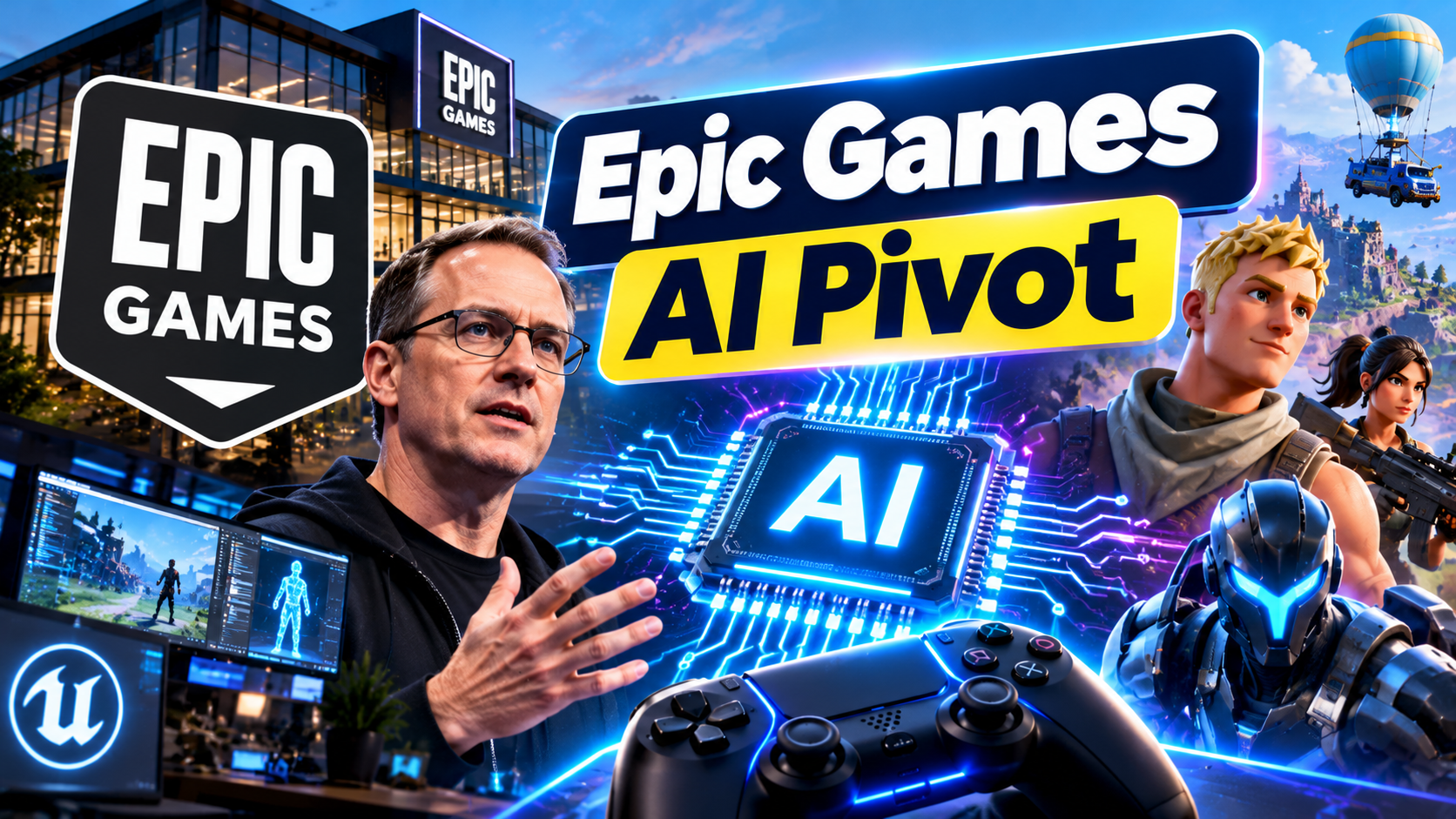
- Epic Games CEO Tim Sweeney says the company is making a "huge pivot" towards AI in game development.
- This comes about six months after Epic laid off more than 1,000 employees.
- Epic had linked those layoffs to its broader business situation, not directly to AI replacing staff.
- AI is expected to speed up things like level design, art assets, and testing inside the Unreal Engine pipeline.
- For Indian gamers, this likely means faster updates and new content in Fortnite, not an overnight AI takeover.
What just happened?
Tim Sweeney, the man who's been running Epic Games since the Fortnite days were just a dream, dropped a pretty big line on Monday. He said Epic is making a "huge pivot" with AI. Not a small experiment. Not a side project. A pivot.
That word matters. Companies don't casually say "pivot" when they mean a minor tweak. A pivot means direction change — Epic wants AI woven into how it actually builds games, not just as a marketing buzzword slapped on a press release.
Here's the part that makes this story spicier. Only about six months ago, Epic cut more than 1,000 jobs. At the time, the company said the layoffs were tied to its broader business and financial situation — not because robots were replacing employees. So now when the same company talks about a "huge AI pivot," people are naturally going to connect the dots, fair or not.
Epic isn't some random startup chasing AI hype for funding rounds. This is the company behind Fortnite, Unreal Engine, and the whole Epic Games Store ecosystem that millions of gamers in India use daily on PC and console. When a company this size says AI is central to its future, the gaming industry listens.
How does this actually work?
Game development is brutally slow and expensive. Building one decent-looking level, character, or animation set can take a team weeks. Multiply that by hundreds of assets in a game like Fortnite, and you understand why studios are desperate for shortcuts.
AI pivot, in plain terms, means using AI tools to speed up that grind. Think of it like this — instead of an artist manually sculpting every tree, rock, or background prop from scratch, AI tools can generate rough versions instantly. The human team then polishes it instead of starting from zero.
Unreal Engine, which Epic owns, already powers a huge chunk of games and even Hollywood VFX work. A serious AI push here isn't just about Fortnite skins dropping faster. It's about every studio using Unreal Engine potentially getting AI-assisted tools for coding, testing bugs, generating NPC dialogue, and building worlds quicker.
Sweeney hasn't detailed exact tools or timelines publicly in a way that's been independently confirmed yet, so treat specifics with caution. But the direction is clear — AI moving from "nice to have" to "core strategy" inside one of gaming's biggest companies.
What changes for people in India?
India has one of the largest Fortnite and Unreal Engine developer communities outside the West. Bengaluru, Hyderabad, and Pune all have studios either using Unreal Engine or building tools around it.
If Epic bakes AI deeper into its engine, Indian indie developers and mid-size studios get access to the same AI-powered tools as big international teams — often without needing a Hollywood-sized budget. That's a real opportunity, not just hype.
For regular Fortnite players in India, don't expect your game to suddenly look different tomorrow. What you'll likely notice first is pace — new seasons, events, and content dropping quicker because the development backend is faster. Think of it like how Jio or Flipkart push app updates more frequently once their backend systems get optimised. Players feel the speed, not the plumbing.
There's also the job angle people shouldn't ignore. Epic laid off over 1,000 people before this AI announcement. Game artists, QA testers, and junior developers in India working with international studios or outsourcing partners should watch this space carefully. AI replacing repetitive tasks is one thing — AI replacing entire job categories is a different, scarier conversation, and right now nobody has solid numbers on which way this swings for Epic specifically.
What should you do now?
If you're a Fortnite player, there's genuinely nothing to "do" right now except keep playing and watch for how quickly new content starts rolling in over the next few months.
If you're a game developer or a student learning Unreal Engine in India, this is worth paying attention to. AI-assisted game dev tools are becoming a real skill employers will ask about soon, similar to how UPI integration knowledge became a basic expectation for fintech app developers a few years back.
And if you're just someone who enjoys gaming news, treat "huge pivot" claims from any CEO with healthy curiosity. Big companies love big words. The real test is whether players actually feel a difference in the games they play over the coming updates, not in the press statement.
What are the honest limitations here?
Let's slow down for a second, because "huge pivot" sounds exciting until you ask the boring but important question — what exactly can AI not do yet inside a studio like Epic? Generating a rough tree model or a background prop is one thing. Making a Fortnite-quality character that fits the game's art style, feels consistent with existing lore, and doesn't look like a generic AI blob is a completely different difficulty level. Human artists still have to catch those weird AI mistakes, the extra fingers, the broken textures, the physics that just doesn't sit right in gameplay.
There's also the legal and ownership angle that nobody's talking about loudly yet. If AI tools generate art or code trained on other people's work, questions around copyright and originality don't just disappear because a CEO used the word "pivot" in a press statement. Epic hasn't laid out, at least not publicly in a verified way, exactly which AI models it's using internally or where that training data comes from. Until that's clearer, it's fair to stay a little skeptical about how "AI-made" versus "AI-assisted" the final content actually is.
And then there's the trust problem created by timing. A company announcing a major AI push just six months after cutting over 1,000 jobs is always going to face tougher questions from its own former employees and from gaming communities. Even if the layoffs genuinely had nothing to do with AI, as Epic maintained at the time, optics matter. Right now there's no solid public data confirming whether this AI pivot will create new roles, shrink existing ones, or simply shift what current employees spend their day doing.
What should we actually watch for next?
The real signal to track isn't another CEO quote — it's what shows up inside Unreal Engine's developer tools over the next couple of updates. If Epic rolls out AI features directly into the Unreal Engine editor that indie developers in India can test for free or cheap, that's a genuine, usable step. If it stays limited to internal Fortnite production with zero visible tools for outside developers, then "huge pivot" was mostly aimed at investors and headlines, not at the wider dev community.
Watch Fortnite's own content calendar too. Faster, more frequent in-game events and smoother season rollouts would be the clearest everyday proof that AI is actually speeding up production behind the scenes. On the flip side, if seasons keep following the same old release rhythm as before, that's a quiet hint that this "pivot" is still early-stage talk rather than a finished pipeline change.
Finally, keep an eye on how other big studios react. Gaming is a copy-fast industry — if Epic's AI push genuinely cuts development time and cost, expect Unity, and other major engine makers to announce similar moves within months, not years. That competitive ripple effect, more than anything Sweeney says in an interview, will tell us whether this is truly a turning point for game development or just one company's bet that didn't fully pay off.



Comments (0)
Be the first to comment!