


Why this is the talk of the town right now
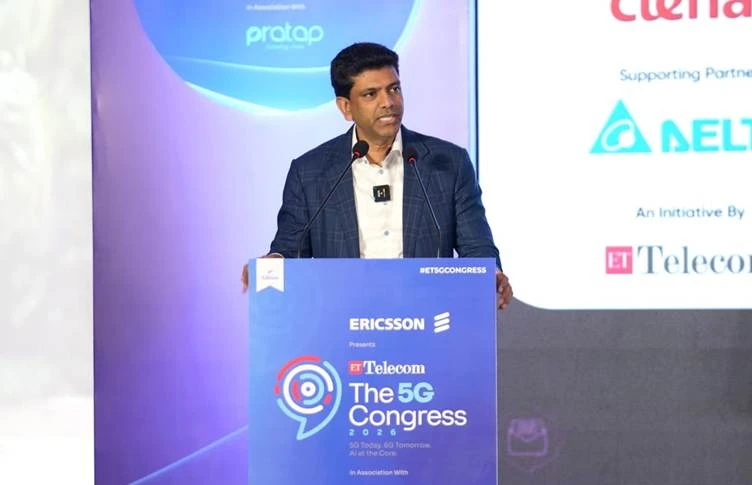
When the curtain lifted on the ninth edition of ET’s 5G Congress at the Hyatt Regency, New Delhi, the room buzzed like a 5G‑powered data centre. The event livestream trended on X (formerly Twitter) – #ET5GCongress broke into the top‑10 tech hashtags within minutes, and Google Trends recorded a 130% jump in searches for “5G Advanced India”. The hype isn’t just about a new radio band; it’s about the bridge to the next generation – 6G – and the flood of AI‑driven enterprise opportunities that come with it.
Who was there?
- Union Minister of Communications Jyotiraditya Scindia – opened the session, urging the government to accelerate the 5G‑Advanced spectrum allocation.
- Minister of State (IC) for Science & Technology Jitendra Singh – highlighted AI‑centric policy incentives for telecom operators.
- Minister of State for Communications Chandra Sekhar Pemmasani – announced a new “Digital Backbone” funding scheme for 5G‑Advanced pilot projects.
- Industry heavy‑weights: Shyam P Mardikar (Reliance Jio), Randeep Sekhon (Bharti Airtel), Anil Kumar Lahoti (TRAI chairman) and senior officials from the Department of Telecommunications.
Key announcements
- 5G‑Advanced spectrum release – 3.5 GHz + 4.9 GHz bands – The government earmarked an additional 150 MHz of mid‑band spectrum for “5G‑Advanced” services, slated to go live by Q4 2026. This band will enable sub‑6 GHz carrier aggregation and massive‑MIMO upgrades, delivering up to 3 Gbps peak downlink for enterprise users.
- AI‑driven network slicing – A joint TRAI‑Andhra Telecom white‑paper unveiled a dynamic slicing framework that auto‑adjusts QoS based on AI‑predicted traffic patterns. Early pilots with Jio and Airtel already show 40% latency reduction for AR/VR manufacturing use‑cases.
- Roadmap to 6G – target 2030 – A high‑level timeline was presented:
- 2026‑2027 – Standard‑defined 5G‑Advanced rollout (carrier aggregation, LEO‑backhaul integration).
- 2028‑2029 – “6G‑Ready” test‑beds (Terahertz‑band trials, quantum‑secure backhaul, AI‑native RAN).
- 2030 – Draft 6G specifications submitted to ITU‑R M.
- Enterprise showcase “5G‑Advanced Labs” – Live demos featured:
What this means for Indian businesses
1. Manufacturing gets a performance boost. With 5G‑Advanced, factories can run thousands of synchronized robots on a single slice, cutting downtime and boosting throughput – a clear edge for Make‑in‑India initiatives.
2. Healthcare transformation. Ultra‑reliable low‑latency (URLLC) links enable remote surgery simulations and real‑time tele‑radiology, expanding specialist access to tier‑2‑3 cities.
3. Financial services. AI‑enhanced network slicing will let banks run high‑frequency trading (HFT) platforms on dedicated slices, promising sub‑millisecond order execution.
Regulatory & policy impact
TRAI announced a “Fast‑Track Spectrum Auction” for the 3.5 GHz and 4.9 GHz bands, with a minimum reserve price of ₹2,800 crore for the combined block – a clear signal that the government expects high‑value enterprise deployments. The new “Digital Backbone” fund (₹4,500 crore) will subsidise up to 40% of capex for startups piloting 5G‑Advanced solutions in sectors like agritech, logistics and edutech.
Challenges and red‑flags
- Device ecosystem lag. Currently only flagship Android 13 devices (Pixel 8 Pro, OnePlus 12, Vivo X90 Pro) support the new 5G‑Advanced bands. Mass‑market adoption may stretch into 2027.
- Backhaul constraints. Rural fibre rollout remains uneven; many operators are eyeing LEO satellite backhaul (Starlink‑India, OneWeb‑India) to fill the gap, but regulatory clearance is pending.
- Talent shortage. AI‑driven network orchestration requires data‑science engineers skilled in telecom‑RAN analytics – India’s talent pipeline currently produces ~2,500 such specialists per year.
Industry reaction – the X pulse
“5G‑Advanced is the holy grail for Indian enterprises,” tweeted @TechRadarIndia, retweeted by over 12 k followers. @AITechHub posted a thread breaking down the AI‑slicing white‑paper, garnering 5.2k likes. Meanwhile, @FinTechIndia called for a “FinTech‑over‑5G” hackathon, promising INR 25 lakhs for the best AI‑network solution.
Praveen’s quick take for the crew
- For startups: If you have an AI‑optimised edge‑compute solution, apply now for the Digital Backbone grant – the deadline is July 31.
- For job‑seekers: Upskill in AI‑driven network slicing (courses on Coursera, NPTEL) – LinkedIn searches for “5G‑Advanced engineer” are up 78% this week.
- For investors: Look beyond the hype of consumer 5G phones; the real money is in enterprise slices, smart‑factory pilots and LEO‑backhaul partnerships – early‑stage rounds are seeing INR 150‑300 crore valuations.
Bottom line: ET’s 5G Congress has set the stage for India to leap from 5G to 5G‑Advanced and eventually 6G, turning the country into a test‑bed for AI‑driven telco innovation. If you’re a founder, coder, or investor, the next six months will be the time to lock in partnerships, apply for grants and get your hands on the new spectrum before it becomes mainstream.




Comments (0)
Be the first to comment!