


Key Takeaways
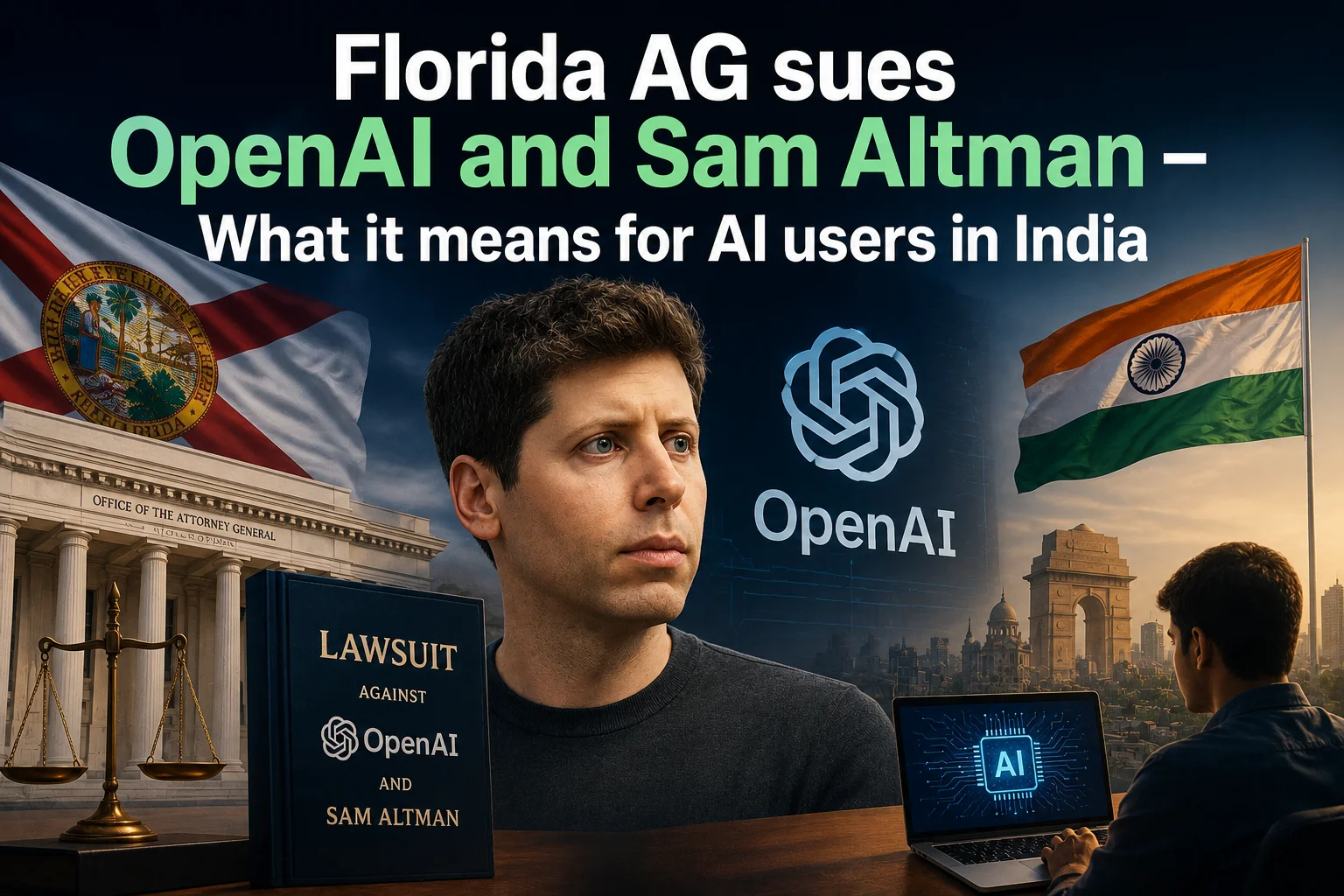
- Florida Attorney General Ashley Uthmeier filed a lawsuit on May 30, 2026 accusing OpenAI and CEO Sam Altman of deceptive trade practices, negligence and public nuisance.
- The complaint seeks up to $1 billion in damages and aims to hold Altman personally liable.
- Indian AI‑powered services that rely on ChatGPT may face tighter scrutiny and possible restrictions if the case leads to new US consumer‑protection rules.
- For Indian users, the immediate impact is limited, but businesses should review their AI contracts and privacy policies now.
Alright, let’s cut to the chase. Florida’s top law‑enforcer is dragging OpenAI and its charismatic CEO Sam Altman into court, accusing them of pulling a fast one on consumers. The lawsuit, filed on May 30, 2026, is not just a headline‑grabber – it could ripple through the global AI ecosystem, and that includes the massive Indian market.
What’s the news?
Florida Attorney General Ashley Uthmeier has sued OpenAI and Sam Altman personally, alleging three main claims:
- Deceptive trade practices: Users were allegedly misled about how ChatGPT works, especially around data privacy and the accuracy of generated content.
- Negligence: The suit says OpenAI failed to put reasonable safeguards in place, leading to harmful outputs that caused real‑world damage.
- Public nuisance: By flooding the internet with AI‑generated text, the complaint argues the company is contributing to misinformation, which harms the public at large.
The complaint asks for up to $1 billion in damages and wants the court to order OpenAI to change its business practices. It also seeks to hold Altman personally responsible, a move that’s rare in tech lawsuits.
The details – numbers, timeline, and legal angles
Here’s the nitty‑gritty:
- Date of filing: May 30, 2026.
- Plaintiff: Ashley Uthmeier, Florida Attorney General.
- Defendants: OpenAI (the company) and Sam Altman (CEO, individually).
- Claims: Deceptive trade practices (Florida’s Deceptive and Unfair Trade Practices Act), negligence (state consumer‑protection statutes), and public nuisance (Florida’s Public Nuisance Law).
- Damages sought: Up to $1 billion, plus injunctive relief to force changes in OpenAI’s product disclosures and safety mechanisms.
The suit points to several high‑profile incidents: a ChatGPT‑generated medical advice that led to a patient’s misdiagnosis, a school essay that was flagged for plagiarism, and a series of political misinformation posts traced back to AI‑generated text.
Why should Indian readers care?
India is the world’s biggest consumer of AI‑powered tools – from ChatGPT for coding help to generative AI in customer support. While the case is filed in a US state, the outcome could influence:
- Regulatory frameworks: If a US court imposes strict consumer‑protection standards, other jurisdictions (including India’s Ministry of Electronics & IT) may adopt similar rules.
- Product licensing: Companies that embed ChatGPT via API might need to renegotiate contracts, add more disclosures, or switch to alternative models.
- Data‑privacy checks: Indian firms will likely be asked to show how they store and process user data when using OpenAI services.
In plain terms, a ruling against OpenAI could make the cost of using ChatGPT higher for Indian startups, and could force them to add extra compliance layers.
India‑specific impact – pricing, availability, alternatives
Right now, OpenAI’s API pricing for India is roughly $0.002 per 1,000 tokens for the “gpt‑4‑turbo” model. If the lawsuit leads to higher compliance costs, we could see a 10‑20% price hike – that translates to an extra ₹1‑2 per 100,000 characters for Indian developers.
Alternatives are already gaining traction:
- Google Gemini: Launched in 2025, Gemini offers comparable performance and is hosted on Google Cloud India, which may become the go‑to for privacy‑sensitive projects.
- Microsoft Azure OpenAI Service: Still uses OpenAI models but bundles them with Microsoft’s compliance certifications, possibly shielding Indian users from direct legal fallout.
- Local startups: Companies like JioAI and Khatabook’s AI arm are rolling out indigenous LLMs, marketed as “data‑sovereign”.
For the average consumer, the immediate effect is minimal – you can still chat with ChatGPT on the web or via the official app. But for businesses that embed the model in apps, websites, or internal tools, a legal shift means revisiting contracts and maybe budgeting for higher fees.
TamilTech’s take – the pros, cons, and what to do next
We think the lawsuit is both a wake‑up call and an opportunity.
Pros:
- Consumer protection: If the court forces clearer disclosures, users will know when they’re dealing with AI‑generated content.
- Industry standards: A precedent could push all AI providers to adopt stronger safety nets – better content filters, more transparent data policies.
Cons:
- Cost pressure: Compliance is expensive. Small Indian startups may feel the pinch if OpenAI hikes prices.
- Innovation slowdown: Over‑regulation could stifle rapid experimentation, especially in the education and health sectors where AI is still nascent.
What should Indian readers do?
- Audit your AI usage: List every product that uses OpenAI’s API. Check if you have proper user consent and clear disclosure.
- Plan for alternatives: Start a pilot with Gemini or a local LLM. Even a 10% traffic split now can hedge future cost spikes.
- Stay informed: Follow the case docket – any settlement or injunction will be reported widely. TamilTech will keep you posted.
What to expect next?
The case will likely go through a series of motions before any trial. Expect OpenAI to file a motion to dismiss the personal‑liability claim against Altman – that’s standard. Meanwhile, consumer‑advocacy groups in other states (California, New York) are watching closely and may file similar suits.
If a settlement is reached, it could include a binding commitment to improve transparency, add “AI‑generated content” labels, and possibly a fund for victims of AI‑related harms. That would set a de‑facto standard for the whole industry.
For now, keep an eye on the headlines, but don’t panic. Your ChatGPT conversations will still work, and Indian businesses have plenty of alternatives if the cost curve climbs.



Comments (0)
Be the first to comment!