


What’s the headline?
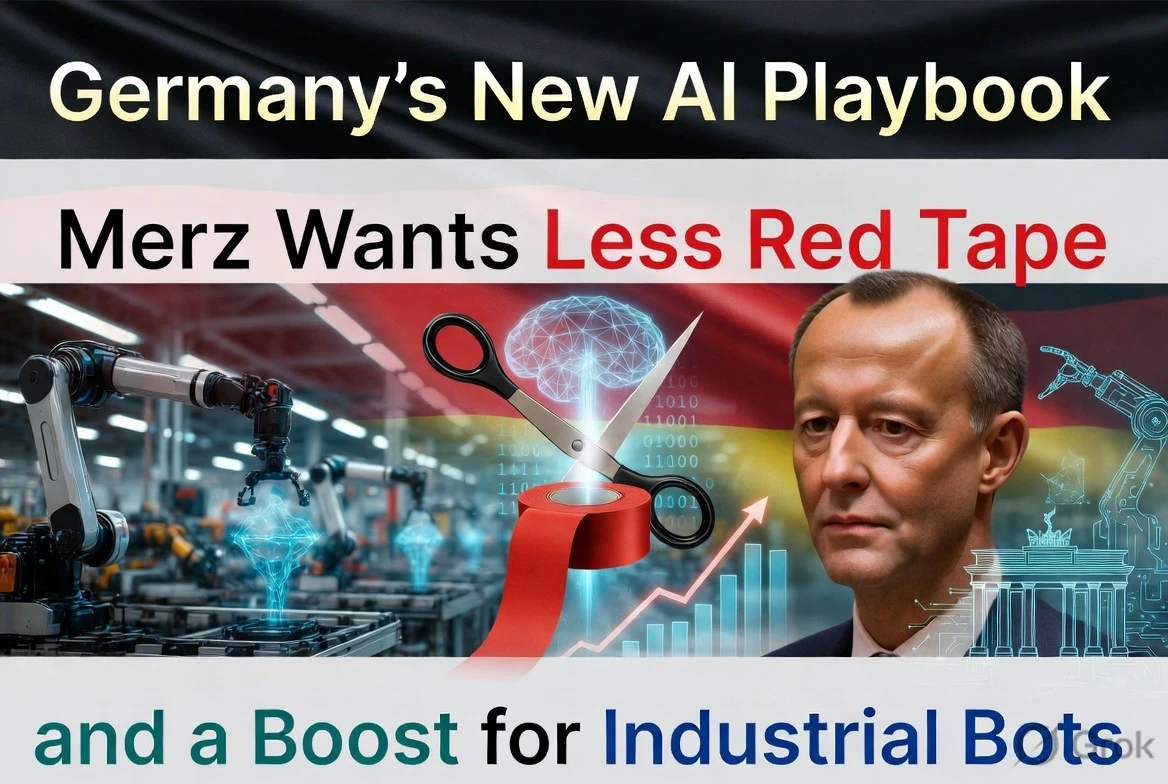
Friedrich Merz, Germany’s new chancellor, is on a mission to make the EU’s AI legislation less of a nightmare for businesses. He’s talking about trimming the so‑called “regulatory burden” and even giving industrial AI a special exemption. The goal? Keep Europe competitive while still protecting citizens.
Why does this matter now?
The EU’s AI Act, set to become law next year, classifies AI systems into risk tiers and forces companies to meet strict documentation, testing and transparency requirements. While the move is praised for consumer safety, many CEOs say it will slow down product roll‑outs, especially in sectors like manufacturing, logistics and energy.
Merz’s game plan in plain English
- Cut the paperwork: Reduce the number of mandatory impact‑assessments for low‑risk tools.
- Industrial carve‑out: Allow AI that runs on the shop‑floor – predictive maintenance, quality‑control vision systems, robotic process automation – to skip the high‑risk classification.
- Fast‑track approvals: Create a “sandbox” where firms can test AI under regulator supervision and get quicker clearance.
Numbers you should know
According to recent industry surveys, German manufacturers could save up to €1.2 billion a year if AI compliance costs drop by 30 %. Across the EU, the AI market is projected to hit €150 billion by 2030; a lighter rulebook could add another €20‑30 billion in revenue.
Impact on India’s AI ecosystem
India’s own AI policy is still in draft mode, but we watch EU moves closely because many Indian startups export AI‑powered solutions to Europe. A lighter EU regime means:
- Cheaper contracts: Indian firms won’t have to embed costly compliance modules in every SaaS deal.
- Faster time‑to‑market: A sandbox model mirrors India’s own “RegTech sandbox” experiments, letting us align our products quicker.
- Talent flow: German factories may hire more AI engineers, opening up remote‑work gigs for Indian coders.
TamilTech’s take – the good, the bad, the ugly
We think Merz is onto something. Europe needs to protect citizens from deep‑fakes and biased hiring tools, but the current one‑size‑fits‑all approach hurts the very sectors that can drive the green transition. Giving industrial AI a lighter touch could accelerate automation in steel plants, renewable‑energy farms and even Indian‐made tractors that use AI for soil analysis.
On the flip side, a loophole could become a backdoor for companies to label any AI as “industrial” and dodge scrutiny. The key will be a clear definition – maybe something like “AI that does not make autonomous decisions affecting people’s rights.”
What should Indian entrepreneurs do now?
- Audit your product line: Identify which modules fall under “industrial” vs. “high‑risk”.
- Prep a compliance kit: Even if you get an exemption, regulators will still want documentation. Keep data‑logs, model cards and risk‑mitigation plans ready.
- Watch the EU lobby: Join industry groups that are shaping the final AI Act. Your feedback could influence the carve‑out language.
What’s next on the horizon?
Merz is expected to bring the proposal to the European Council by Q4 2024. The EU Parliament will then debate, likely adding its own tweaks. If the industrial exemption survives, we could see the first wave of AI‑enabled factories in Germany by 2025 – and Indian AI vendors will be right there, supplying the algorithms.
Bottom line: Europe is trying to balance safety with speed. For us in India, a more flexible EU rulebook is a green light to push our AI solutions abroad faster, but we must stay vigilant about the definition of “industrial”. Stay tuned, because the next few months will decide whether Europe’s AI future is a sprint or a marathon.





Comments (0)
Be the first to comment!