



Key Takeaways
- OpenAI’s Sam Altman, Anthropic’s Dario Amodei and xAI’s Elon Musk have publicly backed stronger government oversight of frontier AI.
- US President Donald Trump and a divided Congress show little urgency for a sweeping federal AI Act in 2026.
- India still runs on draft guidelines and the IndiaAI Mission rather than a single comprehensive AI law.
- US policy tone shapes cloud pricing, model access and compliance costs for Indian IT firms and SaaS startups.
- Deepfake risk, hiring automation and UPI fraud detection make the regulation gap a live issue for Indian users.
What's the news
The same people building the most powerful AI models are telling governments to put rules in place. Anthropic CEO Dario Amodei, OpenAI CEO Sam Altman and xAI’s Elon Musk have all argued that frontier systems need clearer oversight before the next capability jump lands in consumer apps and enterprise stacks.
On the other side sits the White House under President Donald Trump. The administration and many lawmakers are not treating a heavy federal AI statute as an emergency. Industry-friendly voices warn that rushed rules could hand China an edge and choke US startups. Safety-first voices say waiting is the real risk. That tug-of-war is the story right now.
For Indian readers this is not distant Capitol Hill drama. US model labs set the default APIs that power chatbots on Jio phones, recommendation engines on Flipkart-style marketplaces, and copilots inside TCS and Infosys delivery centres. When Washington stalls or softens, the global compliance baseline stays fuzzy - and Indian boards still have to decide how hard to push safety reviews.
Details
The CEO calls are not identical. Some focus on licensing for the largest training runs. Others want clearer liability when a model hallucinates harmful advice or when deepfake audio spreads. A recurring theme is that voluntary commitments alone will not hold when competitive pressure spikes. They want the state to draw bright lines so responsible labs are not undercut by anyone shipping faster and dirtier.
Trump’s camp has framed aggressive federal mandates as a threat to American AI leadership. The preference, publicly and in early policy signals, leans toward lighter federal touch, state-level experimentation, and keeping export and compute advantages intact. Congress remains split across party lines and across tech-friendly versus labour-and-safety blocs. The result in 2026 is familiar: hearings, draft bills, and no single signed comprehensive AI Act that settles the big questions.
That vacuum matters. Without a federal floor, companies face a patchwork of state rules, sector guidelines, and whatever the EU AI Act already forces on global products. Model providers then pass compliance complexity downstream through contracts. Enterprise buyers in India - banks, insurers, hospital chains - end up writing longer AI addendums even when Delhi has not yet passed matching legislation.
Another live thread is national security and chip controls. Export rules on advanced GPUs already shape who can train what. Broader AI regulation debates sit next to those controls. Labs that want predictability argue that safety rules and compute rules should move together. Political reality is messier. Innovation rhetoric often wins the news cycle while technical safety work continues inside companies and standards bodies.
None of this means zero oversight. Agencies still have sector powers - finance, health, consumer protection. What is missing is a coherent, AI-specific federal framework that defines high-risk systems, audit duties, and incident reporting the way Europe tried to do. Tech CEOs saying "regulate us" while a White House says "not so fast" creates an odd optics loop that confuses users and investors alike.
India impact
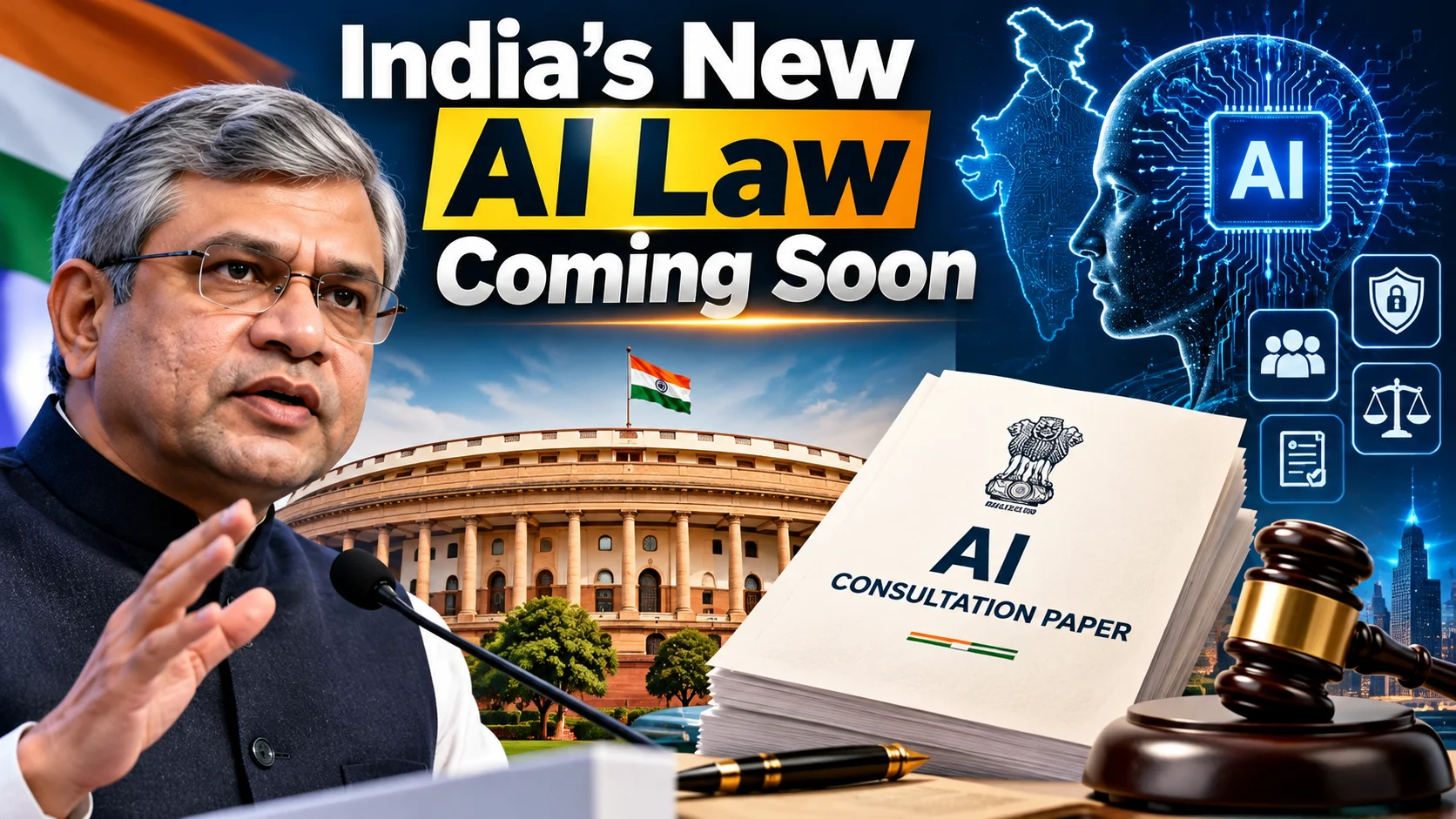
India’s official stance has been pragmatic: promote AI adoption through the IndiaAI Mission, fund compute and datasets, and issue advisory guidelines rather than a lock-everything EU-style Act overnight. MeitY consultations and NITI-era strategy papers already exist. What India does not have in 2026 is a single statute that tells every startup exactly when a model needs third-party audit before it touches credit scoring or hiring.
That soft-law approach has upsides. Indian SaaS founders can ship faster. IT services majors can productise AI offerings without waiting for a 200-page Act. The downside shows up when a US or EU customer asks for SOC-style AI risk reports and the Indian vendor has only internal checklists. Compliance cost then arrives in dollars and INR legal fees anyway.
Everyday India angles are concrete. UPI fraud rings already use voice clones and scripted social engineering. Banks and fintechs deploy AI to flag odd patterns. If model providers face weak disclosure rules, Indian security teams get less visibility into training data and failure modes. Deepfake videos during election cycles remain a worry even with the next Lok Sabha contest years away - state elections and viral WhatsApp forwards do not wait for Parliament.
Job impact is the other dinner-table topic. BPO and L1 support roles feel automation pressure first. Clearer rules on notice, reskilling funds, and human-in-the-loop requirements could soften the landing. Without them, firms optimise for margin and workers scramble. Indian policy makers watching Trump’s light-touch line may decide to keep India’s own path - encourage build-out of sovereign models and DPI-linked AI while tightening only high-risk use cases like credit and health.
Cloud and GPU access also flow through US policy. Any future linkage between safety certification and export licences would hit Indian research labs and startups that rent H100-class clusters abroad. Jio, Reliance, and public-private compute projects are trying to grow domestic capacity. Until that scales, Indian teams remain sensitive to Washington’s mood.
Use cases
Where regulation - or the lack of it - shows up in real products:
Customer support copilots. Indian IT firms roll out agents that draft replies and summarise tickets. Without clear liability rules, a wrong refund promise or leaked PII becomes a contract fight between the model vendor, the SI, and the bank client.
Hiring screens. Startups and GCCs use resume rankers. Bias audits are still uneven. A federal US standard would pressure Indian vendors selling into US HR stacks to document fairness tests.
Healthcare triage chat. Clinics experiment with symptom checkers. Medical advice errors need human review gates. Soft guidelines help, but insurers want harder audit trails.
UPI and lending fraud. Real-time models score transactions. Better model cards and incident reporting from frontier labs would give Indian risk teams faster signals when a new jailbreak style appears.
Content and deepfakes. Newsrooms and election desks need watermarking and detection APIs that actually work across Indic languages. Voluntary industry tools exist. Mandated provenance standards would raise the floor.
In each case the pattern is the same: Indian builders can move today, but enterprise buyers keep asking for paperwork that mirrors whatever the strictest major market demands. US delay does not erase that paperwork - it just makes it inconsistent.
Honest take
Calling for regulation while shipping ever-larger models looks like covering yourself. Fair. Still, the CEOs are not wrong that frontier systems create systemic risk that voluntary blogs cannot fully contain. Trump’s hesitation is also understandable if the alternative is a rushed bill written by people who still think a transformer is a movie robot. Bad law can freeze open research and push talent offshore.
India should not copy-paste either extreme. We need sharp rules for high-risk scoring systems, deepfake provenance, and critical infrastructure - and a light hand for productivity tools that help a Tier-2 founder ship faster. Pair that with public compute, Indic datasets, and serious red-team capacity inside CERT-In and MeitY circles.
For users: treat every AI answer as draft, especially on money and health. For founders: document your evals now so the first big RFP does not wreck your quarter. For policy watchers: the US standoff will drag. Build India’s stack as if the federal AI Act stays stuck in committee. That mindset ages better than waiting for Washington to finish its argument.
The CEOs asked for a referee. Congress and the White House are still arguing about the rulebook. Indian teams cannot pause the match - so play smart, keep logs, and assume the global compliance bar will keep rising even when US politics does not.



Comments (0)
Be the first to comment!