


Key Takeaways
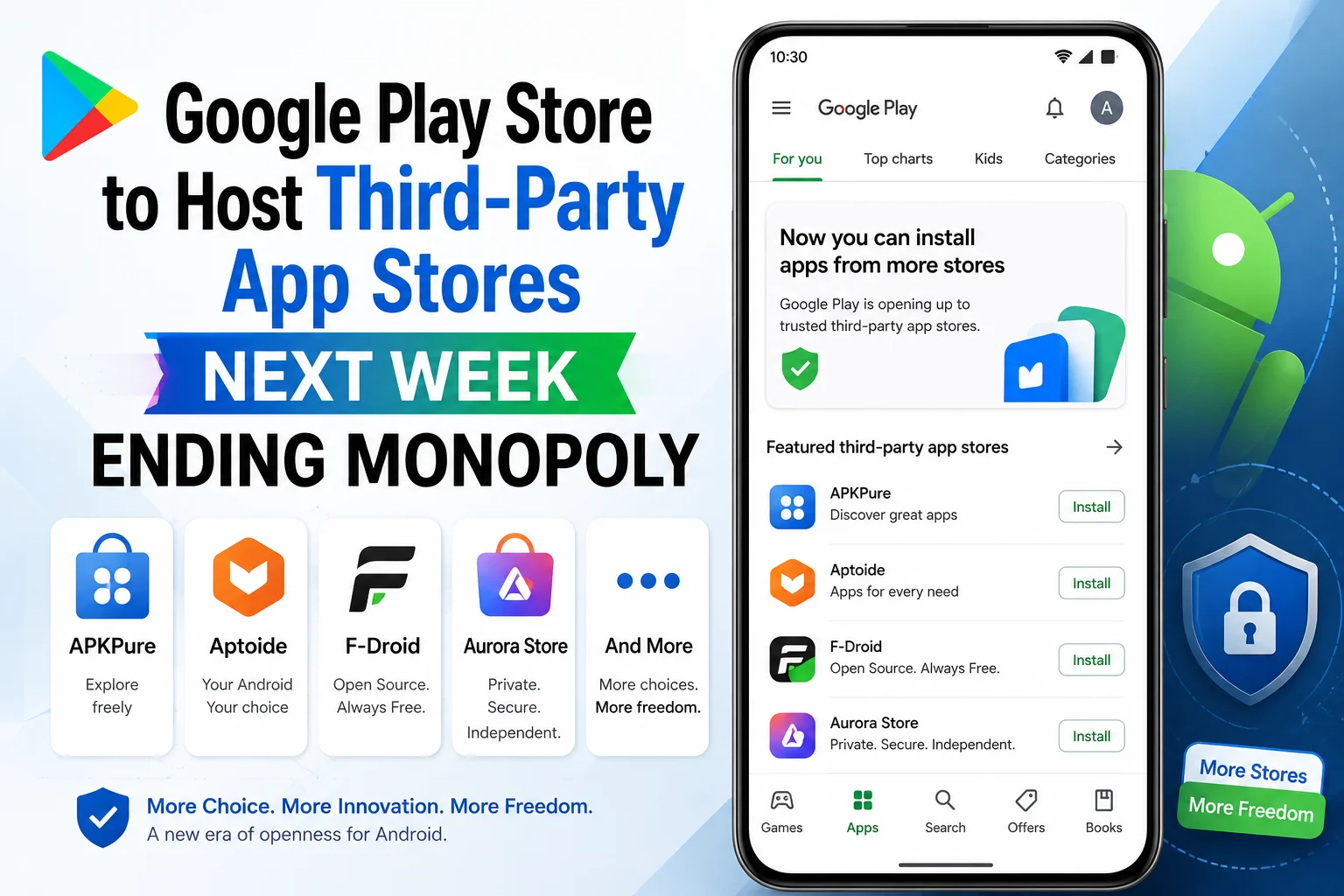
- Starting next week in July 2026, the Google Play Store will officially host third-party app stores like the Epic Games Store and Samsung Galaxy Store.
- Developers can now integrate their own payment gateways, potentially bypassing Google's 15-30% commission fee on digital purchases.
- Indian gamers playing titles like BGMI or Genshin Impact could see a 10-20% drop in in-game currency prices due to reduced platform fees.
- Users will no longer face 'Unknown Sources' security warnings when installing apps from these verified third-party stores hosted on Play.
The Wall Has Finally Fallen
Remember back in 2020 when Fortnite was kicked off the Play Store and everyone thought it was the end of mobile gaming freedom? Well, fast forward to July 2026, and we are witnessing the biggest U-turn in tech history. After years of legal battles, appeals, and courtroom drama between Epic Games and Google, the search giant is finally throwing open the doors. Starting next week, you won't just find apps on the Google Play Store—you'll find entire app stores. This isn't just a minor update; it's a fundamental shift in how the Android ecosystem works. For the first time ever, Google's monopoly on how we discover and pay for apps is being officially dismantled right from within their own platform.
So, what actually happened? To put it simply, the court orders that Google fought so hard to delay have finally reached their deadline. The 'Epic settlement' implementation means Google can no longer block rival stores from being distributed through the Play Store. If you want to download the Epic Games Store, the Samsung Galaxy Store, or even specialized stores for indie games, you can just search for them in Google Play like you'd search for WhatsApp or Instagram. No more digging through shady websites, no more 'this file might be harmful' warnings, and no more jumping through hoops in the settings menu to enable sideloading. It’s all going to be native, official, and surprisingly seamless.
How We Got Here: The Epic vs Google Saga
To understand why this is such a big deal in 2026, we have to look back at the mess that started it all. Epic Games sued Google (and Apple) because they were tired of giving away 30% of every V-Bucks purchase to the platform owners. While Apple managed to keep its 'Walled Garden' mostly intact with some slight cracks in the EU, the US courts were much harsher on Google. The jury found that Google was running an illegal monopoly by bundling the Play Store with other Google services and paying off phone manufacturers to not pre-install rival stores. Google tried every trick in the book to delay this day, but as of July 2026, their time has run out. The withdrawal of the final stay on the settlement means they have to comply, and they have to do it now.
What’s interesting is how Google is handling this. Instead of fighting it further, they are trying to make it look like a 'feature' for users. But don't be fooled—this is a forced move. For years, Google argued that allowing third-party stores would compromise the security of Android. Now, suddenly, they've found a way to make it 'secure' because the court told them they had to. This shift proves that the 'security concerns' were largely a business tactic to keep the 30% commission flowing. Now that the legal barriers are gone, we are about to see a gold rush of companies trying to launch their own storefronts on Android.
What This Means for Your Phone (and Your Wallet)
Let’s talk about the actual experience. From next week, when you open Google Play, you’ll see a new category or search results for 'App Marketplaces.' When you install one, say the Epic Games Store, it will have the same system-level permissions to update apps as Google Play does. This means if you download a game from Epic's store, it can update in the background without you having to manually click 'Install' every single time. It makes the third-party store feel like a first-class citizen on your phone. This is a huge win for user experience because, let's be honest, the old way of sideloading was a massive pain in the neck for the average user.
But the real kicker is the money. Since these third-party stores don't have to pay Google a cut, they can afford to charge developers less. We expect to see stores taking only 10% or 12% instead of Google's 30%. In a market like India, where we are extremely price-sensitive, this is going to be massive. Imagine buying a 'Prime Plus' subscription in BGMI or buying extra storage in a productivity app. If you do it through a third-party store, the developer might pass those savings on to you. We could see prices for digital goods dropping across the board just because Google's 'tax' is no longer the only option in town.
The India Impact: UPI and Local Stores
India is the largest market for Android, and this change will hit here harder than anywhere else. We’ve already seen the rise of the Indus Appstore by PhonePe, which has been trying to gain traction by offering zero platform fees for a year. Now that Indus can be downloaded directly from Google Play, its user base could explode. For Indian developers who have been struggling with Google's strict billing policies, this is a day of celebration. They can finally use UPI, credit cards, or even local wallets without fearing that Google will kick them off the store for not using 'Google Play Billing.'
Furthermore, think about the local context. We might see specialized stores for Indian regional content, or even 'Gaming Stores' that are optimized for low-end devices popular in tier-2 and tier-3 cities. Since these stores can manage their own distribution, they can offer lite versions of apps that Google Play might have previously restricted. The integration of UPI directly into these third-party stores without Google’s interference will make the checkout process much smoother for millions of Indians who don't use international credit cards. This is the decentralization of the app economy that we've been waiting for.
Is it Safe? The Security Question
Now, I know what you’re thinking—is this going to turn my phone into a malware magnet? Google has been scaring us about this for years. However, here is the reality: these third-party stores will still have to meet certain basic security standards to be hosted on Google Play. It’s not like any random hacker can put up a 'Store' app. Companies like Epic, Samsung, and PhonePe have massive security budgets. In fact, having competition might actually force Google to improve its own security scanning (Play Protect) to prove that their store is still the 'safest' place to be. Competition is usually good for the consumer, and security is no exception.
That being said, you should still be careful. Just because a store is on Google Play doesn't mean every single app inside that secondary store is perfect. You’ll need to trust the reputation of the store owner. If it's a store from a brand you know, you're likely fine. If it's 'SuperFreeAppsStore123,' maybe think twice. The responsibility is shifting from Google to the user, which is a bit of a double-edged sword. But for most of us who just want to play games or use alternative browsers without being taxed, the risk is minimal compared to the benefits.
TamilTech’s Verdict: A New Era for Android
Honestly, we think this is the best thing to happen to Android in at least five years. The 'Walled Garden' approach was starting to make Android feel too much like iOS, losing that 'Open Source' spirit that made us love it in the first place. By allowing other stores to compete on a level playing field, Google is finally being forced to innovate. They can't just sit back and collect 30% anymore; they have to make the Play Store so good that we choose to use it, rather than being forced to.
What should you do next week? Our advice: don't rush to delete Google Play, but definitely explore the alternatives. Look for the Epic Games Store if you’re a gamer, or check out local Indian stores to see if they offer better deals on your favorite apps. Keep an eye on the prices of in-app purchases—if you see a cheaper price on a third-party store for the same item, go for it! This is the start of a price war that only benefits us, the users. We’ll be doing a full step-by-step guide on how to set up these new stores as soon as they go live next week, so stay tuned!



Comments (0)
Be the first to comment!