


Key Takeaways
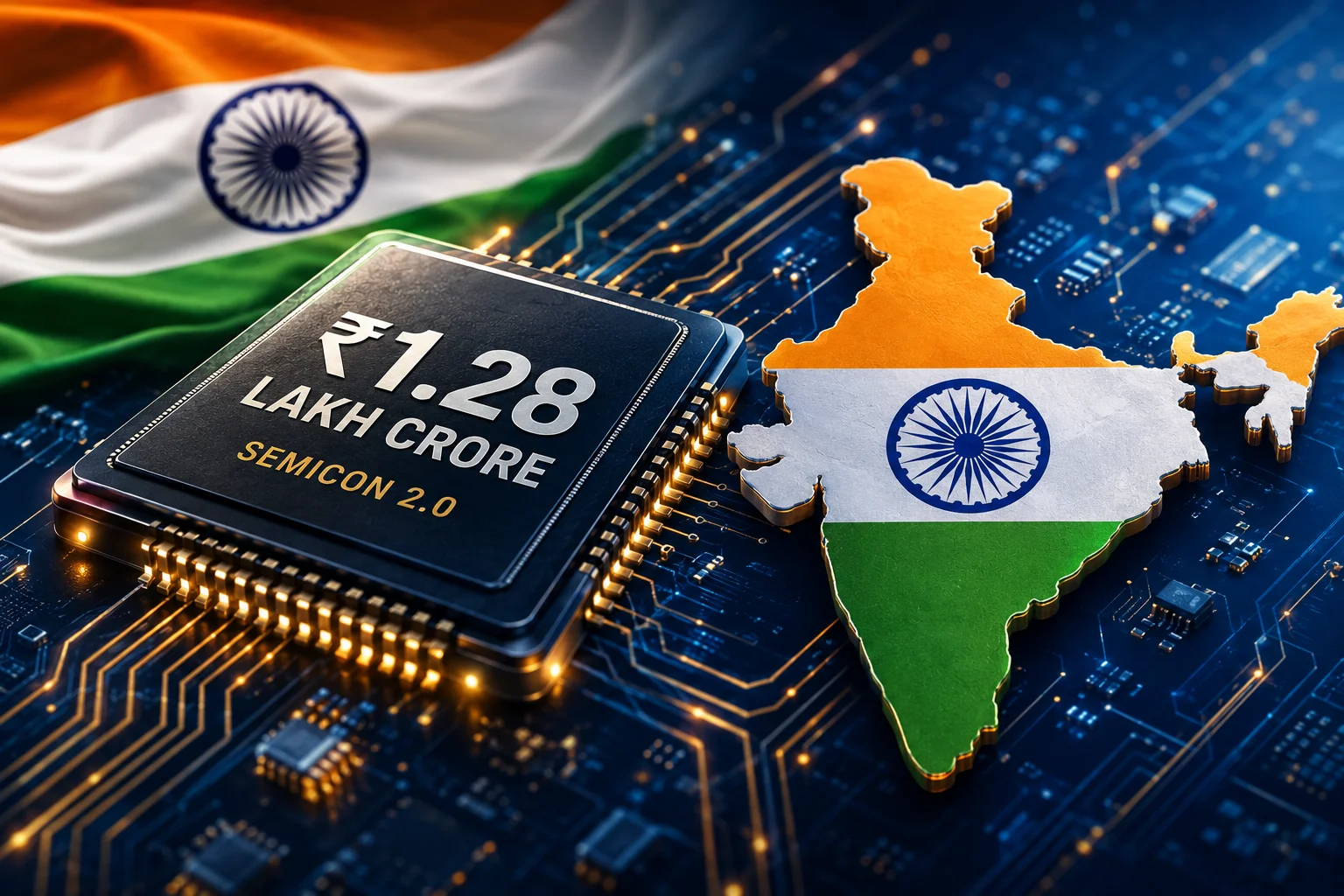
- The Indian Cabinet has approved ₹1.28 Lakh Crore for the Semicon 2.0 program to expand the domestic semiconductor ecosystem.
- Under the new policy, the government offers a flat 50% fiscal support for setting up semiconductor fabs, display fabs, and compound semiconductor units.
- This move aims to reduce India's electronics import bill, which is currently one of the highest after oil and gold.
- The funding will also support the 'Design Linked Incentive' (DLI) scheme to help Indian startups design chips locally.
- Expect cheaper electronics and high-tech job creation as more global giants like Micron and Tata expand their operations in 2026 and beyond.
The Big News: India is Doubling Down on Chips
So, here is the thing—India is no longer just dreaming about making chips; we are actually doing it. Today, Wednesday, 15 July 2026, the Union Cabinet officially pulled the trigger on the Semicon 2.0 program. If you thought the first version of the Semiconductor Mission was big, this one is a different beast altogether. We are talking about a massive ₹1.28 Lakh Crore investment. That is a lot of zeroes, and it shows how serious the government is about making India a global tech powerhouse.
You might be wondering why this matters to you. Look at everything around you—your smartphone, your smart TV, your EV scooter, even your microwave. Everything runs on semiconductors. For decades, we have been importing these tiny pieces of silicon from Taiwan, China, and the US. But now, the goal is simple: 'Make in India' for the world. With Semicon 2.0, the government isn't just inviting companies to build factories; they are building an entire ecosystem from the ground up.
How We Got Here: From 1.0 to 2.0
Let’s take a quick trip back. A couple of years ago, when the first Semicon India program launched, there was a lot of skepticism. People asked, 'Can India really compete with Taiwan?' But then things started moving. We saw Tata Electronics partnering with PSMC for the Dholera fab, and Micron setting up its massive ATMP plant in Sanand. As of now, in mid-2026, those plants are already nearing completion or are in early production phases. The momentum is real.
Semicon 1.0 was like the foundation of a house. It proved that big players are willing to bet on India. But Semicon 2.0 is the actual construction of the skyscraper. The government realized that ₹76,000 crore wasn't going to be enough if we wanted to lead in the long term. This new ₹1.28 Lakh Crore budget is designed to sustain this growth for the next decade. It covers everything from raw materials and chemicals to the final packaging of the chips. It is a full-stack approach that we haven't seen before in the Indian tech space.
Breaking Down the Numbers: Where is the Money Going?
The ₹1.28 Lakh Crore isn't just a random number thrown at a wall. It is strategically divided to cover multiple sectors. First, a huge chunk goes into fiscal support. The government is offering to pay 50% of the project cost for setting up fabs. If a company wants to build a ₹20,000 crore factory, the government steps in with ₹10,000 crore. This kind of 'skin in the game' is what attracts giants like Intel or TSMC to look at India more seriously.
Then there is the focus on 'Compound Semiconductors.' These aren't your regular silicon chips; these are made from materials like Gallium Nitride (GaN) or Silicon Carbide (SiC). Why should you care? Because these are the chips that make fast chargers smaller and EVs travel longer distances on a single charge. Semicon 2.0 puts a heavy emphasis on these next-gen technologies. Additionally, a significant portion is kept for R&D and the Design Linked Incentive (DLI) scheme, ensuring that Indian engineers aren't just working in factories but are actually designing the chips of the future.
What This Means for the Indian Consumer
Let's talk about the real-world impact. Currently, when you buy a high-end smartphone in India, a large part of that price goes toward the cost of imported components, especially the processor and the display. By manufacturing these in India, companies can save significantly on logistics and import duties. In the next 2-3 years, we could see the 'India-made' tag on the processors inside our phones, leading to more aggressive pricing on platforms like Flipkart and Amazon India.
But it's not just about prices. It's about security and availability. Remember the chip shortage during the pandemic? Cars had 6-month waiting periods because of a tiny chip. By having our own fabs, India becomes self-reliant. Whether it's for 5G towers, IRCTC servers, or UPI infrastructure, we won't have to wait for a shipment from halfway across the world. This is about 'Atmanirbhar Bharat' in its truest sense—controlling the brains of our digital economy.
The Challenges: It’s Not All Smooth Sailing
I’ve been tracking this space for a while, and honestly, we need to be realistic. Building a semiconductor fab is not like building a smartphone assembly plant. It requires millions of gallons of ultrapure water, a 24/7 uninterrupted power supply, and a highly skilled workforce. Even a 1-second power flicker can ruin an entire batch of silicon wafers worth millions of dollars. While the ₹1.28 Lakh Crore budget solves the money problem, the infrastructure challenge remains.
Another hurdle is the talent gap. We have thousands of brilliant VLSI engineers, but most of them currently work for global firms in Bengaluru or Chennai, designing chips for the US or Europe. Bringing that talent back to work on Indian-owned IP is going to be a challenge. The government is trying to solve this by partnering with universities, but it will take time. We are playing a long game here, and we shouldn't expect a 'Made in India' NVIDIA-level GPU by next year.
TamilTech’s Take: Is it Worth the Hype?
So, what do we think? At TamilTech, we believe this is probably the most important policy decision of the decade. Yes, it’s a lot of taxpayer money, but look at it as an investment. Every rupee spent here has a multiplier effect. It creates high-paying engineering jobs, boosts the local supply chain, and puts India on the map as a high-tech manufacturing hub. We are moving away from being just a 'service nation' to a 'product nation.'
If you are a student or a young professional in ECE or Mechanical engineering, this is your golden era. The demand for semiconductor professionals in India is going to skyrocket by 2027. Our advice? Keep an eye on the companies getting these incentives. Whether it's the Tata-PSMC project or the new players coming in under Semicon 2.0, these are the places where the future is being built. India is finally playing in the big leagues of silicon, and we are here for it.
What to Expect Next?
Over the next few months, expect a flurry of MoUs (Memorandums of Understanding). We will likely see more European and Japanese firms scouting for land in states like Gujarat, Tamil Nadu, and Karnataka. The government is also expected to announce specific incentives for the 'Display Fab'—the factories that make the screens for our phones and laptops. We will be covering every single update right here, so stay tuned. The silicon revolution in India has officially entered its second gear.





Comments (0)
Be the first to comment!