


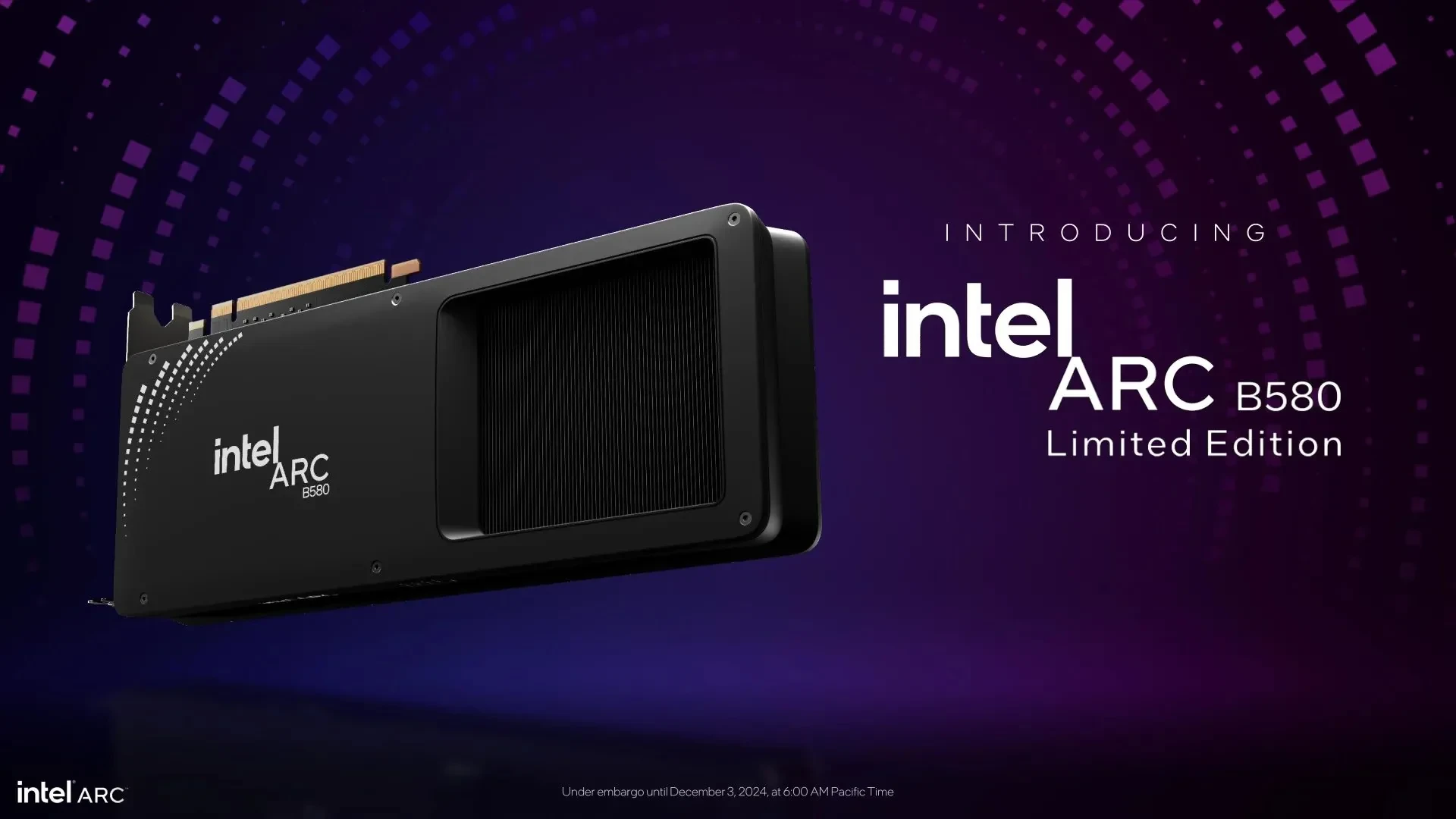
Intel GPU news — but not the kind gamers wanted
So Intel is back with new Arc GPUs, and the announcement is reportedly set for March 25. Before you get excited thinking this is the gaming card you've been waiting for — I have to be upfront. These are workstation GPUs, not gaming cards. If you're a gamer looking for Intel's next move in consumer graphics, you're going to be disappointed again.
But that doesn't mean this isn't interesting. Let me explain what's actually being announced and why it matters — just not to the people who'd normally follow GPU news.
What are the Arc Pro B70 and B65?
According to VideoCardz, Intel has set an embargo date for two cards called the Arc Pro B70 and Arc Pro B65, both part of what's being called the "Big Battlemage" line. The key word here is Pro — these are professional workstation graphics cards, similar to how Nvidia has its RTX series for gaming and its RTX Pro or Quadro series for professional work.
The specs are actually impressive for what they are:
The Arc Pro B70 comes with 32 Xe2 cores and a power rating of 160W to 290W — that's a pretty wide range, suggesting different variants or power modes. It packs 32GB of ECC GDDR6 memory. The ECC part is important — Error Correcting Code memory means the GPU can detect and correct memory errors, which is critical for professional workloads like 3D rendering, scientific simulation, and AI inference where a single bit error could corrupt hours of work.
The Arc Pro B65 has 20 Xe2 cores and a fixed 200W power rating. It also has 32GB of ECC GDDR6 — same memory amount as the B70, just fewer compute cores.
Both cards are clearly aimed at engineers, content creators doing professional 3D work, AI researchers, and corporate workstation users — not someone in a Bangalore apartment trying to run GTA 6 at 4K.
Why is Intel doing this instead of gaming cards?
This is the part that's a bit painful to write as someone who hoped Intel would become a serious third option in consumer gaming GPUs. Intel's Arc gaming cards — specifically the B580 and B570 — were actually well-received in the budget and mid-range gaming space. The Arc B580 was a genuinely good value GPU when it launched.
But Intel reportedly shelved the Arc B770, which would have been the high-end gaming card in the Battlemage lineup. So instead of competing with Nvidia's RTX 5070 or AMD's RX 9070 XT at the upper gaming tier, Intel is pivoting toward the professional market where margins are better and competition from AMD and Nvidia's consumer lines doesn't directly apply.
The professional GPU market is lucrative. Nvidia's workstation cards — old Quadro, now RTX Pro — sell for significantly higher margins than gaming cards. Intel clearly sees an opportunity to carve out space there with the Xe2 architecture that already proved itself in the gaming Arc cards.
What does this mean for Indian buyers?
For the average Indian gamer or PC builder — honestly, nothing immediately. These workstation cards will be expensive, won't offer gaming optimizations like frame generation or high refresh rate support, and are targeted at corporate buyers and professional workstation builders.
In India, professional GPU cards from Nvidia and AMD are available through business channels and specialty retailers, not the consumer Flipkart or Amazon listings. Expect these Intel Pro cards to follow the same path — priced probably in the ₹60,000–₹1,20,000 range or higher, sold through enterprise channels to design studios, engineering firms, and research institutions.
If you're a developer, data scientist, or AI researcher in India who does heavy GPU compute and wants an alternative to expensive Nvidia workstation cards — these might eventually be worth watching. The 32GB ECC GDDR6 at potentially lower price than comparable Nvidia options could be interesting for local AI inference workloads or 3D rendering pipelines.
For gaming? Keep looking at the AMD RX 9070 XT or Nvidia RTX 5070 Ti in the ₹65,000–₹95,000 range. Intel isn't competing there with these cards.
Intel's Arc situation — an honest assessment
I want to be fair to Intel here. Their Arc gaming cards — especially the B580 — were a genuine step forward and offered real competition to AMD and Nvidia in the ₹20,000–₹35,000 budget range. Indian gamers with tight budgets had a legitimate third option for the first time in years.
But the decision to shelve the B770 and pivot to workstation cards is a retreat from the consumer GPU fight. Whether that's financially smart for Intel is one question. Whether it's good for the consumer GPU market is another — less competition means Nvidia and AMD have less pressure to keep prices down.
The GPU market in India is expensive enough already. An Intel that was genuinely competing at the mid-to-high gaming tier would have been healthy for everyone's wallets.
What to watch on March 25
The Arc Pro B70 and B65 announcement on March 25 will likely reveal official specs, pricing, and availability. Watch for how Intel positions these against Nvidia's RTX Pro and AMD's Radeon Pro workstation lines.
If Intel prices these aggressively — and they've shown they can do that in the consumer space with the B580 — there might be a real story here for Indian professional users looking for affordable workstation GPUs. But for gaming? This chapter closes without the Arc B770 we were hoping for.






Comments (0)
Be the first to comment!