


Key Takeaways
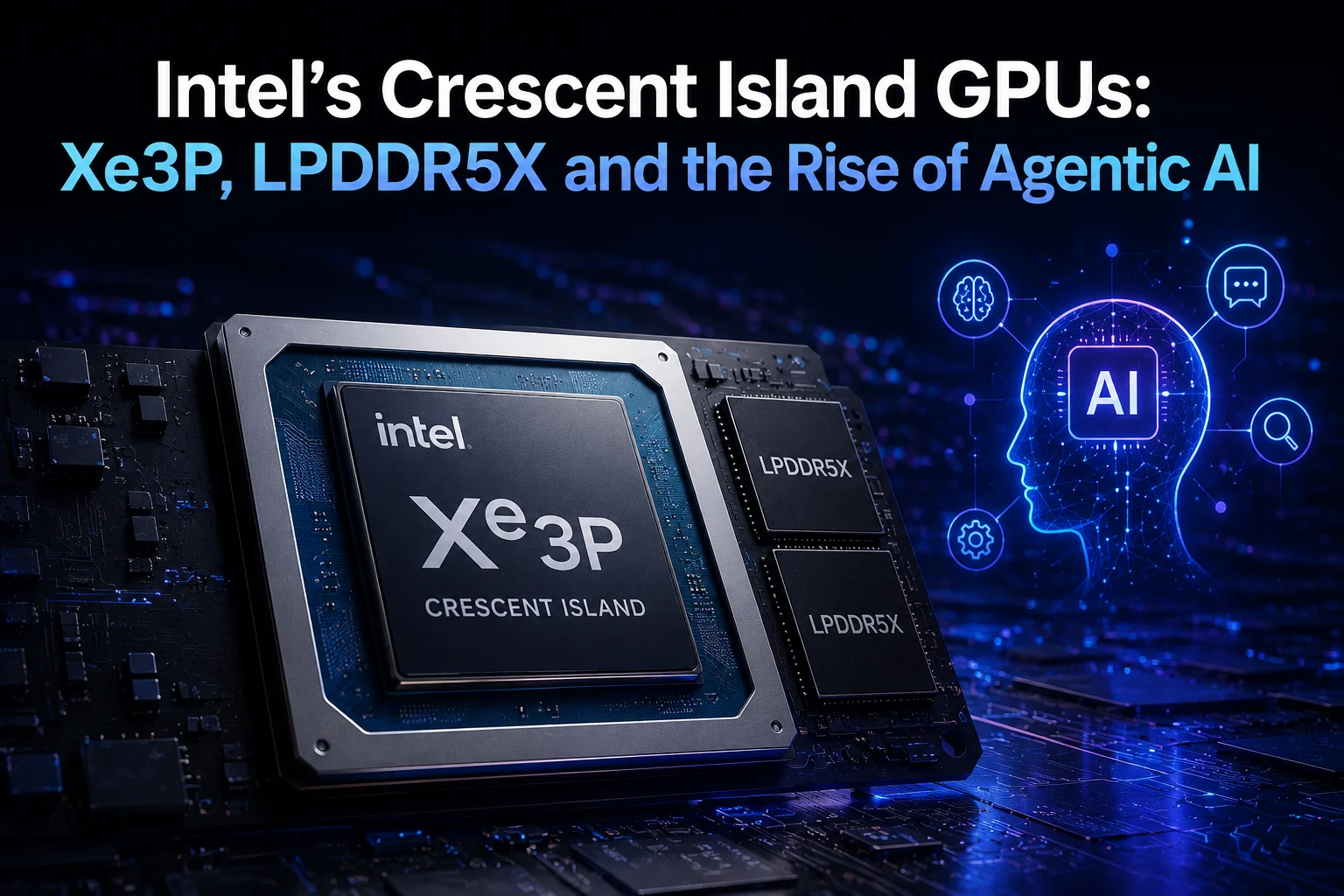
- Intel’s Crescent Island GPUs use Xe3P chips with 144 GB of LPDDR5X memory, a first for a data‑center accelerator.
- LPDDR5X cuts board‑level cost by up to 30% compared to HBM‑3 while still delivering 1.2 TB/s memory bandwidth.
- In India, the GPUs are expected to ship Q4 2026 at an estimated price of ₹3.2 lakhs per unit, targeting cloud providers and large‑scale AI labs.
- TamilTech’s verdict: a smart, cost‑effective option for agentic AI workloads, but early‑adopters should watch software‑stack maturity.
Alright, let’s break it down. Intel just dropped a new line of data‑center GPUs called “Crescent Island”. The headline‑grabber is the Xe3P architecture – the third generation of Intel’s Xe‑Series compute cores – and the fact that it finally says goodbye to HBM and embraces LPDDR5X memory. Intel is calling these chips “built for agentic AI”, meaning they’re tuned for large‑scale, self‑directing models like autonomous agents, multimodal assistants and next‑gen recommendation engines.
What’s the news?
During a virtual launch on June 1 2026, Intel announced three variants of the Crescent Island GPU: the 56‑core, 84‑core and 112‑core models. All of them ship with a massive 144 GB of LPDDR5X running at 6400 MT/s. The memory bandwidth clocks in at a respectable 1.2 TB/s – not as high as HBM‑3’s 2 TB/s, but the price‑per‑GB advantage is huge. Intel also unveiled a new silicon‑level scheduler that can juggle up to 128 concurrent agentic threads, a feature they say will cut inference latency for autonomous agents by 35% compared to their older Xe2‑based GPUs.
Technical deep‑dive
Here are the nitty‑gritty specs that matter to engineers:
- Xe3P core: 2 nm process, 84 mm² die, 112 compute units (CUs) in the top model.
- Memory: 144 GB LPDDR5X, 6400 MT/s, 1.2 TB/s bandwidth, 30 W lower power draw than comparable HBM‑3 solutions.
- Tensor cores: 4th‑gen INT8/FP16/FP32 mixed‑precision units, up to 150 TOPS (tera‑ops) on INT8.
- Interconnect: PCIe 5.0 x16, plus Intel’s proprietary “FlexFabric” for GPU‑to‑GPU NVLink‑style bandwidth (up to 200 GB/s).
- Software stack: Integrated with Intel’s oneAPI AI Runtime, supports PyTorch, TensorFlow and the new Agentic AI SDK (beta).
Why LPDDR5X? Intel’s engineering team argues that HBM’s cost and supply‑chain constraints have been a bottleneck for many Indian data‑centers, especially those scaling out many nodes. LPDDR5X can be sourced from multiple vendors (Samsung, SK Hynix, Micron), and its lower power envelope means less cooling overhead – a win for hot‑climate racks in Chennai or Bengaluru.
Impact on India
For Indian cloud providers like Netmagic, Tata Communications and the emerging AI‑focused startups in Hyderabad’s “AI corridor”, the Crescent Island GPUs could be a game‑changer. Intel estimates a 30‑40% lower total‑cost‑of‑ownership (TCO) versus HBM‑based competitors when you factor in board‑level BOM, power and cooling.
Pricing is still under NDA, but insiders suggest a list price around ₹3.2 lakhs per GPU for the 84‑core model, with volume discounts for Indian data‑center operators. Availability is slated for Q4 2026, initially in the US and EU, with Indian shipments following the “Intel India 2026 rollout” timeline.
TamilTech’s take
We’re excited because Intel finally addressed the cost‑vs‑performance trade‑off that has held back many Indian AI labs. LPDDR5X isn’t as fast as HBM‑3, but the bandwidth is still ample for most agentic workloads – think large language model (LLM) inference, reinforcement‑learning agents, and multimodal pipelines.
Pros:
- Lower upfront cost – good for startups with limited cap‑ex.
- Reduced power and cooling demand – fits well with India’s hot data‑center environments.
- Strong software integration via oneAPI, which is already supported on most Indian‑built clusters.
Cons:
- Memory bandwidth ceiling may limit the very largest models ( > 70 B parameters ) unless you scale out more nodes.
- Agentic AI SDK is still in beta; early adopters may hit rough edges.
- Competition from Nvidia’s H100/H200 and AMD’s MI300X still offers higher raw performance.
Bottom line: If you’re building a production‑grade AI service that needs to run many autonomous agents concurrently – like a conversational assistant for banking or a real‑time recommendation engine for e‑commerce – Crescent Island gives you a cost‑effective path. If you’re chasing the absolute top‑end performance for the biggest LLMs, you might still lean on Nvidia’s ecosystem for now.
What’s next?
Intel has promised a “Crescent Island II” refresh in early 2027, likely moving to 1.5 nm and adding HBM‑3 as an optional memory tier. In the meantime, keep an eye on the oneAPI Agentic AI SDK updates – the first stable release is expected by October 2026.
For Indian AI founders, the practical step is to start evaluating the Xe3P benchmark numbers against your current workload. If you’re on a tight budget and your models sit under 30 B parameters, start planning a pilot with a single 84‑core node and measure latency, cost and power.





Comments (0)
Be the first to comment!