


Key Takeaways
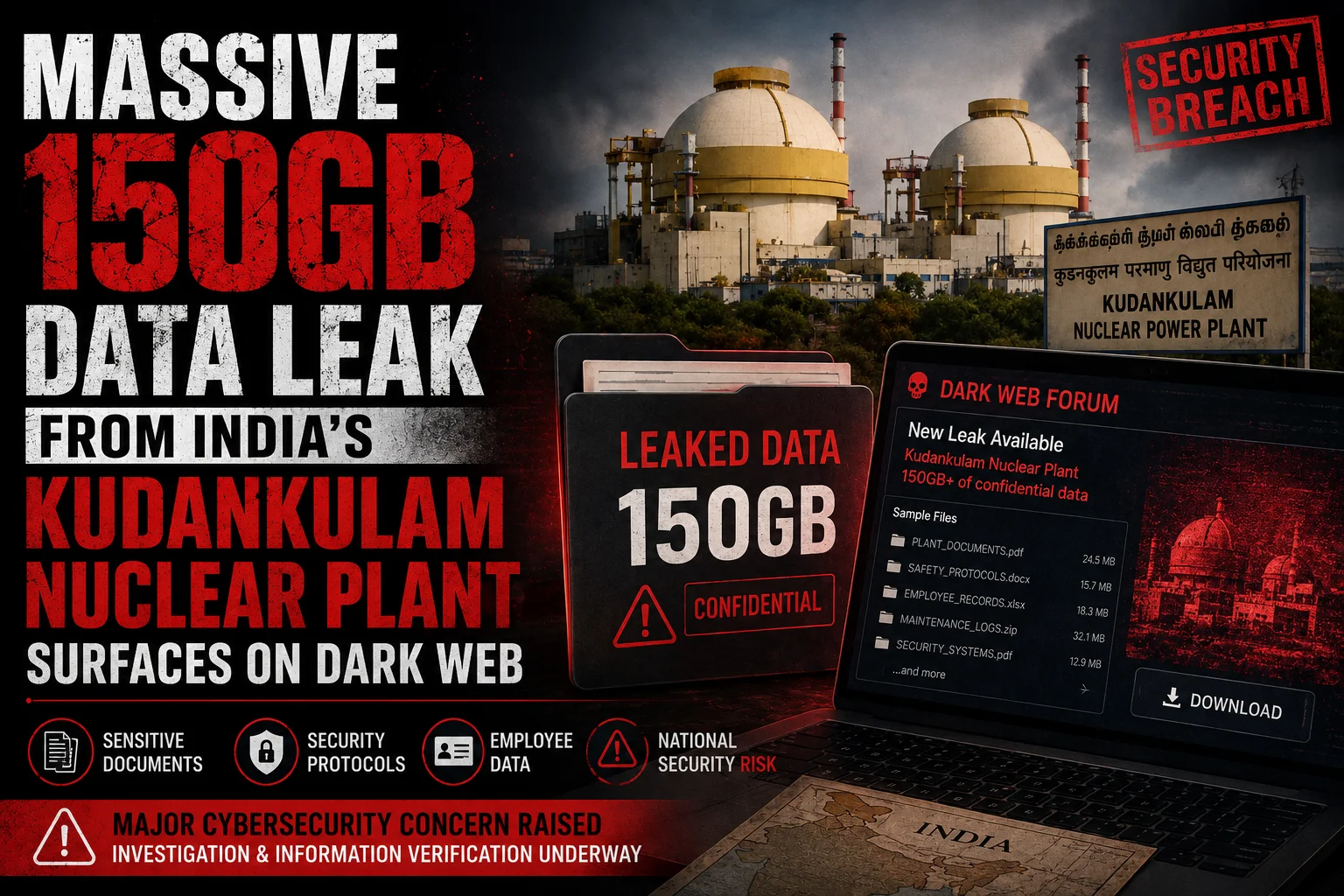
- A massive 150GB data dump containing internal blueprints and employee credentials from the Kudankulam Nuclear Power Plant (KNPP) has been spotted on Dark Web forums.
- The leaked data includes sensitive network diagrams, server configurations, and personal identification documents of over 2,000 employees.
- This breach marks the most significant threat to India's critical infrastructure in 2026, raising alarms about potential physical sabotage risks.
- Security experts recommend an immediate 'Zero-Trust' audit across all Indian nuclear and power installations to prevent further lateral movement by hackers.
The Unfolding Crisis at Kudankulam
It’s a quiet Thursday in July 2026, but the Indian cybersecurity landscape just hit a massive turbulence. We’ve been tracking some disturbing activity on high-level Dark Web forums, and the news isn't good. Sensitive files belonging to the Kudankulam Nuclear Power Plant (KNPP), India's largest nuclear energy facility, have been put up for sale. This isn't just a small data leak; we are talking about architectural blueprints, internal network maps, and deeply personal data of the people who run the plant. For a country that is rapidly moving towards nuclear self-reliance in 2026, this is a wake-up call that we can’t afford to hit the snooze button on.
Now, you might be thinking, "Isn't the nuclear plant's network air-gapped?" That’s what we were always told. An air-gapped system means it’s not connected to the public internet, making it supposedly unhackable from the outside. But as we’ve seen in recent years, the 'air-gap' is more of a suggestion than a hard rule when employees use infected USB drives or when maintenance laptops bridge the gap. The files we’ve seen suggest that someone, somewhere, managed to bypass these protocols, and now the crown jewels of our energy sector are being auctioned to the highest bidder in the digital underworld.
What Exactly Is in the 150GB Leak?
Our team at TamilTech took a deep dive into the listings, and the sheer volume of data is staggering. We aren't just looking at basic emails. The leak includes high-resolution CAD drawings of reactor components, which is a nightmare scenario for national security. If these blueprints fall into the wrong hands, they could be used to identify structural vulnerabilities. Beyond the hardware, there’s a massive folder containing 'Employee PII' (Personally Identifiable Information). This includes Aadhaar copies, internal login IDs, and even home addresses of senior scientists and engineers. In 2026, where identity theft is at an all-time high, this puts the lives and families of our top tech minds at risk.
The most technical and perhaps most dangerous part of the leak involves the SCADA (Supervisory Control and Data Acquisition) system diagrams. These systems are the brains of the power plant—they control the cooling, the pressure, and the power output. The leaked files show exactly how these systems are networked together. With this information, a sophisticated state-sponsored hacking group wouldn't even need to be on-site to cause trouble. They could theoretically plan a remote 'logic bomb' or a ransomware attack that could cripple the power supply to millions of homes across South India. This isn't just about data; it's about the physical safety of the entire region.
The History of Attacks on Indian Infrastructure
Let’s look at how we got here. This isn't the first time Kudankulam has been in the crosshairs. Back in 2019, there was the Dtrack malware incident, which the government eventually confirmed. Since then, we’ve seen a steady increase in probes and 'pings' against Indian government servers. By 2025, the frequency of these attacks tripled. Hackers are no longer just looking for credit card numbers; they are looking for leverage. They want to know how our grid works, where our weak points are, and how they can use that information during a geopolitical conflict. The 2026 leak seems to be the culmination of years of quiet, persistent infiltration.
The shift in hacking tactics is also worth noting. In the past, hackers would 'smash and grab'—they’d get in, take what they could, and leave. But the 2026 data dump shows evidence of 'Advanced Persistent Threats' (APTs). These are groups that stay inside a network for months or even years, slowly exfiltrating data without being noticed. They behave like digital spies. The fact that blueprints from various stages of the plant's expansion are included in the leak suggests that the breach wasn't a one-time event, but a long-term failure of internal security protocols that went undetected for far too long.
The India Impact: What This Means for You
You might be wondering, "I’m just a guy using a smartphone in Chennai, why should I care about a nuclear plant leak?" Here is why: India’s economy in 2026 runs on electricity. From the UPI transactions you make at a tea shop to the massive data centers powering our AI startups, everything depends on a stable grid. Kudankulam is a massive contributor to that grid. If a cyberattack leads to a shutdown, we aren't just talking about a couple of hours of power cut. We are talking about a systemic failure that could take days to fix, costing the Indian economy billions of rupees in lost productivity. The price of everything from groceries to gadgets would spike if our energy security is compromised.
Furthermore, there's the privacy angle. If the data of 2,000+ employees is out there, it’s not just their problem. These employees have access to other government portals. A hacker could use a scientist's stolen credentials to log into other sensitive Indian databases, like the ISRO or DRDO networks. It’s a domino effect. Once one major pillar of our national security is breached, every other pillar becomes a little more wobbly. For the common man, this means the 'Digital India' we are so proud of in 2026 needs a much stronger shield than what we currently have in place.
How to Protect Critical Infrastructure: A Step-by-Step Approach
While the government handles the high-level stuff, there are technical lessons here for every organization in India. If you are running a business or a tech startup, you need to learn from the KNPP failure. First, the 'Air-Gap' is a myth—never trust it. Instead, implement a 'Zero-Trust Architecture.' This means even if someone is inside your internal network, they are not automatically trusted. Every single request for data must be authenticated and authorized. Second, use hardware-based MFA (Multi-Factor Authentication). Standard SMS-based OTPs are easily bypassed in 2026. Security keys like YubiKeys should be mandatory for anyone with administrative access.
Third, we need to talk about 'Data Sharding' and encryption. Sensitive blueprints should never be stored in a single, easily accessible directory. They should be encrypted at rest and split across different secure servers so that even if a hacker gets into one part of the system, they only get a useless fragment of the data. Finally, regular 'Red Teaming' exercises are a must. The government needs to hire ethical hackers to constantly attack our own infrastructure to find the holes before the bad guys do. If we aren't testing our own defenses, we are just waiting for the next Dark Web listing to happen.
TamilTech’s Honest Take: What Happens Next?
At TamilTech, we believe this is a massive wake-up call for the Ministry of Electronics and Information Technology (MeitY). We’ve spent years talking about 5G, 6G, and AI, but we’ve clearly neglected the 'boring' stuff like server hardening and internal security audits at our most critical sites. It’s embarrassing that files of this magnitude are sitting on a forum for anyone with a Tor browser to see. We expect the government to issue a formal denial initially, followed by a 'limited investigation.' But the data doesn't lie. The samples we've seen are far too specific to be fake.
What we expect next is a massive overhaul of the cybersecurity laws in India. We might see stricter penalties for companies—and even government bodies—that fail to protect sensitive data. For the general public, don't panic, but stay informed. These leaks often lead to an increase in phishing attacks. If you get an email or a message claiming to be from a government agency asking for your details, be extra careful. The hackers now have the 'insider' lingo and employee names to make their scams look very convincing. Stay safe, stay updated, and let’s hope 2026 is the year we finally get serious about our digital borders.




Comments (0)
Be the first to comment!