


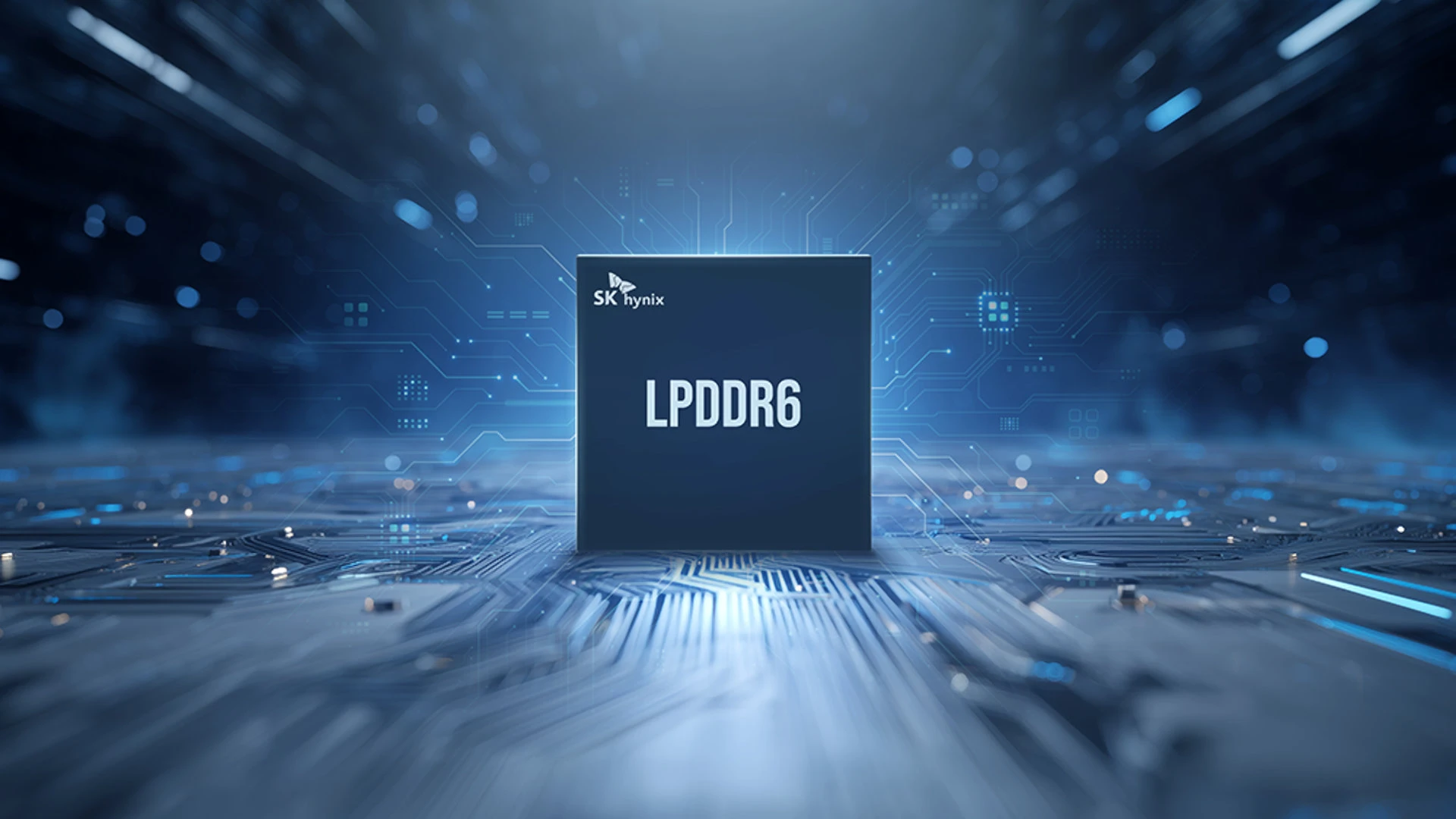
LPDDR6 Memory Is Coming: What It Means for Smartphones, Laptops, and AI Devices
The memory inside your smartphone and laptop is about to take its biggest leap forward in years. LPDDR6 — the next generation of Low Power Double Data Rate memory — is on the horizon, and the numbers are staggering. With nearly double the bandwidth of its predecessor LPDDR5X and significantly improved power efficiency, LPDDR6 is set to redefine what mobile and thin-and-light devices can accomplish.
From faster app launches and smoother multitasking to enabling on-device AI at previously impossible scales, LPDDR6 is not just an incremental upgrade — it is a generational leap that will shape the next five years of computing.
What Is LPDDR Memory?
LPDDR stands for Low Power Double Data Rate. It is the type of RAM used in almost all modern smartphones, tablets, and increasingly in ultra-thin laptops. The "LP" prefix is key — it is specifically engineered to balance performance with power efficiency, making it ideal for battery-powered devices.
Unlike desktop DDR memory (DDR5, DDR4), LPDDR is soldered directly onto the device's main board — it cannot be upgraded later. This makes the LPDDR generation a device ships with critically important for its long-term performance.
The LPDDR Evolution: How Far We've Come
| Generation | Max Speed | Max Bandwidth | Key Devices |
|---|---|---|---|
| LPDDR4X | 4266 Mbps | ~34 GB/s | Snapdragon 865 era phones |
| LPDDR5 | 6400 Mbps | ~51 GB/s | Snapdragon 888, Exynos 2100 |
| LPDDR5X | 8533 Mbps | ~68 GB/s | Snapdragon 8 Gen 2/3, Apple M3 |
| LPDDR6 (upcoming) | ~14400 Mbps | ~115 GB/s | Next-gen flagships, AI PCs |
LPDDR6 is expected to deliver memory bandwidth of up to 115 GB/s — a ~70% jump over LPDDR5X — while also improving power efficiency by approximately 25%. This combination of more speed with less power draw is the hallmark of each LPDDR generation, but the LPDDR6 leap is particularly significant.
LPDDR6: The Technical Breakthrough
LPDDR6 achieves its performance gains through several key innovations:
1. Higher Data Rates
LPDDR6 targets speeds of up to 14,400 Mbps per pin — nearly double LPDDR5X's 8,533 Mbps. This is achieved through improved signal integrity techniques, better on-die termination, and refined manufacturing processes at advanced nodes (3nm and below).
2. Wider Bus Architecture
LPDDR6 introduces a wider memory bus in high-end configurations, enabling more data to flow between the memory and the processor simultaneously. This is particularly critical for AI workloads that require feeding massive amounts of data to the model's matrix multiplication units.
3. Enhanced Power Management
LPDDR6 features improved Deep Power Down modes and more granular power gating — meaning the memory can more aggressively reduce power consumption when not in active use. This translates directly to better battery life on smartphones and laptops.
4. Improved Error Correction (ECC)
LPDDR6 is expected to include enhanced on-die ECC (Error Correcting Code) capabilities — important for AI inference workloads where data integrity is critical and errors in weight matrices can silently degrade model accuracy.
Why LPDDR6 Matters for AI
Artificial Intelligence is the single most important driver of the LPDDR6 development push. On-device AI — running large language models, image generation, and real-time inference locally on smartphones and laptops — is fundamentally a memory bandwidth problem.
AI models require the processor to rapidly load billions of parameters from memory, perform calculations, and repeat — millions of times per second. The faster the memory bandwidth, the more powerful the on-device AI experience.
With LPDDR6's ~115 GB/s bandwidth:
- Smartphones will be able to run significantly larger language models locally — enabling more capable on-device assistants without cloud dependency
- Real-time AI video processing, like AI-powered background replacement and object removal in video calls, becomes practical at higher resolutions
- AI photo enhancement algorithms can process multiple frames simultaneously for computational photography
- On-device translation and transcription becomes near-instantaneous even for complex languages
Qualcomm, MediaTek, and Apple are all reportedly designing their next-generation SoCs with LPDDR6 support — with Qualcomm's Snapdragon 8 Elite successor and Apple's M4-generation successors expected to be among the first to adopt the new standard.
Impact on Smartphones
For flagship smartphones, LPDDR6 will deliver a noticeable performance step change:
- App launch speeds: Apps preloaded in memory can be served to the processor faster, reducing perceived latency
- Gaming: Open-world games that stream assets from memory in real-time will see smoother texture loading and reduced pop-in
- Camera: Computational photography pipelines — particularly multi-frame HDR, night mode, and AI scene processing — will execute faster, reducing shutter lag
- Multitasking: More apps can remain active in memory simultaneously without being killed in the background
Samsung and SK Hynix — the two dominant LPDDR memory manufacturers — have both confirmed LPDDR6 development programs. Samsung is expected to begin mass production of LPDDR6 modules in late 2025, with devices featuring the new memory reaching consumers in 2026.
Impact on Thin-and-Light Laptops
For the PC market, LPDDR6 is particularly exciting for ultra-thin laptops — devices like the MacBook Air, Dell XPS 13, and Snapdragon-powered Copilot+ PCs that use LPDDR rather than traditional SO-DIMM desktop RAM.
LPDDR6 in laptops means:
- AI Copilot features and on-device LLMs can process queries faster and handle longer context windows
- Video editing and rendering timelines compress significantly
- Better battery life despite higher performance — power efficiency gains directly extend unplugged working time
- The gap between mobile chips (like Apple Silicon) and desktop processors narrows further
When Will LPDDR6 Devices Arrive?
The JEDEC (the international standards body for memory) is finalizing the LPDDR6 specification. Based on industry timelines:
- 2025: JEDEC finalizes LPDDR6 standard; Samsung and SK Hynix begin qualification samples
- Late 2025 / Early 2026: First SoC announcements with LPDDR6 support (likely Qualcomm and MediaTek)
- 2026: First LPDDR6 smartphones and laptops reach consumers — likely starting with ultra-premium flagships
- 2027–2028: LPDDR6 becomes mainstream across mid-range and budget segments
What About India?
India's rapidly growing smartphone market — now the world's second largest — will see LPDDR6 devices arrive through the usual channels: Samsung Galaxy S series, Apple iPhone, and OnePlus/Xiaomi flagships will be among the first to feature the new memory standard.
For India's booming AI PC market, LPDDR6 will also be significant. With the government's push for AI adoption in education, healthcare, and business, faster and more efficient on-device AI processing — enabled by LPDDR6 — aligns perfectly with India's digital ambitions.
The trickle-down to mid-range phones (₹20,000–₹40,000) typically happens 2–3 years after flagship introduction — meaning LPDDR6 mid-range devices in India could arrive by 2028–2029.
Conclusion
LPDDR6 represents the most significant memory upgrade in recent years — not just in raw speed numbers but in what it enables. Faster on-device AI, better gaming, smoother multitasking, and longer battery life are all downstream benefits of this fundamental hardware improvement.
As smartphones and laptops increasingly become AI platforms rather than just communication and productivity tools, the memory architecture becomes more critical than ever. LPDDR6 is the foundation that will make the next generation of AI-native devices possible.




Comments (0)
Be the first to comment!