


Key Takeaways
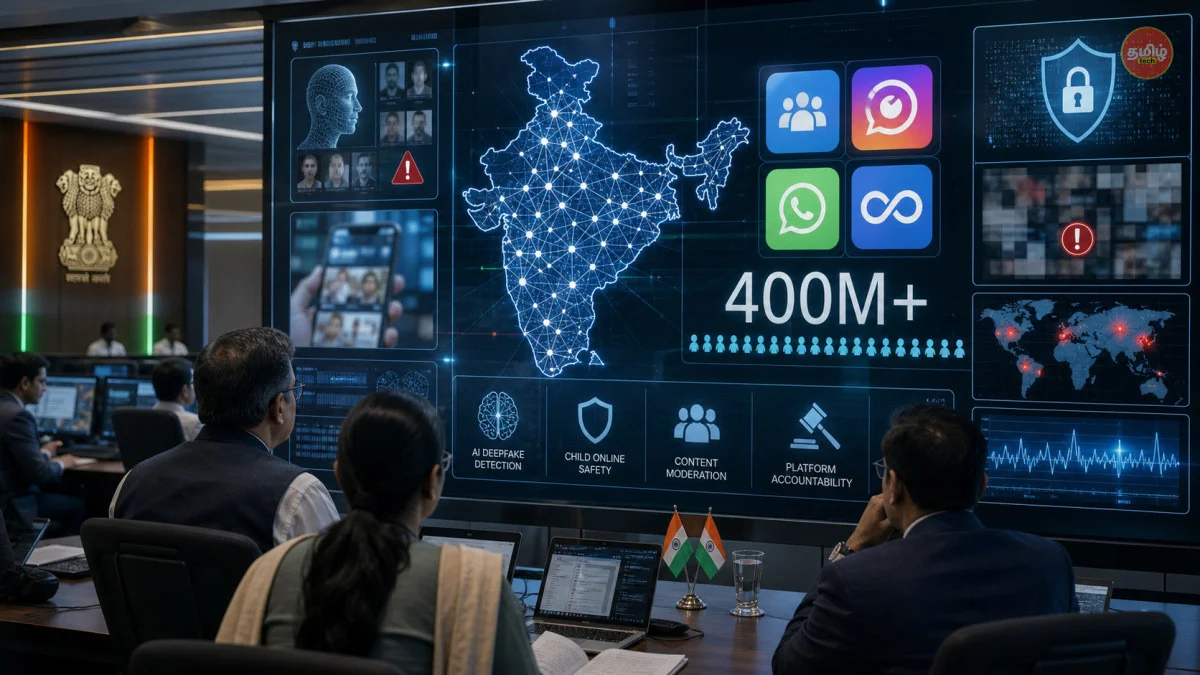
- India's Ministry of Electronics and Information Technology has formally requested Meta to implement advanced detection systems for deepfakes and CSAM by October 2026
- Meta's platforms including Facebook, Instagram, and WhatsApp host over 400 million Indian users, making compliance crucial for the company's Indian operations
- The request includes mandatory AI-powered content scanning and rapid takedown mechanisms within 24 hours of detection
- Failure to comply could result in penalties under India's Digital Personal Data Protection Act 2023
- This move aligns with India's broader strategy to regulate Big Tech while maintaining its position as the world's largest digital market
What's the News
The Indian government has escalated its efforts to combat harmful digital content by formally requesting Meta to implement significant technical changes across its platforms. The directive specifically targets the growing menace of deepfake technology and child sexual abuse material (CSAM) that's increasingly proliferating through Meta's services in India.
According to sources familiar with the matter, the Ministry of Electronics and Information Technology (MeitY) has issued a comprehensive notice to Meta's India headquarters in Hyderabad, demanding immediate action on several fronts. The request comes amid growing concerns about the misuse of artificial intelligence to create convincing fake videos and images, particularly targeting women and children.
Details
The government's technical requirements include implementing state-of-the-art deepfake detection algorithms that can identify manipulated content with 99% accuracy. Meta is also being asked to deploy AI-powered scanning systems capable of detecting CSAM even when it's encrypted or shared through private messaging channels like WhatsApp.
Additionally, the notice mandates the establishment of a 24/7 monitoring team based in India to handle content moderation requests. Meta must also provide regular reports to Indian authorities about the number of deepfakes and CSAM content removed from their platforms, along with details about the perpetrators identified through their systems.
The technical changes are expected to cost Meta approximately ₹500 crore in infrastructure upgrades and personnel hiring, according to industry estimates. The company has until October 2026 to complete these implementations, with quarterly progress reports to be submitted to the government.
India Impact
This development has significant implications for India's digital ecosystem. With over 400 million Meta users across the country, the changes will affect a substantial portion of India's internet-using population. The move also signals India's willingness to enforce strict regulations on Big Tech companies operating in its market.
Local content creators and digital rights activists have mixed reactions. While many welcome the crackdown on harmful content, others express concerns about potential over-censorship and the impact on legitimate creative expression. The government has assured that the new systems will include safeguards to prevent false positives that could affect innocent users.
India's approach differs from other countries as it balances regulation with its position as a technology hub. The government has emphasized that these measures are not intended to stifle innovation but to create a safer digital environment for all users.
Use Cases
The technical changes will affect various aspects of Meta's services in India. For WhatsApp users, enhanced scanning will occur both in transit and at rest, potentially affecting message delivery speeds during peak hours. Instagram will see new watermarking requirements for AI-generated content, while Facebook will implement stricter verification processes for political advertising.
Businesses using Meta's platforms for marketing will need to adapt to new content guidelines. The changes may impact influencer marketing campaigns, particularly those involving AI-generated content. However, the government has announced a six-month grace period for businesses to comply with the new requirements.
Honest Take
While India's move to regulate Meta's content moderation practices is understandable, the effectiveness of these technical changes remains to be seen. Deepfake technology evolves rapidly, and what works today might be obsolete tomorrow. The government's approach of mandating specific technical solutions rather than outcome-based regulations could create compliance challenges without guaranteeing actual safety improvements.
The real test will be in implementation. Meta has historically been slow to roll out changes in India compared to other markets. If the company treats this as just another regulatory hurdle rather than a genuine commitment to user safety, the impact will be minimal.
What's needed is a collaborative approach between the government, platforms, and civil society. India has the opportunity to create a model for digital content regulation that balances safety with innovation. However, this requires more than just technical fixes – it needs ongoing dialogue and adaptation as technology continues to evolve.




Comments (0)
Be the first to comment!