


Key Takeaways
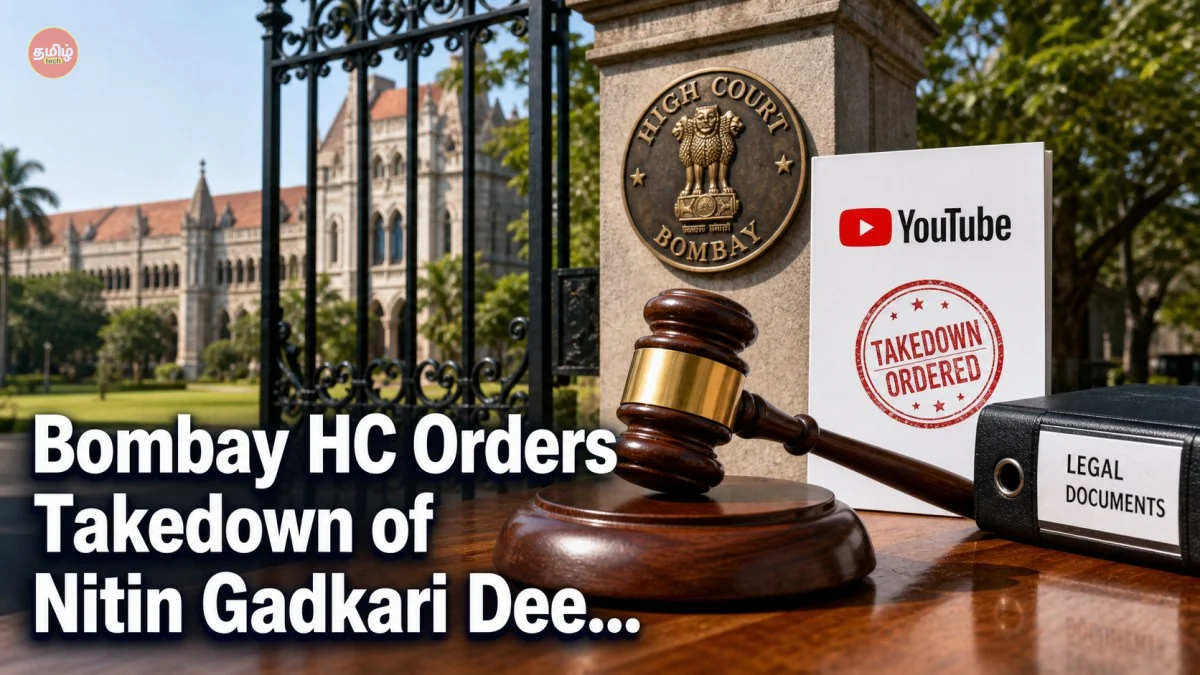
- The Bombay High Court has ordered social media platforms to remove all deepfake videos of Union Minister Nitin Gadkari within 24 hours.
- Platforms like X (formerly Twitter) and YouTube are required to provide the IP addresses and registration details of the accounts that uploaded the content.
- This ruling reinforces the 2026 IT Rules amendments regarding AI-generated content and misinformation in India.
- Users are advised to verify viral political content using official fact-checking tools before sharing to avoid legal complications.
The New Reality of Digital Deception in 2026
As we move further into 2026, the line between reality and digital fabrication has become incredibly thin. We have seen AI evolve from simple face-swaps to hyper-realistic videos that can fool even the sharpest eyes. The latest incident involving Union Minister Nitin Gadkari has brought this issue to the forefront of the Indian legal system. The Bombay High Court has taken a stern stance, ordering the immediate removal of deepfake videos that were being circulated to damage the minister's reputation and mislead the public. This isn't just about one politician; it is about how our legal system is finally catching up with the rapid pace of Generative AI.
The videos in question were sophisticated deepfakes where the minister appeared to be making statements he never actually made. These clips were being widely shared across messaging apps and social media platforms, gaining millions of views before the legal machinery kicked in. What makes this case different from previous ones is the court's insistence on not just removing the content, but also identifying the source. In the past, platforms would often hide behind 'safe harbor' protections, but in 2026, the rules of the game have changed significantly. The court's demand for user data, including IP addresses and account details, sends a clear message to anonymous creators: you are not as invisible as you think.
How the Bombay High Court Handled the Case
The legal proceedings were swift, reflecting the urgency of the situation. The court recognized that in the age of viral content, even a few hours of delay can cause irreparable damage to a person's reputation or even incite public unrest. The judges noted that while freedom of speech is a fundamental right, it does not extend to the creation of synthetic media designed to deceive. By ordering platforms to take down the content, the court has set a precedent that will likely be cited in many more cases throughout 2026. The tech giants involved have been given a tight deadline, proving that the 'wait and watch' approach of the past is no longer acceptable to Indian authorities.
Furthermore, the court's request for user data is a major step toward accountability. For years, deepfake creators operated in the shadows, using VPNs and burner accounts to spread misinformation. However, the Bombay High Court's order forces platforms to cooperate with law enforcement agencies to trace these digital footprints. This move is aligned with the latest digital privacy and security frameworks implemented in India this year, which aim to balance user anonymity with the need for national security and the prevention of digital crimes. It is a tough balancing act, but one that is necessary as AI tools become more accessible to everyone.
The Tech Behind the Deepfakes: Why It's Hard to Spot Them
You might be wondering, why is this such a big deal now? Well, the AI tools available in 2026 are lightyears ahead of what we had in 2024. Today, Generative Adversarial Networks (GANs) and advanced neural networks can replicate a person's voice, tone, and even their micro-expressions with nearly 99% accuracy. These aren't the glitchy videos of the past; these are high-definition, perfectly synced clips that look like they were shot in a professional studio. When such technology is used to create fake political narratives, it poses a direct threat to the democratic process, especially in a country as digitally active as India.
At TamilTech, we have been tracking these developments closely. The ease with which someone can now generate a 'fake' speech using just a few minutes of real audio and video footage is alarming. Most social media users scroll through their feeds quickly and don't take the time to analyze the lighting, the lip-sync, or the background of a video. This 'passive consumption' is exactly what deepfake creators exploit. The Bombay High Court's intervention is a necessary speed bump in an era where misinformation travels faster than the truth. It forces us to ask: if a Union Minister can be targeted like this, what about the average citizen?
India's Legal Shield: IT Rules and AI Governance in 2026
India has been proactive in updating its Information Technology (IT) Rules to tackle the AI menace. As of 2026, platforms are legally obligated to label AI-generated content and have robust mechanisms for reporting deepfakes. The Gadkari case is the first major test of these updated regulations. Under the current laws, platforms can lose their intermediary status—which protects them from being held liable for user-posted content—if they fail to act on court orders regarding misinformation. This is why we are seeing companies like Google, Meta, and X acting much faster than they used to.
For the average Indian user, this means that the digital space is becoming more regulated. While some argue that this could lead to censorship, the focus here is specifically on 'synthetic media' that is harmful or defamatory. The government and the courts are working together to ensure that AI is used for innovation, not for character assassination. If you are a content creator in India today, you need to be extremely careful about using AI tools for parody or satire, as the line between a joke and a legal violation is becoming increasingly blurred.
TamilTech's Honest Take: What You Should Do
Here is what we think at TamilTech: This court order is a massive wake-up call for everyone. We love technology, and we love what AI can do for productivity and creativity, but the misuse of deepfakes is a dark side we cannot ignore. The fact that the court is asking for IP addresses shows that the government is serious about tracking down bad actors. If you receive a video that seems too sensational or out of character for a public figure, don't be the one to hit 'share'. You could unknowingly be part of a misinformation chain that has real-world legal consequences.
Looking ahead, we expect more such rulings. We might even see the introduction of a dedicated 'Deepfake Act' in the Indian Parliament later this year. For now, the best defense is digital literacy. Use tools like Google's 'About this image/video' feature or dedicated AI detectors to verify content. Stay skeptical, stay informed, and remember—just because you see it on your screen in 2026 doesn't mean it actually happened. The Bombay High Court has done its part; now it's up to us as responsible netizens to do ours.



Comments (0)
Be the first to comment!