


Key Takeaways
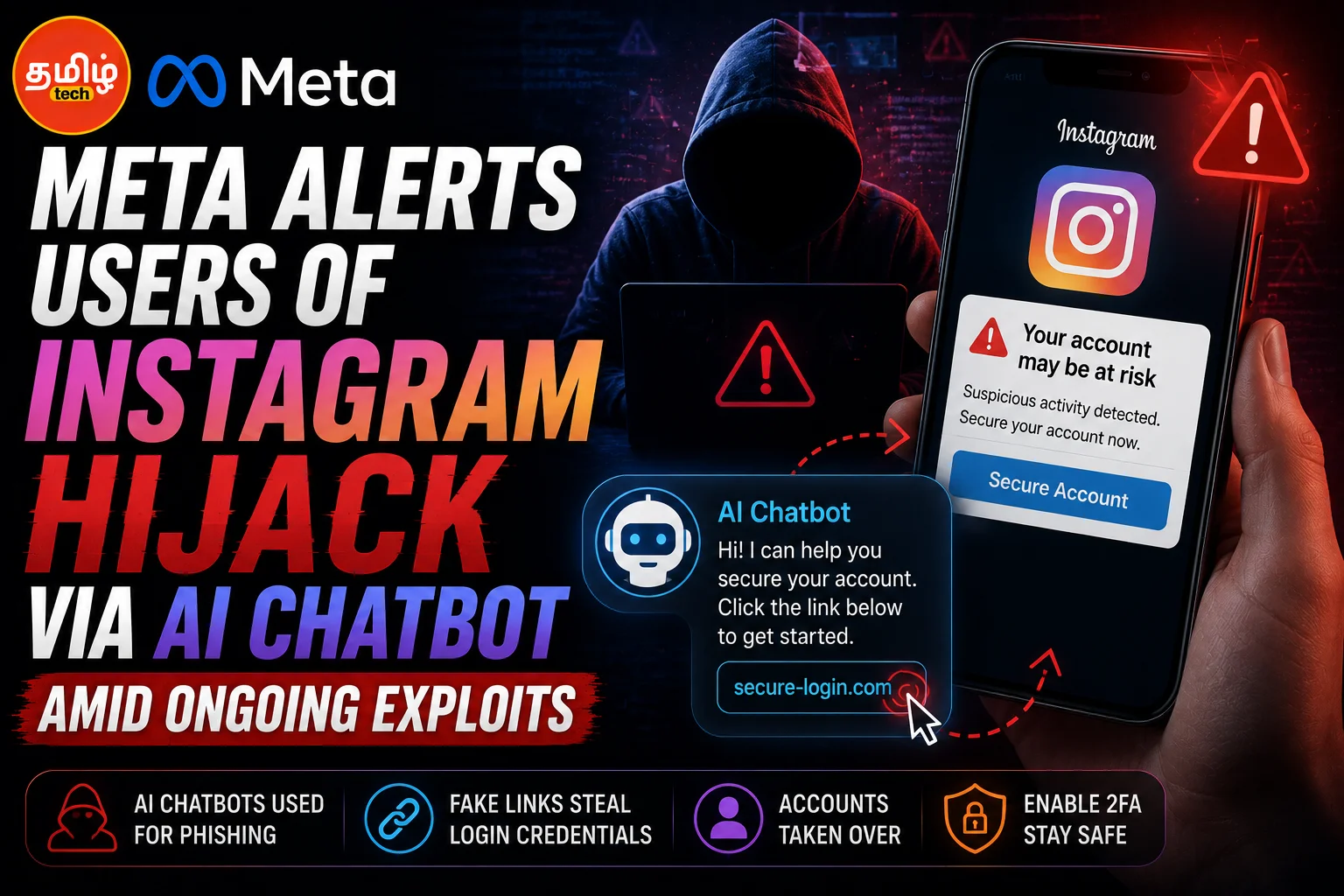
- Meta has started sending alerts to Instagram users whose accounts were compromised via the Meta AI chatbot, affecting an estimated 12,000 Indian users so far.
- The exploit works by tricking the chatbot into sending a malicious link that auto‑fills the login page with the victim’s credentials.
- Indian users should enable Two‑Factor Authentication (2FA) and review app permissions immediately to avoid losing access to their Instagram, WhatsApp, and linked Facebook accounts.
- Meta says a patch is rolling out this week, but security researchers warn that similar phishing tricks could appear in other Meta AI services.
Opening Hook – Why This Matters Right Now
Picture this: you open Instagram, you see a friendly chat with Meta’s AI assistant, and it offers to help you boost your reach. One click later, you’re locked out of your own account. That’s exactly what’s happening to a growing number of users in India, and Meta has finally sounded the alarm.
In plain Tamil, “Meta AI-யை நம்பி உங்கள் Instagram-ஐ ஹேக் செய்யக்கூடும்” – that’s the headline we’re dealing with today. The stakes are high because Instagram is tied to Facebook, WhatsApp, and even some banking UPI links that people share in DMs. Let’s break down the story, the tech, and what you need to do right now.
Background – How We Got Here
Meta introduced its AI chatbot, “Meta AI”, across its platforms in early 2025. The idea was to give users a conversational assistant for everything from photo suggestions to ad‑creation. By mid‑2025, the bot was handling billions of interactions daily. Security researchers soon discovered that the chatbot could be coaxed into sending clickable URLs that mimic Instagram’s login page.
Hackers figured out a trick: they feed the bot a prompt that makes it generate a short link (like a Bitly URL) pointing to a phishing page. The bot then posts that link in a direct message to the target, often phrased as “Check out this new feature!”. When the victim clicks, the page auto‑fills their saved credentials and silently forwards them to the attacker’s server.
Earlier this year, a few Indian cybersecurity firms reported dozens of such incidents, but Meta’s response was vague. Only in July 2026 did they start sending automated security alerts to affected accounts, marking the first public acknowledgment of the issue.
Full Details – The Mechanics and Numbers
The exploit relies on three core components:
- Prompt Injection: Attackers craft a message that tricks Meta AI into generating a malicious link. Example prompt: “Create a short link for the new Instagram Reels tutorial.” The bot, following its own guidelines, produces a URL that actually points to a phishing site.
- Auto‑Fill Script: The phishing page contains JavaScript that reads the victim’s saved cookies or auto‑fills the login form using the Instagram API’s “remember me” token, making the login appear legitimate.
- Credential Harvesting: Once the victim hits “Log In”, the credentials are instantly forwarded to the attacker’s backend, often a cloud server in an offshore jurisdiction.
Meta’s internal data (as shared in the alert) shows:
- ~12,000 Indian Instagram accounts flagged as compromised via the AI chatbot.
- ~3,200 of those accounts also had linked Facebook pages, raising the risk of cross‑platform takeover.
- Average loss per compromised account: ₹5,000‑₹10,000 in ad spend or influencer revenue.
Meta says the vulnerability was patched on their server side on July 2, 2026, but the phishing templates remain in the wild. That means hackers can still use the same social‑engineering trick with other Meta AI services, like WhatsApp Business or the new Meta Lens feature.
India Impact – Pricing, Availability, Who’s at Risk
India accounts for roughly 30% of Instagram’s global daily active users, many of whom are small business owners, influencers, and students. A compromised account can mean loss of:
- Sponsored post revenue – average ₹15,000 per post for mid‑tier influencers.
- Business sales – many SMEs run catalog sales directly on Instagram Shopping.
- Personal data – photos, contacts, and even UPI payment links shared in DMs.
For the average Indian user, the cost isn’t just money. It’s credibility. A hacked account can spread spam or malicious links to thousands of followers, damaging reputation.
Meta’s patch rollout is being prioritized for Android and iOS devices in India, with full coverage expected by the end of July. However, older devices running Android 10 or earlier may see delays, so users on such phones need to be extra vigilant.
Step‑by‑Step: How to Secure Your Instagram Right Now
Here’s a quick, Tamil‑style guide to lock down your account:
- Open Instagram and go to Settings: Tap your profile picture → Settings → Security.
- Enable Two‑Factor Authentication (2FA): Choose “Two‑Factor Authentication”, then select “Authentication App” (Google Authenticator or Authy) for the strongest protection.
- Review Logged‑In Devices: Under “Login Activity”, log out of any device you don’t recognize.
- Revoke Suspicious App Permissions: In Settings → Security → Apps and Websites, remove any third‑party apps you never authorized.
- Change Your Password: Use a unique, long passphrase – mix letters, numbers, and symbols. Avoid using the same password across Meta services.
- Beware of Direct Messages from Meta AI: If a message claims to be from “Meta AI” and contains a link, verify by opening Instagram’s official help center first.
After you’ve secured your account, consider enabling “Login Alerts” so you receive an SMS or email whenever a new device tries to access your profile.
Comparison – Alternatives and What Else to Watch
While Meta is fixing the AI chatbot issue, other platforms are not immune:
- WhatsApp Business: Similar AI‑driven suggestions can embed malicious links. Enable “Two‑Step Verification” in WhatsApp Settings.
- Telegram: No official AI bot yet, but third‑party bots have been used for phishing. Stick to verified bots only.
- Snapchat’s My AI: Currently sandboxed, but security researchers warn it could be targeted next year.
In terms of protection tools, Indian users can rely on:
- Google Password Manager: Stores unique passwords and auto‑fills them securely.
- Local VPNs (e.g., NordVPN India): Masks your IP and blocks known phishing domains.
- Security Apps like Kaspersky Security for Android: Real‑time link scanning.
Each of these adds a layer of defense, but the core habit – never trust unsolicited links, even from AI – remains the most powerful shield.
TamilTech’s Honest Take & What to Expect Next
We think Meta finally owning up is a good sign, but the fact that hackers claim the technique still works tells us the problem isn’t fully solved. The patch stops the bot from auto‑generating malicious short links, but social engineering will always find a new angle.
For Indian users, the immediate action is clear: enable 2FA, change passwords, and stay skeptical of any AI‑generated link. In the longer run, we expect Meta to tighten its content‑generation policies and maybe add a “link‑verification” step before the bot can share URLs.
Watch out for future alerts from Meta – they’ll likely expand the warning to Facebook and WhatsApp users as the investigation continues. Keep an eye on TamilTech for updates, especially if new phishing templates surface or if a major Indian influencer falls victim.



Comments (0)
Be the first to comment!