


Key Takeaways
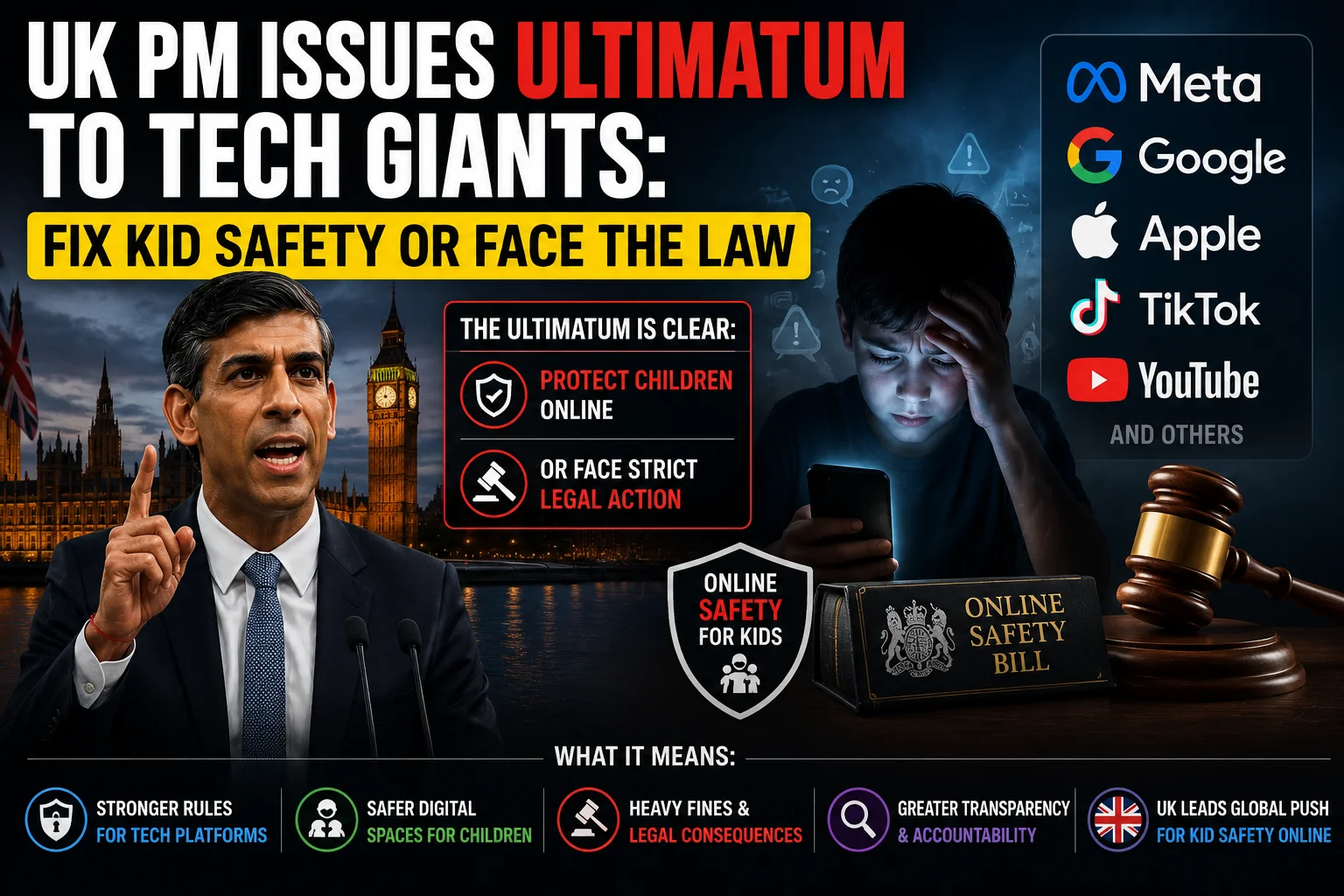
- UK PM Keir Starmer demands tech companies introduce mandatory "device controls" to detect and block explicit images for minors.
- Companies like Apple, Meta, and Google face new legislation if they fail to voluntarily implement these safety features.
- The move reignites the global debate between user privacy (End-to-End Encryption) and child safety online.
- Indian regulators are likely to watch this closely, as India's Digital India Act 2026 explores similar safety mandates for social media.
- The bottom line: Tech giants can no longer stay neutral; they must now choose between total privacy and proactive safety monitoring.
The Big Warning from 10 Downing Street
So, here is the thing — the era of tech companies saying "we can't see what's happening on the device" might be coming to an end. In a massive move today, June 8, 2026, UK Prime Minister Keir Starmer has laid down the law. He told tech giants that they need to step up and introduce "device-level controls" specifically designed to stop children from sending or receiving nude images. This isn't just a friendly suggestion anymore. Starmer made it crystal clear: either the tech companies do it themselves, or the UK government will bring in new laws to force their hand. This is a huge deal because it targets the very core of how smartphones and apps are built today.
Why is this happening now? Well, the UK has been at the forefront of the "Online Safety" battle for years. But even with existing regulations, the rise of AI-generated explicit content and the ease with which minors can access or be coerced into sharing sensitive photos has reached a breaking point. Starmer's stance is that the responsibility shouldn't just fall on parents to monitor every single click. Instead, the hardware and software makers — we're talking about the big players like Apple, Google, and Meta — need to build safety into the foundation of the OS (Operating System). If a kid tries to open or send a photo that looks like it contains nudity, the device should be smart enough to stop it or at least alert a guardian.
How Did We Get Here? The History of the Safety vs. Privacy War
To understand why this is such a bombshell, we have to look back at the last few years. Remember back in 2021-2022 when Apple tried to introduce something called CSAM (Child Sexual Abuse Material) detection? They wanted to scan photos on your iPhone before they were uploaded to iCloud. The backlash from privacy advocates was insane. People argued that if you build a "backdoor" for safety, it will eventually be used by governments for surveillance. Apple eventually backed down, but the problem of child safety online didn't go away. Since then, the UK passed the Online Safety Act, but Starmer feels it hasn't gone far enough to address the actual hardware level.
In 2026, the technology to detect these images has improved significantly thanks to on-device AI. We aren't talking about humans looking at your photos; we are talking about local machine learning models that can identify explicit content without the data ever leaving the phone. However, tech companies have been hesitant to flip the switch because it ruins their marketing pitch of "absolute privacy." Starmer is basically saying that the "absolute privacy" argument doesn't hold water when it comes to protecting children from predators or self-harm. He is pushing for a middle ground where the device acts as a filter, protecting the most vulnerable users without compromising the data of adults.
The Technical Side: How Device Controls Actually Work
Let's get into the nitty-gritty of how this would actually work. When we talk about "device controls," we aren't talking about a simple app you download. We are talking about deep integration within iOS or Android. Imagine an AI model that lives on your phone's processor (like the NPU in your latest Snapdragon or Apple A-series chip). This AI is trained to recognize the patterns of explicit imagery. When a child receives a message on WhatsApp, Snapchat, or even via AirDrop, the system scans the file locally. If it detects nudity, it blurs the image and shows a warning: "This looks like an explicit photo. Are you sure you want to see this?" It could also be set to notify a parent's device immediately.
The tech companies argue that this is a slippery slope. If they build a system that can scan for one type of image, what's stopping a government from asking them to scan for political posters or "prohibited" documents? This is the core of the technical dilemma. However, Starmer's government is arguing that the technology is now sophisticated enough to be "purpose-built" only for child protection. They want these features turned on by default for any account registered to a minor. It’s a proactive approach rather than the reactive approach of reporting content after the damage is already done.
India Impact: What This Means for Us in India
You might be wondering, "This is happening in the UK, why should I care in India?" Well, India is currently the world's largest market for many of these tech companies. Our government is already working on the Digital India Act 2026, and they have been very vocal about "accountability." If the UK successfully forces Apple and Meta to build these tools, you can bet that the Indian government will ask for the same thing. We've already seen this with the 2021 IT Rules where India demanded traceability of messages — a move that WhatsApp fought tooth and nail. If a global standard for "device-level safety" is established in the UK, it will become the blueprint for India.
For Indian parents, this could be a game-changer. Right now, parental controls on Android and iOS are okay, but they are easy to bypass, and they don't really monitor the content of messages in real-time. If these UK-mandated features roll out globally, an Indian parent buying an iPhone or a Samsung for their teenager would have a much more robust safety net. However, the price we pay might be a slight decrease in the "purity" of our encryption. If the OS is scanning the content before it gets encrypted and sent, is it still truly private? That's the question we'll be debating in the Indian courts very soon.
TamilTech's Honest Take: Safety or Surveillance?
Look, let's be real for a second. As tech enthusiasts, we love our privacy. We don't want anyone, not even an AI, snooping through our files. But we also have to admit that the internet is a wild place for kids in 2026. Deepfakes, AI-generated nudes, and predators are everywhere. Relying on parents to be "tech-savvy" enough to block all this is just not realistic anymore. Most parents in India struggle just to set up a screen time limit, let alone monitor encrypted chats on three different messaging apps. So, from a safety perspective, what Starmer is asking for makes a lot of sense.
Our take at TamilTech is that this is inevitable. Tech giants have spent years avoiding this responsibility, but the pressure is building. However, the implementation is everything. If this is done strictly on-device, with zero data sent to the cloud, and only for accounts verified as minors, it's a huge win. But if it becomes a tool for mass surveillance of adults, it’s a disaster. We expect the tech companies to fight this in the UK courts, but eventually, they will have to compromise. Expect to see "Safety by Design" become the biggest marketing buzzword of the next two years.
What to Expect Next
What happens now? We expect a period of intense lobbying. Meta and Apple will likely release statements saying they share the PM's goals but disagree with the methods. They will try to offer "lite" versions of these safety features to appease the government. But Keir Starmer seems determined. If the UK Parliament passes a law with heavy fines (like 10% of global turnover), the tech giants will have no choice but to comply. This will trigger a domino effect across the EU and eventually Asia. Keep an eye on your next OS update — your phone might be getting a lot more "protective" very soon.




Comments (0)
Be the first to comment!