


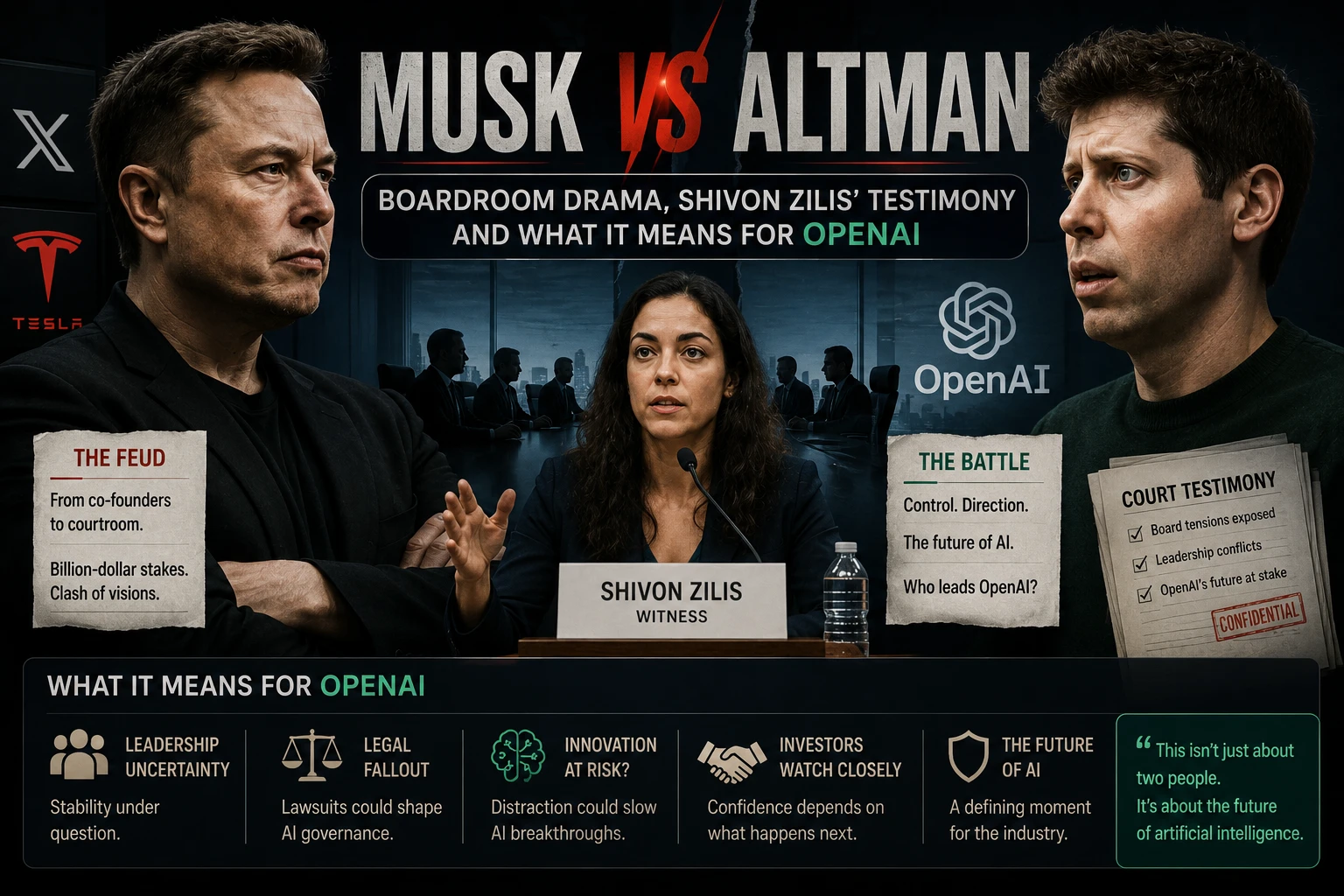
What triggered the courtroom showdown?
Last month Sam Altman, the CEO of OpenAI, filed a lawsuit against Elon Musk, alleging that Musk tried to force a board reshuffle that would have ousted Altman. The claim is that Musk wanted to install a new board that could steer OpenAI towards his own AI ambitions, especially after he launched xAI.
Enter Shivon Zilis – a former board member who joined OpenAI in 2022 and left in 2023, right after Musk’s xAI was announced. During the trial she took the stand and swore that her friendship with Musk never influenced any decisions she made at OpenAI.
Key points from Zilis’ testimony
- She met Musk at a few industry events, but never discussed OpenAI strategy with him.
- All board votes she participated in were recorded, and there’s no evidence of a “Musk‑influenced” agenda.
- She resigned voluntarily in early 2023, citing a desire to focus on AI safety projects, not because of any pressure from Musk.
Her statement basically shuts down the narrative that Musk had a secret back‑channel to manipulate the board.
Why does this matter for OpenAI’s future?
If the court believes Zilis, the case could swing back in Altman’s favor, reinforcing the current board’s independence. That means OpenAI can keep pushing its roadmap – GPT‑4.5, multimodal models, and the upcoming “ChatGPT Enterprise” – without corporate meddling.
On the flip side, if the judge finds any hidden influence, it could force a board overhaul, potentially slowing down product releases and shaking investor confidence.
Impact on Indian users and businesses
India is the world’s biggest consumer of AI‑driven tools – from ChatGPT helping students write essays to startups using OpenAI APIs for customer support. A stable OpenAI governance means:
- Consistent pricing – the current ₹0.90 per 1K tokens for GPT‑4.5 is already a sweet spot for Indian developers.
- Fewer service disruptions – no surprise policy changes that could affect Indian data‑localisation rules.
- More local partnerships – OpenAI is eyeing collaborations with Indian cloud giants like AWS India and JioCloud.
So, the courtroom drama isn’t just Silicon Valley gossip; it could ripple down to the cost of a ChatGPT subscription for a Bangalore startup.
TamilTech’s take
Honestly, we think Zilis’ testimony is a win for transparency. The AI race is heating up and any hint of back‑door influence could scare off Indian investors who are already cautious after the recent crypto crackdown.
That said, Musk’s xAI is still in its infancy, and his public statements about “building a friendly AI” could attract talent away from OpenAI. If Musk decides to double‑down, we might see a split in the developer community – some will stick with OpenAI’s mature ecosystem, others will experiment with xAI’s early‑access APIs.
What’s next?
The judge is expected to deliver a preliminary ruling by late August. If Altman wins, we’ll likely see a quiet continuation of the current product pipeline. If Musk gets a partial victory, expect a board reshuffle and maybe a pause on some API features while the new leadership finds its footing.
For Indian readers, the practical advice is simple: keep an eye on OpenAI’s pricing announcements, and consider diversifying your AI stack – maybe keep a small backup on Anthropic or Google Gemini, just in case the board drama leads to unexpected API rate‑limit changes.


Comments (0)
Be the first to comment!