


Key Takeaways
- Navana.ai has raised ₹40 crore—roughly $4.2 million—in a Series A round led by its existing investor.
- The capital will be deployed to scale voice AI models for Indian regional languages and ambient-noise environments.
- With UPI, Jio, and Flipkart driving audio-first interactions in Bharat, a niche voice stack can capture enterprise verticals that English-centric models ignore.
- The round signals investor confidence that vertical voice solutions for India can survive on relatively modest capital compared to generalist AI labs.
- If executed well, Navana could become the default STT/TTS backend for Indian contact centers, fintech, and edtech before early giants scale down localization.
What's the news
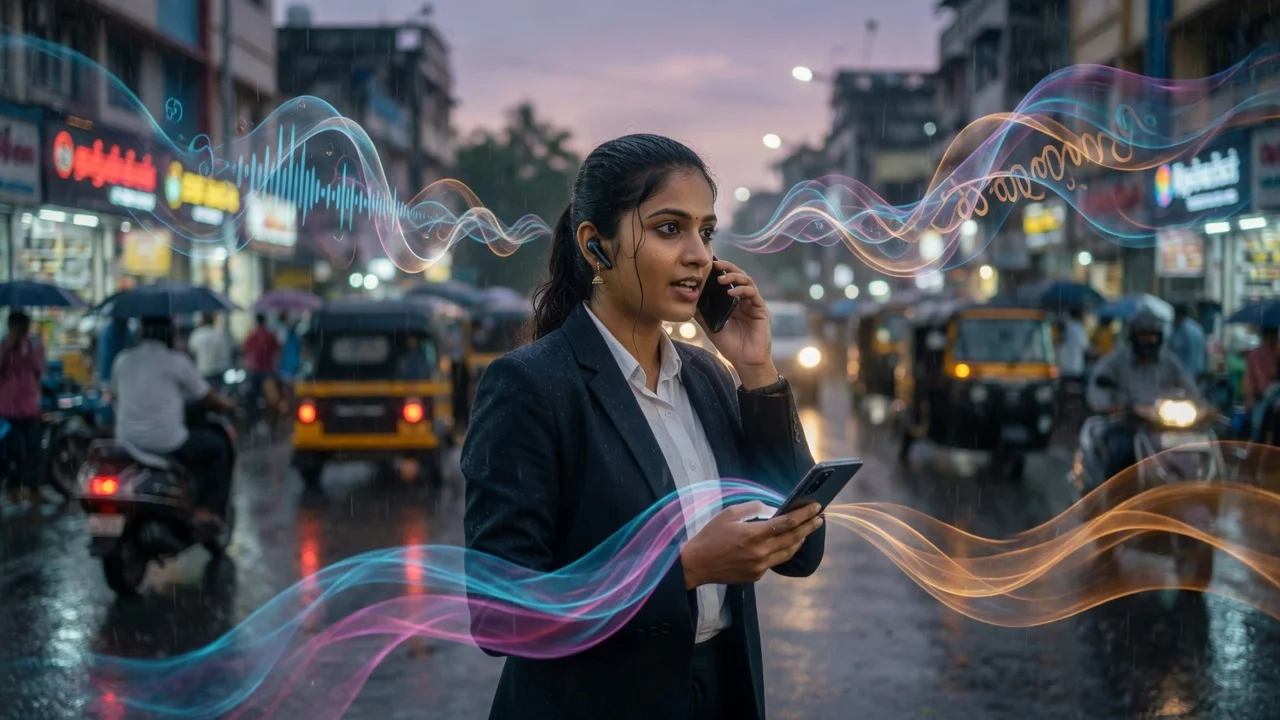
Navana.ai is once again in the funding spotlight, and this time the spotlight is pointed squarely at the Indian voice market. The startup has reportedly closed a Series A raise of around ₹40 crore, approximately $4.2 million, led by its existing backer. While the exact valuation and the identity of the lead investor were not fully disclosed in public filings, the fact that a previous backer chose to lead a fresh round rather than exit signals strong confidence in the underlying technology. The company plans to deploy this capital into expanding its speech recognition and natural language understanding pipeline across Indian languages. Much of the current voice AI market in the country is dominated by either English-first foundational models or generic translation apps that break when users switch from Hindi to Tamil mid-sentence. The company is reportedly building a platform that can handle natural code-switching, local accents, and the kind of background noise you find in a busy kirana store or an auto-rickshaw on a busy avenue.
Details
Looking at the technical and financial side, a ₹40 crore check is not life-changing money if you are trying to match the compute spend of global generative AI labs building trillion-parameter models. But it is plenty if your strategy is vertical and your team operates lean. Navana likely relies on a mixture-of-experts architecture or similar approach to keep inference latency low on commodity servers and avoid the GPU bills that kill most voice startups. The target audience appears to be enterprise customers running legacy CRM systems and customer support platforms in India. Integration with Salesforce or homegrown Indian packaged software is probably a near-term roadmap item. Another layer of complexity is data privacy. With the Digital Personal Data Protection Act now in effect, any startup handling call recordings or user speech must maintain strict consent flows and localization mandates. Navana will need to bake compliance into its SDK rather than treating it as an afterthought. If the founding team includes alumni from Indian telecom operators or major cloud providers, they probably have a head start convincing mid-sized enterprises to pilot the product.
India impact
The structural opportunity here is undeniable. India is not just a language-diverse country; it is an audio-first culture where many users will never type more than a name or password. UPI transactions are often confirmed by speaking aloud in small towns, and the next layer of voice tech will move beyond simple transaction confirmation into active comparison shopping, grievance redressal, and even health consultations. Jio’s continued rollout of 5G and broadband-lite services means millions of new users will access the internet through voice-first devices on high-latency networks. Waiting for perfect 4K video is not an option for consumers in tier-3 and tier-4 towns. Navana’s funding, though modest by global chatbot-era standards, fuels a different hypothesis: that the next billion users will not abandon Hindi or Tamil simply because a western AI model was not trained on their accent, and that machines must adapt to humans, not the other way around.
Use cases
So where exactly will this play out first? Contact centers are the low-hanging fruit. Indian BPOs handle tens of millions of calls every quarter, and quality assurance traditionally relies on supervisors randomly listening to recordings manually. Navana could potentially automate that workflow with real-time transcription in the customer’s preferred language followed by sentiment analysis and intent extraction. Fintech is another obvious area. Loan officers and wealth-management advisors who operate in semi-urban markets often struggle with typing on smartphones in dusty conditions. A robust voice agent that can handle nuanced questions in Bhojpuri, Marathi, Telugu, or Bengali could dramatically reduce loan dropout rates. Edtech companies are also experimenting with spoken quizzes and doubt-solving by voice, particularly for students who find reading English textbooks difficult. Lastly, there is the internal enterprise angle. Companies interfacing with supply chains used by marketplaces and logistics firms might want to check stock status or delivery timelines by speaking rather than navigating nested menus.
Honest take
Let us be real about what this round means. If Navana is burning through cash on fancy offices in Bengaluru or Silicon Valley and paying market-rate rents for premium co-working spaces, ₹40 crore will vanish before they demonstrably hit product-market fit. But if the burn is controlled and strategic, hiring remote engineers from places like Cochin, Indore, or Coimbatore, then the runway is meaningful. The real challenge is not capital; it is the brain drain. Indian researchers in speech, NLP, and acoustic modeling are being courted by well-funded global labs and large domestic incumbents. Navana must offer more than salary; it needs data partnerships, compelling open-source contributions, and a mission that resonates with engineers tired of shipping English-only or North-Indian-accented products. Open-source models fine-tuned by indie teams are also rising, so raw model accuracy is not a guaranteed long-term moat anymore. The win condition is building something technically solid, legally compliant with India’s DPDP framework, and commercially sticky enough that customers do not switch the moment a cheaper open-source alternative drops.




Comments (0)
Be the first to comment!