

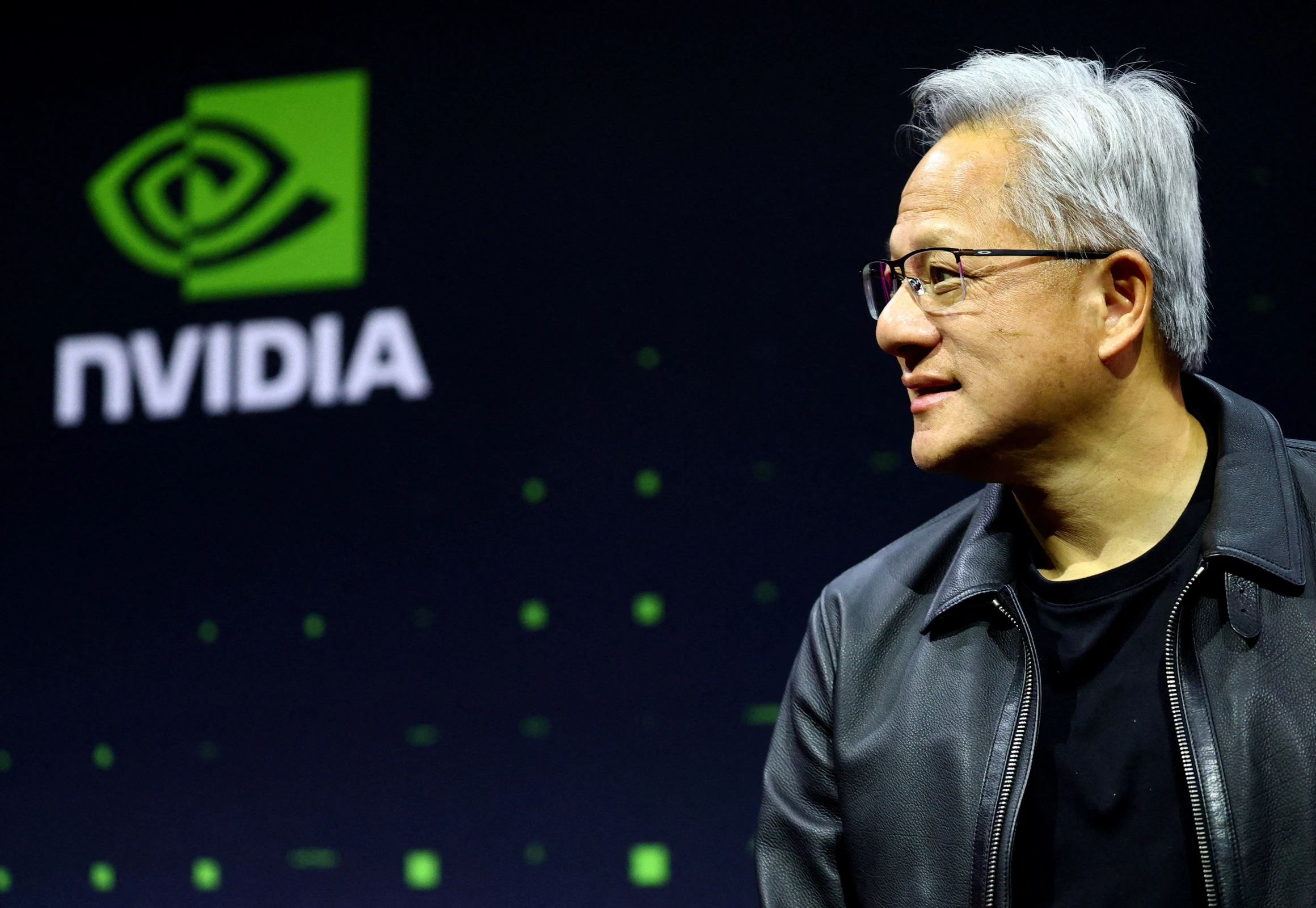
If you asked anyone five years ago which company would lead the open source AI revolution, Nvidia wouldn't have been most people's first answer. That honor would've gone to Google, Meta, or some scrappy startup. But here we are in 2026 — and Nvidia is not just making chips. It's giving away world-class AI models for free.
At the PyTorch Conference 2025, fast.ai founder Jeremy Howard said something that turned heads across the tech world: "The one company that has stood out, head and shoulders above the others... is NVIDIA, who, just in recent months, has created some of the world's best models — and they are open source, and they are openly licensed."
That's not marketing. That's a respected AI researcher putting Nvidia on the same pedestal as Meta when it comes to open source contributions. So what exactly is Nvidia doing, and why should Indian developers and startups care?
The goal? Make Nvidia's GPU ecosystem so deeply embedded in the AI developer workflow that open sourcing models actually increases demand for their hardware. It's a genius business move disguised as generosity.
The Nemotron Family: Models Worth Knowing
The star of Nvidia's open source lineup is the Nemotron model family, available on Hugging Face with full commercial licenses. Here's what's available right now:
Nemotron Nano 2
A 9B parameter small language model with a hybrid Transformer-Mamba architecture. What makes it special? A configurable thinking budget — you can tell it how much reasoning time to spend before answering. Perfect for edge deployment on devices like the NVIDIA DGX Spark or even RTX laptops.
Nemotron RAG Models
Nvidia released 8 RAG-focused models on Hugging Face, including:
- Llama-Embed-Nemotron-8B — multilingual text embeddings built on Llama 3.1
- Omni-Embed-Nemotron-3B — cross-modal retrieval (text, images, audio, video)
- Six production-grade models for text ranking, reranking, and PDF data extraction
For Indian developers building document intelligence apps — think GST filing assistants, legal document analysis, or IRCTC-style customer service bots — these models are a massive shortcut.
India Gets Its Own AI Dataset
This one deserves its own spotlight. Nvidia released the Nemotron-Personas-India dataset — a fully synthetic collection grounded in real Indian demographic, geographic, and cultural data, with zero personally identifiable information.
What does this mean? AI developers in India can now train models that actually understand Indian users — their language patterns, regional contexts, and social nuances — without needing to scrape real user data. This is huge for building genuine "Sovereign AI" that serves Indian communities rather than just translating Western models.
Similar datasets exist for the US and Japan, but the India dataset is a direct signal that Nvidia sees the Indian AI market as a serious priority.
The vLLM Partnership: Speed for Everyone
Running large language models efficiently is hard. That's where vLLM comes in — it's the industry's go-to open source inference engine. Nvidia partnered with the vLLM team to add upstream support for all Nemotron models.
In plain English: you can now deploy Nemotron models on your own GPU servers with enterprise-grade performance, using open source tools, at zero licensing cost. For Indian startups and cloud providers building AI products, this removes one of the biggest cost barriers.
Physical AI: 7 Million Robotics Trajectories, Open
Beyond language models, Nvidia opened up its Physical AI datasets — over 7 million robotics trajectories and 1,000 SimReady 3D assets on Hugging Face. These datasets have been downloaded over 6 million times and combine real-world + synthetic data from NVIDIA's Cosmos, Isaac, DRIVE, and Metropolis platforms.
For India's growing robotics and manufacturing automation sector — from warehouse automation in Pune to agricultural robots being trialed in Punjab — this is a foundational resource that would have cost millions to build independently.
Why Is Nvidia Doing This?
Let's be honest — Nvidia isn't doing this purely out of altruism. The strategy is elegant:
- More developers use Nemotron models → they need NVIDIA GPUs to run them efficiently
- More companies adopt NIM microservices → they buy NVIDIA DGX infrastructure
- Indian startups build on NVIDIA's open stack → they become long-term customers as they scale
But here's the thing — even if the motivation is commercial, the outcome for the open source community is genuinely positive. World-class models with commercial licenses, available for free, is an unprecedented deal.
Nvidia vs. The Open Source Competition
| Company | Open Source Models | Commercial License | India-Specific Data | Hardware Ecosystem |
|---|---|---|---|---|
| Nvidia | Nemotron family | ✅ Yes | ✅ Yes | ✅ Full GPU stack |
| Meta | Llama family | ✅ Yes (with limits) | ❌ No | ❌ No |
| Gemma family | ✅ Yes | Partial | ⚠️ Partial (TPU) | |
| Mistral | Mixtral, Mistral | ✅ Yes | ❌ No | ❌ No |
What This Means for Indian Developers Right Now
If you're a developer or startup founder in India, here's the practical takeaway:
- Building a RAG system? Use Nemotron RAG models instead of paying for proprietary embeddings — you'll save money and get better performance on Indian-language documents
- Running AI on local hardware? Nemotron Nano 2 on an RTX 4090 PC is now a viable production option
- Training models for Indian users? Start with the Nemotron-Personas-India dataset
- Building robotics or automation? Nvidia's Physical AI datasets cut years off your data collection timeline
India is already one of the world's largest developer markets. With tools like these, the gap between what an Indian startup can build vs. a Silicon Valley company is shrinking fast.
The Bigger Picture: Jensen Huang's Open Source Bet
At GTC 2026 in San Jose, Jensen Huang talked about CUDA turning 20 — calling it the "flywheel" that drove everything NVIDIA has built. The open source AI strategy is the next version of that flywheel. Instead of just selling GPU hardware, Nvidia is building a platform ecosystem where open models, datasets, and tools all point back to NVIDIA compute.
It's the same playbook that made AWS the default cloud — give developers tools they love, and they'll bring their companies along. Except Nvidia is doing it at the model level, not just the infrastructure level.
Pros & Cons of Nvidia's Open Source AI Push
✅ Pros
- World-class models available free with commercial licenses
- India-specific datasets address real localization gaps
- vLLM support makes deployment genuinely easy
- Reduces barriers for Indian startups building AI products
- Physical AI datasets accelerate robotics development
❌ Cons / Watch-outs
- Best performance still requires expensive NVIDIA GPUs (A100, H100)
- Heavy dependency on one vendor's ecosystem carries risk
- Some models have usage caps (over 700M monthly active users)
- Not all models are fully "open" — weights are available but training pipelines may not be
What's Next?
With GTC 2026 just wrapped up, Nvidia's open source pipeline is only accelerating. Expect more Nemotron variants optimized for specific Indian languages, deeper integrations with domestic cloud providers like Jio Cloud and BSNL's upcoming AI infrastructure, and potentially Nvidia-backed hackathons targeting Indian developer communities.
The open source AI war is being fought on multiple fronts — and Nvidia just showed it's playing to win, not just participate.
Frequently asked questions
5
What is Nvidia's open source AI strategy?
Nvidia's open source AI strategy involves releasing the Nemotron family of AI models, India-specific training datasets, RAG models, and partnering with vLLM to make deployment easy — all available free with commercial licenses on Hugging Face.
What is the Nemotron model and how can I use it?
Nemotron is Nvidia's family of open source AI models available on Hugging Face. It includes reasoning models (Nemotron Nano 2), embedding models, and RAG-focused models. You can use them for building chatbots, search systems, document intelligence, and more — with no licensing fees.
Does Nvidia have an India-specific AI dataset?
Yes. Nvidia released the Nemotron-Personas-India dataset — fully synthetic data grounded in Indian demographics, culture, and geography with no personal information. It's designed to help developers build AI models that understand Indian users.
How is Nvidia different from Meta and Google in open source AI?
Nvidia offers open source models with full commercial licenses AND a complete hardware ecosystem. Unlike Meta (no hardware) or Google (limited hardware access), Nvidia's models are optimized to run best on NVIDIA GPUs, creating a complete end-to-end ecosystem.
Can Indian startups use Nvidia's open source AI models for free?
Yes. Models like Nemotron RAG, Nemotron Nano 2, and the India persona datasets are available on Hugging Face with open commercial licenses. You can use them in production applications without paying Nvidia licensing fees — though running them at scale may require NVIDIA GPU hardware.
Get tomorrow’s tech news on WhatsApp
One short update a day, free. Follow the TamilTech channel.
What do you think?

Keerthika is an editor at TamilTech, the Tamil and English technology publication founded by Praveen Kumar S. She covers AI, smartphones, gadgets, EVs, startups and cybersecurity i...
More from KeerthikaAsk TamilTech on WhatsApp
Tech doubt? Ask in Tamil or English — our WhatsApp assistant answers from TamilTech articles in seconds.
Related stories
 15h
India's New AI Law Coming Soon: What Ashwini Vaishnaw's Consultation Paper Means for You
15h
India's New AI Law Coming Soon: What Ashwini Vaishnaw's Consultation Paper Means for You
 1d
Best Free AI Image to Video Generator in 2026: Top Tools, Free Credits, and Hidden Catch
1d
Best Free AI Image to Video Generator in 2026: Top Tools, Free Credits, and Hidden Catch
 2d
Why Your AI Agent Cloud Bill Explodes And How Cache Engineering Fixes It
2d
Why Your AI Agent Cloud Bill Explodes And How Cache Engineering Fixes It
 2d
DeepSeek Just Raised $15 Billion: What Does This Mean for the AI Race?
Next story
India's New AI Law Coming Soon: What Ashwini Vaishnaw's Consultation Paper Means for You
2d
DeepSeek Just Raised $15 Billion: What Does This Mean for the AI Race?
Next story
India's New AI Law Coming Soon: What Ashwini Vaishnaw's Consultation Paper Means for You

TamilTech
Install app for faster access
Only the big updates. No spam, switch off any time.
Comments (0)
Be the first to comment!