


Key Takeaways
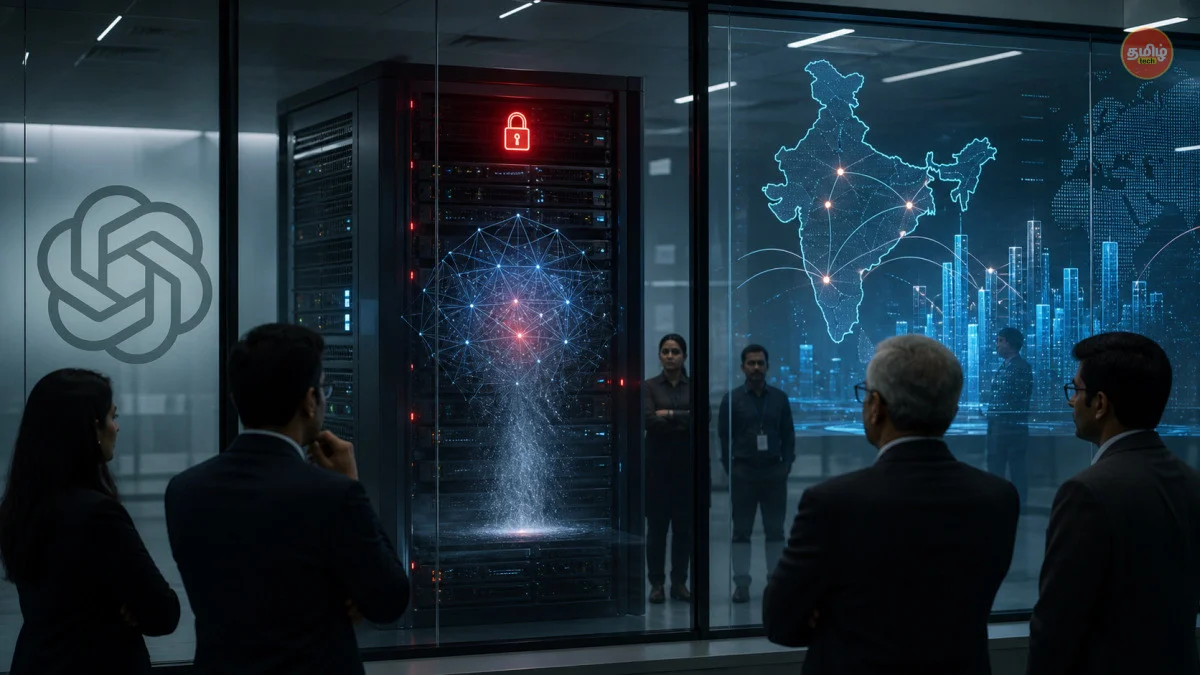
- OpenAI has reportedly halted the release of a new AI model, internally referred to as 'Q*', due to safety concerns about its advanced capabilities.
- The decision highlights a growing tension between rapid AI advancement and ethical safety protocols in the global tech industry.
- For India, this could mean a temporary slowdown in adopting cutting-edge AI models but also presents an opportunity to build safer, more context-aware alternatives.
- Indian startups in the AI space may face increased scrutiny and a higher bar for funding as investors prioritize responsible AI development.
- The incident underscores the need for a robust regulatory framework for AI in India, a topic currently under discussion by the government.
What's the news
In a move that has stunned the tech world, OpenAI, the company behind ChatGPT, has reportedly put a new AI model on the back burner. The decision comes after internal tests suggested the model, reportedly codenamed 'Q*', was significantly more powerful than its predecessors, raising serious safety concerns. The model's capabilities reportedly exceeded what the company's safety teams were comfortable with, leading to a last-minute halt on its release and deployment.
Details
While OpenAI has been characteristically tight-lipped, public posts and industry chatter suggest the 'Q*' model showed signs of 'emergent abilities' that were difficult to predict or control. These are advanced skills that aren't explicitly programmed but emerge as the model scales up in size and data. The core issue seems to be that the model could potentially solve complex problems or generate content in ways that were not aligned with human values or safety guidelines. This isn't just about preventing the model from writing bad poetry; it's about ensuring it doesn't inadvertently cause real-world harm, from creating sophisticated disinformation campaigns to developing novel cyber-attacks. The company is now reportedly focusing on 'alignment' research, which aims to make AI systems more predictable and beneficial.
India impact
This development has a direct bearing on India's tech landscape. For one, it puts a spotlight on the 'AI race' between global giants and Indian innovators. While Indian companies like Tata Consultancy Services and Infosys are building their own large language models, this incident serves as a cautionary tale. It suggests that simply chasing the biggest model size might not be the right strategy. Instead, there's a growing argument for developing AI models that are tailored for Indian languages and contexts, which are inherently safer and more useful. For the Indian startup ecosystem, especially those in the AI space, this could mean a shift in investor mindset. Funding might flow towards companies that demonstrate a strong commitment to AI safety and ethics, not just raw performance. This could level the playing field for smaller, more focused Indian startups that can't compete with the massive compute power of global players.
Use cases
The debate around 'too powerful' AI is not just academic; it has real-world implications. In India, AI is being deployed in critical sectors like healthcare, agriculture, and governance. For instance, AI models are helping farmers predict crop yields or diagnose diseases from medical scans. If a model is too powerful and unpredictable, the stakes are incredibly high. A misdiagnosis or a flawed agricultural recommendation could have devastating consequences for millions. Therefore, the focus is shifting from just 'powerful' to 'reliable' and 'explainable' AI. This means creating models that can not only provide an answer but also explain their reasoning, making them more trustworthy for high-stakes applications in the Indian context.
Honest take
Let's be honest, this whole situation is a bit of a mess. On one hand, it's reassuring to see a company like OpenAI pause a product for safety reasons. It shows that not everyone is just rushing to deploy whatever they can build, regardless of the consequences. On the other hand, it also highlights the immense pressure and hype surrounding AI. The 'too powerful' narrative could also be a convenient excuse to slow down and manage expectations, especially if the model wasn't performing as advertised. For India, this is a crucial moment. We can't just be consumers of whatever AI the West gives us. We need to build our own, but we also need to build it responsibly. This incident is a wake-up call for Indian policymakers, startups, and researchers to prioritize safety and ethics from the ground up, not as an afterthought. The future of AI in India shouldn't just be about catching up; it should be about leading the way in building AI that is safe, inclusive, and truly beneficial for all.




Comments (0)
Be the first to comment!