


What’s the big news?
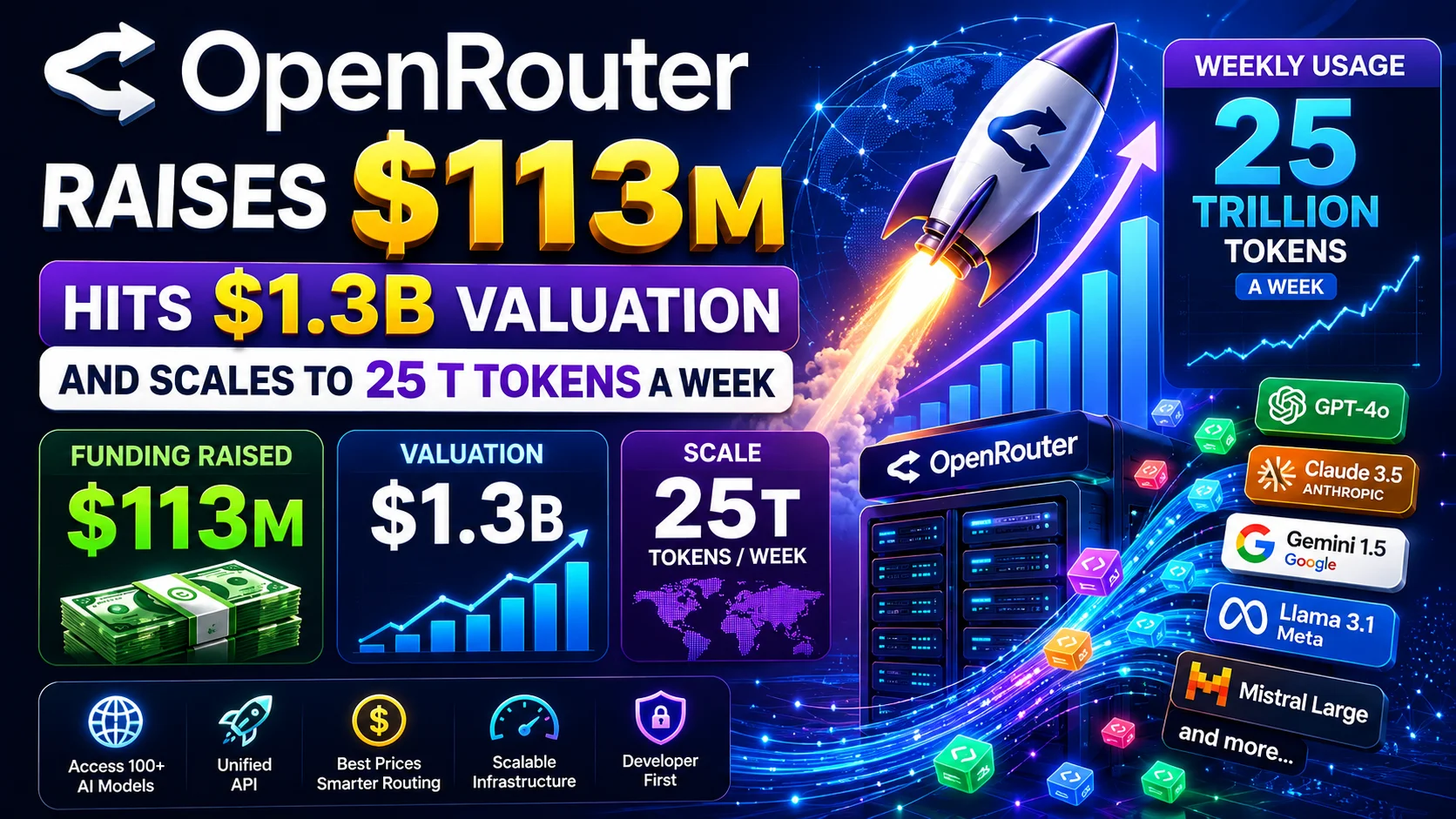
OpenRouter, the AI‑model‑aggregation platform that lets developers call dozens of large language models (LLMs) through a single API, announced a fresh $113 million funding round led by CapitalG. The cash lift pushes the company’s valuation to roughly $1.3 billion. But the headline isn’t just the money – the numbers on the back of the napkin are even wilder: the platform now processes about 25 trillion tokens every week, up from 5 trillion only six months ago.
How did they get here?
OpenRouter started as a thin‑wrapper API that unified access to OpenAI, Anthropic, Mistral, LLaMA and a host of newer open‑source models. By offering a single endpoint, rate‑limit handling, and a pricing‑layer that auto‑routes to the cheapest or fastest model, they solved a pain point for Indian startups that can’t afford to juggle dozens of separate keys.
Since the seed round, the team has hired senior engineers from Google and Microsoft, opened a second data centre in Hyderabad, and added a “model‑mix” feature that lets a single request be split across multiple models – a trick that can cut latency by 30 % for conversational bots.
Numbers that matter
- Funding: $113 M led by CapitalG, with participation from Andreessen Horowitz and Sequoia India.
- Valuation: $1.3 B post‑money.
- Token volume: 25 trillion tokens/week across 400+ models (vs 5 T in Jan 2024).
- Revenue: Estimated $45 M ARR, driven by “pay‑as‑you‑go” and enterprise contracts.
Why Indian developers should care
India’s AI scene is exploding – from Jio’s AI‑assistant to dozens of fintech chat‑bots. Most of those products rely on LLMs, but the cost of calling OpenAI’s GPT‑4 or Anthropic’s Claude can be prohibitive for a startup on a ₹10 Lakh runway. OpenRouter’s pricing model averages 15‑20 % cheaper than calling each provider directly, because it auto‑routes to the cheapest model that meets the latency and quality constraints you set.
Another big win for Indian teams is the new “regional‑model” catalogue. The platform now hosts several Hindi‑tuned LLMs from local research labs, meaning you can get better token‑level accuracy for Tamil, Malayalam, or Bengali queries without paying a premium for an English‑only model.
TamilTech-ஓட கருத்து
We think OpenRouter is a game‑changer for the Indian SaaS ecosystem. The token surge shows real‑world adoption – developers are actually building products that hit billions of tokens daily. The $113 M injection will likely fund more data‑centers in Tier‑2 cities, which translates to lower latency for users in places like Coimbatore or Jaipur.
That said, the platform still has a few rough edges. The UI for model‑mixing feels a bit clunky, and the documentation could use more Indian‑specific examples (think “how to integrate with UPI‑based chat‑bots”). Also, while the pricing is cheaper on average, the per‑token cost can spike if you accidentally route high‑volume traffic to a premium model.
What’s next?
Look out for three things in the next 12 months:
- More regional models: Expect at least five new Indian‑language LLMs, many of them open‑source, to join the catalogue.
- Edge‑compute nodes: OpenRouter is piloting edge servers in Mumbai and Chennai to shave off 10‑15 ms for latency‑sensitive apps like voice assistants.
- Enterprise bundles: Bigger Indian enterprises (e.g., Tata, Reliance) are negotiating private‑cloud contracts – we might see a “OpenRouter for Enterprises” tier soon.
Bottom line
If you’re building a chatbot, a summarisation service, or any AI‑powered feature for an Indian audience, OpenRouter is now a viable, cost‑effective backbone. The $113 M raise gives them runway to scale infrastructure, add more regional models, and tighten the developer experience. Keep an eye on their pricing page and consider a test‑run before you lock into a single‑vendor contract.





Comments (0)
Be the first to comment!