


Key Takeaways
- PhonePe and Visa unveiled three cardless payment solutions at Global Fintech Fest 2026.
- The offerings – Tap to Pay, Cross Border Scan to Pay and Smart Accept – aim to reduce reliance on physical cards.
- Tap to Pay uses NFC on smartphones and works with existing Visa‑enabled terminals.
- Cross Border Scan to Pay lets international travelers pay via QR using Visa’s cross‑border network.
- Smart Accept gives merchants a unified QR‑based checkout that accepts UPI, PhonePe Wallet and Visa tokenized payments.
What's the news
At the Global Fintech Fest held in Bangalore earlier this September, PhonePe announced a strategic partnership with Visa to roll out three new cardless payment experiences. The event, which attracted fintech executives, investors and policy makers from across Asia, served as a showcase for how emerging payment technologies can be scaled in India’s diverse market. PhonePe said the collaboration builds on its existing UPI‑based infrastructure while tapping into Visa’s global network for cross‑border and tokenized transactions.
Details
Tap to Pay turns a smartphone into a contactless card. When the user opens the PhonePe app and selects Tap to Pay, the app generates a dynamic Visa token that is transmitted via NFC to any terminal that already accepts Visa contactless cards. The token changes with every transaction, so the actual card number is never exposed to the merchant or the terminal.
Cross Border Scan to Pay is designed for travelers. Instead of carrying multiple currencies or relying on cash, an Indian traveler abroad can open PhonePe, scan the merchant’s QR code, choose the Cross Border Scan to Pay option, confirm the amount in the local currency and authenticate with their PIN or biometrics. Behind the scenes, Visa’s cross‑border settlement system converts the amount from INR to the foreign currency, settles with the overseas acquirer and notifies both parties in real time.
Smart Accept targets small and medium merchants. A single QR code generated from the PhonePe Merchant app can be printed or displayed on a screen. When a customer scans it, the app presents three payment options: UPI ID, PhonePe Wallet balance, or a Visa‑tokenized card (which could be the user’s own debit/credit card stored in the PhonePe wallet). The merchant receives an instant notification and the funds settle to the linked bank account within minutes, regardless of which payment method the customer chose.
India impact
India’s digital payments story has been dominated by UPI, which processed over thirteen billion transactions per month in 2025. Despite this success, card‑based payments still account for a noticeable share in sectors such as hospitality, travel and organized retail. By giving PhonePe users a way to pay with a tap or a scan without needing a physical plastic card, the partnership could shift a portion of those card transactions to a cardless flow.
The reliance on NFC aligns with the growing number of Jio smartphones that ship with NFC chips. As of mid‑2026, Jio reported that over forty percent of its active smartphones support contactless hardware, widening the potential user base for Tap to Pay. For merchants, especially those already sourcing inventory through Flipkart’s wholesale platform or selling on its marketplace, Smart Accept offers a familiar QR experience that does not require investing in separate card terminals or additional hardware.
From a regulatory standpoint, the Reserve Bank of India has repeatedly emphasized the need for interoperable, less‑cash solutions. A system that works on existing Visa terminals reduces the barrier for small businesses that might find the cost of dedicated NFC readers prohibitive. Additionally, the partnership could encourage more merchants to adopt a unified checkout that accepts both domestic UPI flows and international card‑based payments, thereby supporting India’s goal of increasing digital payment acceptance among tourists and business travelers.
Use cases
Consumer tapping at a coffee shop: After a quick ride, a user opens the PhonePe app, selects Tap to Pay, and taps the phone against the café’s Visa contactless reader. The transaction completes in under a second; the receipt shows a PhonePe payment while the café’s settler sees a standard Visa authorization.
International traveler at a Singapore mall: The traveler scans the QR displayed at a fashion outlet, chooses Cross Border Scan to Pay, confirms the purchase amount in Singapore dollars, and authenticates with fingerprint. The amount is debited from the user’s linked bank account in INR, Visa handles the conversion, and the merchant receives Singapore dollars in its settlement account.
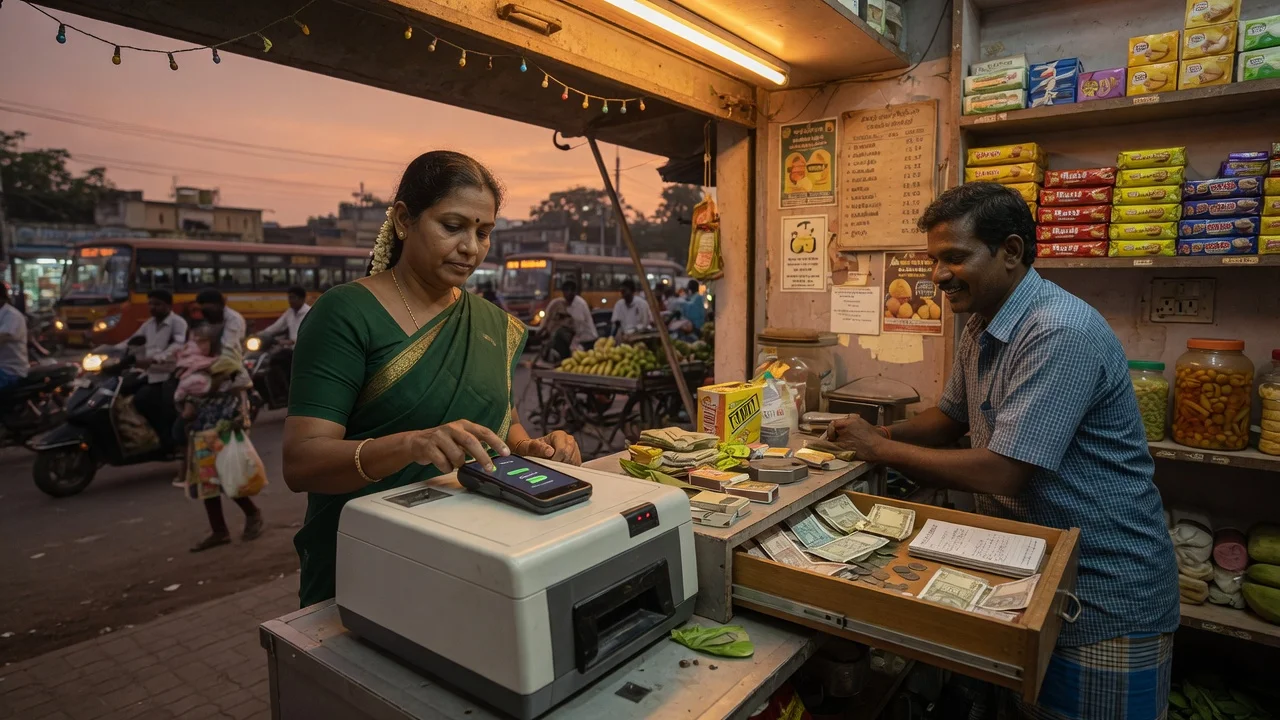
Local kirana store using Smart Accept: The store owner prints a single QR code and places it beside the cash register. A regular customer can pay via UPI, another can use their PhonePe Wallet balance, and a third can tap their Visa‑linked smartphone. Regardless of the choice, the store receives an instant push notification and the funds settle to the linked bank account within minutes, simplifying end‑of‑day reconciliation.
Honest take
While the three solutions address genuine gaps, a few factors will shape their adoption. First, NFC availability remains uneven; many budget smartphones launched in the Indian market still lack the hardware, which limits the reach of Tap to Pay to mid‑range and premium devices. Second, merchants need clear signage to differentiate the Smart Accept QR from a regular UPI QR, otherwise customers may be unsure which payment options are available. Third, Visa’s cross‑border network may involve foreign‑exchange margins that are not yet fully disclosed to end users, potentially making the solution less attractive for cost‑sensitive travelers. Finally, the Indian market already enjoys a highly efficient, free UPI QR ecosystem that enjoys near‑universal acceptance. To convince merchants to add an extra layer, PhonePe and Visa will likely need to offer tangible incentives such as transaction‑fee discounts, cashback rewards or value‑added services like instant settlement alerts.



Comments (0)
Be the first to comment!