


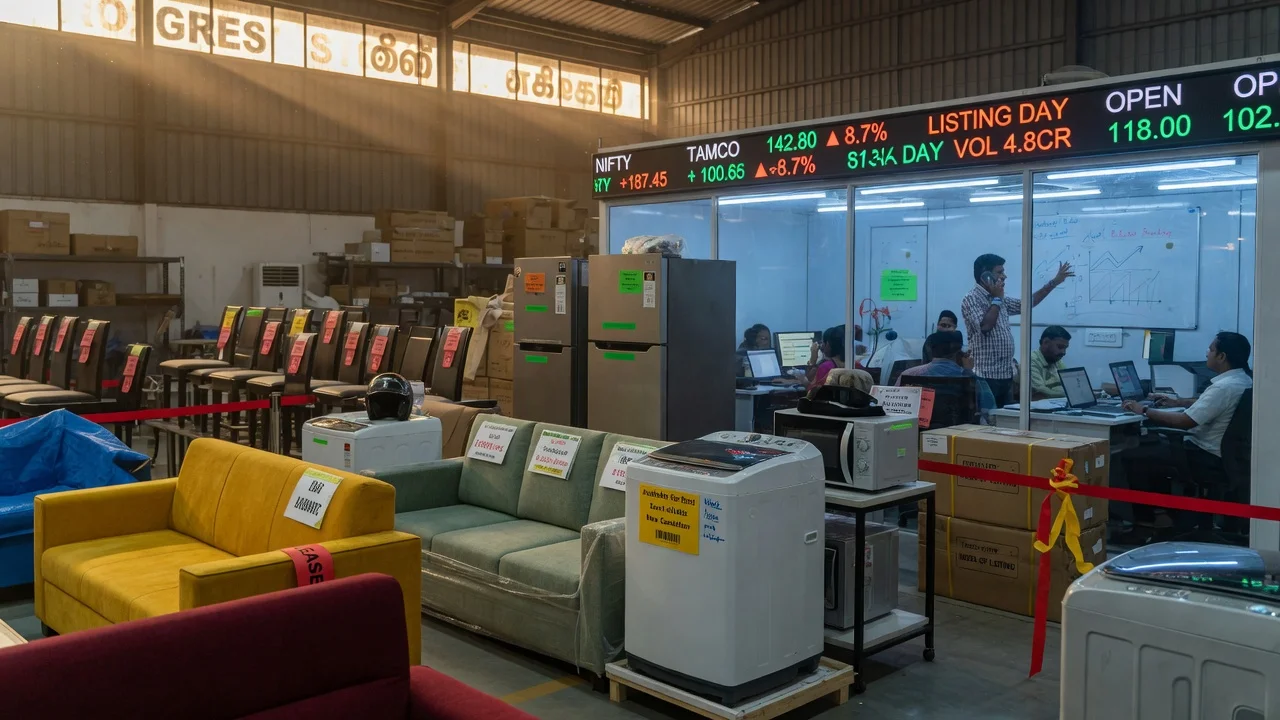
Key Takeaways
- Rentomojo secured Rs 376.07 crore from anchor investors ahead of its IPO.
- The Bengaluru-based rental platform's subscription window opens on September 9, 2026 and closes on September 11, 2026.
- Anchor investors received an allotment of 93.08 lakh equity shares.
- The raise signals continued confidence in India's furniture and appliance rental market.
- It underscores the growing shift toward asset-light consumption among urban millennials and young professionals.
What's the news
Rentomojo, the Bangalore startup turning furniture and home appliances into subscription services, has closed a Rs 376.07 crore anchor round just days before its initial public offering. The funding comes from a slate of domestic and institutional backers that committed capital early, giving the company a floor before the general public gets a look. The anchor allotment stood at 93.08 lakh equity shares, a move that typically smooths the listing process by reducing overhang. With the IPO subscription window opening on September 9, 2026, the market is now watching to see whether retail appetite matches the institutional warmth, especially given the broader cautious sentiment seen in recent tech listings.
Details
Rentomojo operates much like a Netflix for household goods. Customers browse categories such as sofas, beds, refrigerators and washing machines, then pay a fixed monthly fee for a set tenure. The model keeps capital light because the company does not manufacture; it procures, ships, and recovers and refreshes inventory. That structure matters in a capital-hungry climate like India, where burn rates can kill consumer tech startups overnight.
The Rs 376.07 crore anchor commitment is not merely a vanity number. In an IPO, anchor investors act as a safety net. By locking in money before the book-building closes, they reduce the risk of a failed issue and signal that the books have been read at least twice. The 93.08 lakh shares allotted to these backers represent a meaningful block, though the total issue size and price band are decided at a later stage. Still, for a rental business, the size of the committed war chest often matters more than the headline number. It means the company can likely sustain operations, replenish inventory and invest in logistics without rushing to a secondary round at depressed valuations. This is particularly relevant in a market where logistics spend is the largest variable cost for urban fulfillment startups.
Behind the headlines, the rental economy in India still faces friction. Churn is a concern; not every customer renews. Depreciation of furniture and appliance wear-and-tear adds unit-level costs. The unit economics depend heavily on average tenure, maintenance efficiency and the density of serviceable pin codes. Anchor money helps shore up free cash flow, but execution on the ground remains the make-or-break factor.
India impact
The Indian rental landscape is evolving fast, driven by urban migration, fintech-friendly billing and the rise of month-to-month leases instead of lifelong debt through EMIs. Rentomojo taps on this by billing via UPI and offering doorstep delivery, a combination that removes the two biggest friction points for renting: trust and logistics.
If the IPO rolls smoothly, it will list in a market hungry for consumer startups beyond the obvious SaaS and fintech names. That validation could open doors for other asset-light players in gym equipment, power tools, and even auto accessories. There is also the tier-2 angle. Most rental models start in Bangalore, Mumbai or Delhi and inch outward. A public listing could accelerate that expansion by funding regional warehouses and last-mile delivery fleets that leverage UPI convenience.
Indian retail investors might welcome the addition because rental companies, unlike SaaS, generate tangible cash flows from monthly subscriptions. If Rentomojo can prove that churn stays below a sustainable threshold, it offers a rare blend of defensive revenue and growth optionality.
Use cases
From a user standpoint, the rental model works best for three personas. First, the young professional landing in a metro city for the first time; buying a bedroom suite outright is an avoidable liquid-asset hit. Second, the student in a hostel or PG; buying a refrigerator or washing machine seasonally makes little sense when tenure is short. Third, the corporate relocation team moving an employee from Chennai to Delhi; renting furniture and appliances bridges the gap between getting the job and getting settled.
The same logic applies inside businesses. Companies onboarding temporary staff, setting up pop-up offices, or facilitating short-term housing stipends use rental platforms to avoid capital expenditure audits. Even during home renovation, a family might rent a new living room set while the old one is being refurbished, rather than storing or selling used pieces at a loss. Pricing is usually tiered by quality and replacement cycle. A basic foam sofa might command a lower monthly fee than a solid-wood unit with a longer warranty. This tiered catalog lets Rentomojo capture a broader income range while keeping average revenue per user healthy enough to fund operations.
Honest take
The anchor round is a positive signal, but it is not a guarantee of unicorn success. Rentomojo's model works brilliantly on paper: zero heavy manufacturing, predictable monthly revenue, and a customer base that avoids large upfront tickets. In practice, the margins are tight, and customer acquisition costs in Indian metros rival the top subscription apps.
A successful listing also depends on macroeconomic weather. If interest rates stay elevated or disposable income tightens, subscribers might postpone rentals and start buying second-hand. That would dent revenue growth even as the installed base lingers. From a strategic angle, Rentomojo also faces competition from well-funded peers and aggressive conventional furniture retailers and big e-commerce players trying to mimic rental features. The 93.08 lakh shares going to anchors tell us that at least some smart money thinks the going-concern story is solid, but the real test is whether the management can scale without turning the balance sheet into a repair shop for depreciating sofas. Turnover is slow, and every delayed return lowers the asset's residual value.
The IPO is a milestone, not a finish line. It gives the company a currency to hire, expand and compete. Whether that translates into long-term market leadership will depend on execution, not just the Rs 376.07 crore check.





Comments (0)
Be the first to comment!