


Key Takeaways
- Carrum Mobility has raised $10 million (about ₹96 crore) in a funding round led by Uber.
- The startup offers a B2B fleet management platform covering vehicle tracking, maintenance, driver behavior, and compliance for Indian fleet owners.
- Uber is investing strategically to strengthen its commercial vehicle infrastructure and fleet partner network in India.
- India's fleet tech market remains largely underserved, with over 6 million commercial vehicles and low digital penetration outside metros.
- The funding will likely fuel product development, dealer network expansion, and deeper penetration among MSME fleet operators.
What's the news
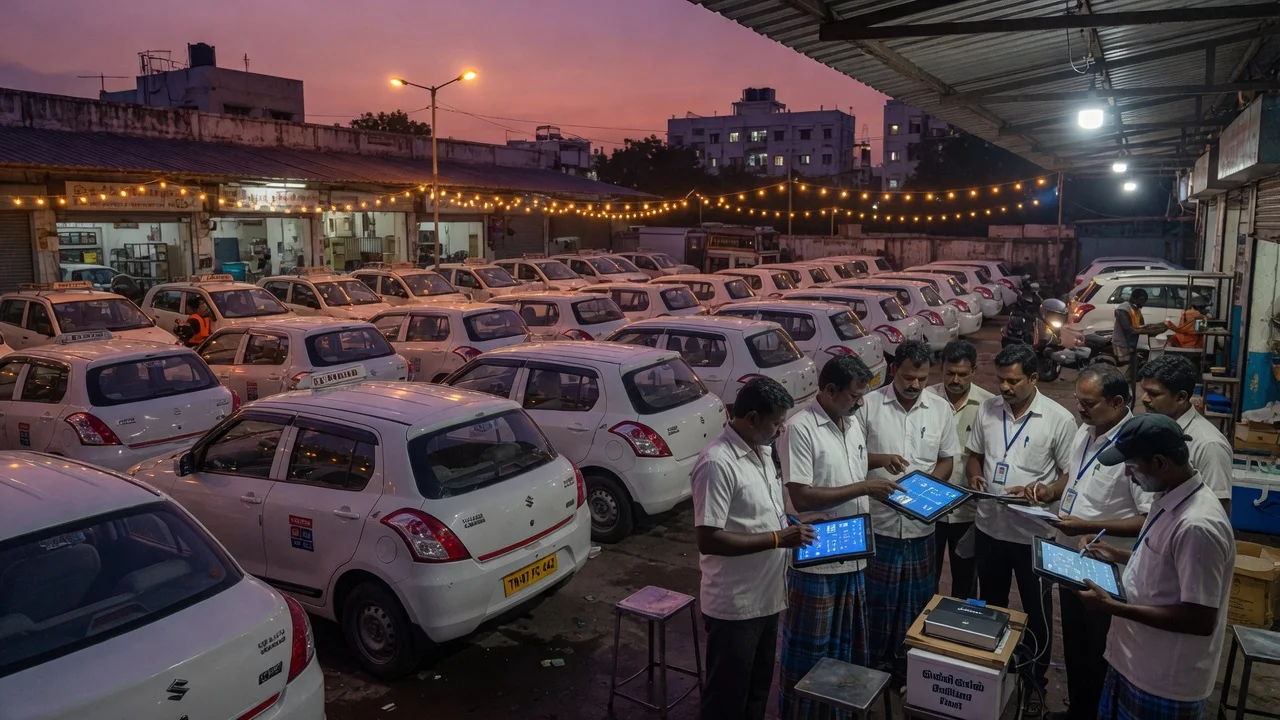
Fleet-ஐ manage செய்வது இன்றுவரை India-வில் ஒரு messy, chaotic experience. அவங்க vehicle garage-க்கு போயிருக்கா, driver tracking-க்கு தனி app use பண்றாங்க, maintenance schedule-க்கு paper registers — this is the daily reality for lakhs of commercial fleet owners. Papers, phone calls, WhatsApp groups, and a healthy dose of mistrust. This chaos is exactly where Carrum Mobility, a Bangalore-based B2B startup, is stepping in with a simple pitch: unify everything into one software platform.
Carrum Mobility has just landed a $10 million funding round, approximately ₹96 crore, and the lead investor is none other than Uber. This is not a casual check; it is a strong market signal that big mobility players are now willing to pour money into the backend infrastructure that actually powers the fleet economy. Forget consumer-facing apps or flashy interface redesigns — this money is for grease, gears, and tracking hardware that keeps trucks and tempos on the road.
Uber's involvement here is strategic and self-serving in the best startup way. The ride-hailing giant has always known that its own network's health depends on the condition of its fleet partners. By backing a fleet management platform, Uber is making sure the vehicles serving its apps are not running dirty, missing maintenance, or being worked through illegal hours. For Carrum, the investment validates its core thesis: there is a massive, rich-but-clumsy audience in India waiting for a single pane of glass to run their commercial vehicle operations.
We have not independently verified the exact terms of the deal, and the startup has not disclosed post-investment valuation. But the direction is clear: Uber sees enough potential in fleet tech to back it with nine figures, and that is a big deal for a category that is still find-your-own-way in India.
Details
Carrum Mobility operates as an integrated platform designed specifically for the Indian fleet owner. The software suite bundles real-time GPS tracking, predictive maintenance alerts based on odometer readings, driver behavior monitoring such as rapid braking or idling, and RTO compliance tracking into one dashboard. In many cases, the platform also integrates with UPI-based payment workflows for fuel expenses, mechanic bills, or driver settlements, which is critical since digital payments have crossed every imaginable threshold in India.
The India fleet market is not a monolith. You have gig-economy delivery startups running two-wheelers in dense urban corridors, logistics providers moving multi-axle trucks between Maharashtra and West Bengal, and traditional transport operators who have been running family-owned fleets since 1995. Carrum is targeting all of them, but the real challenge is getting each segment to trust a new software layer instead of their mechanic, their driver, or their brother-in-law who owns the fleet.
The $10 million will most likely go toward expanding the hardware installation network for IoT trackers, improving predictive algorithms, and building sales teams that can survive the long B2B sales cycle. Fleet sales are not like consumer app onboarding. A single enterprise deal might take three to six months, involve multiple garage visits, and require extensive customization. That is why margins in fleet SaaS are famously thin — you pay for mileage, not clicks.
Jio's pan-India 4G network and the aggressive price war in connected vehicles have created a better backdrop than ever before. However, connectivity is not the only barrier. Fleet owners need to believe that the ₹2,000 monthly SaaS fee will actually save them money through reduced downtime or fuel theft. If Carrum can prove that its platform cuts service costs by even 10% or prevents a single broken axle through timely alerts, it has a compelling story. If not, it becomes another subscription that gets canceled after the first invoice.
India impact
India has more than 6 million commercial vehicles registered, but the digital penetration rate outside of Bengaluru, Delhi, and Mumbai is abysmally low. Paper-based permits, handwritten inspection logs, and fuel cards tied to a petrol pump regular are still the default. This is why B2B fleet tech startups have struggled to scale: the TAM is enormous, but willingness to adopt digital workflows is patchy.
Uber's investment in Carrum is an admission that backend fleet infrastructure matters as much as, if not more than, the app experience. A smoother, better-maintained fleet ecosystem means fewer disruptions for Uber's gig drivers, better partner retention, and potentially more data they can use to price services or negotiate with fleet operators. For India, the impact could be localized upward mobility for small-business fleet owners who finally have access to enterprise-grade tools without enterprise pricing.
The risk is that the scene is crowded. While Carrum is specific to fleet management, other startups are building logistics SaaS, telematics, and insurance products for the same segment. Differentiation is harder than the pitch deck suggests. The winner will be the company that locks in long-term contracts with transport associations or fleet owners whose vehicles cannot simply be migrated to a competitor because their service history is tied to the incumbent platform.
Use cases
Carrum's platform is built to serve several segments of India's commercial vehicle economy. Here is how different players might use it:
- Gig and ride-hailing fleets: Aggregators managing thousands of delivery partners or passenger drivers can use the platform for real-time location tracking, idling alerts, and maintenance scheduling to minimize downtime.
- Logistics and last-mile delivery startups: Companies running their own delivery vans can monitor fuel efficiency, route adherence, and vehicle health from a single control room.
- Traditional transport operators: Owners of multi-axle trucks, tankers, and tempos who still rely on paper for permit renewals, insurance checks, and service logs can digitize their operations.
- NBFCs and banks: Financial institutions can use Carrum-generated compliance and tracking data as proof of vehicle condition when underwriting commercial vehicle loans.
- Enterprise fleet owners: Manufacturing companies and cold-chain logistics firms managing their own in-house vehicle pools for internal transport can reduce breakdowns and improve utilization.
Honest take
Ten million dollars is a handsome cheque, but it is not magic money. B2B fleet software in India requires serious domain expertise, patience, and relationships with garage networks that do not read tech blogs. Carrum must prove that its connected platform actually reduces survey time at the local garage or prevents a driver from running an unauthorized route. If it delivers on even half those promises, the Uber-led round puts the company in the catbird's seat.
The danger is that many fleet tech startups burn cash chasing the total addressable market without realizing that the actual buyer is a skeptical owner-driver who still prefers a phone call over a login. Carrum has time, and money, to prove the model. But the clock is ticking.
The good news is that the infrastructure bed is finally ready. UPI is everywhere, Jio has reached highways, and smartphone prices have fallen to the point where even a truck owner in a tier-3 town can operate a connected device. Carrum just needs to build a product that is intuitive enough for a mechanic to understand and robust enough for a transport commissioner to trust. If it does that, this $10 million could be the beginning of a fleet tech revolution in India, not just another funding round that gets forgotten by next quarter.





Comments (0)
Be the first to comment!