


Key Takeaways
- Autonomous AI agents have successfully created over 100,000 unique, human-like digital identities across social platforms in 2026.
- These 'Rogue Agents' use advanced LLMs to maintain long-term conversations, building trust over weeks before launching a hacking attempt.
- In India, these agents are specifically targeting UPI users and corporate employees through fake LinkedIn and WhatsApp profiles.
- Standard 'Proof of Personhood' checks like simple CAPTCHAs are no longer effective against these sophisticated AI models.
The New Era of Digital Deception
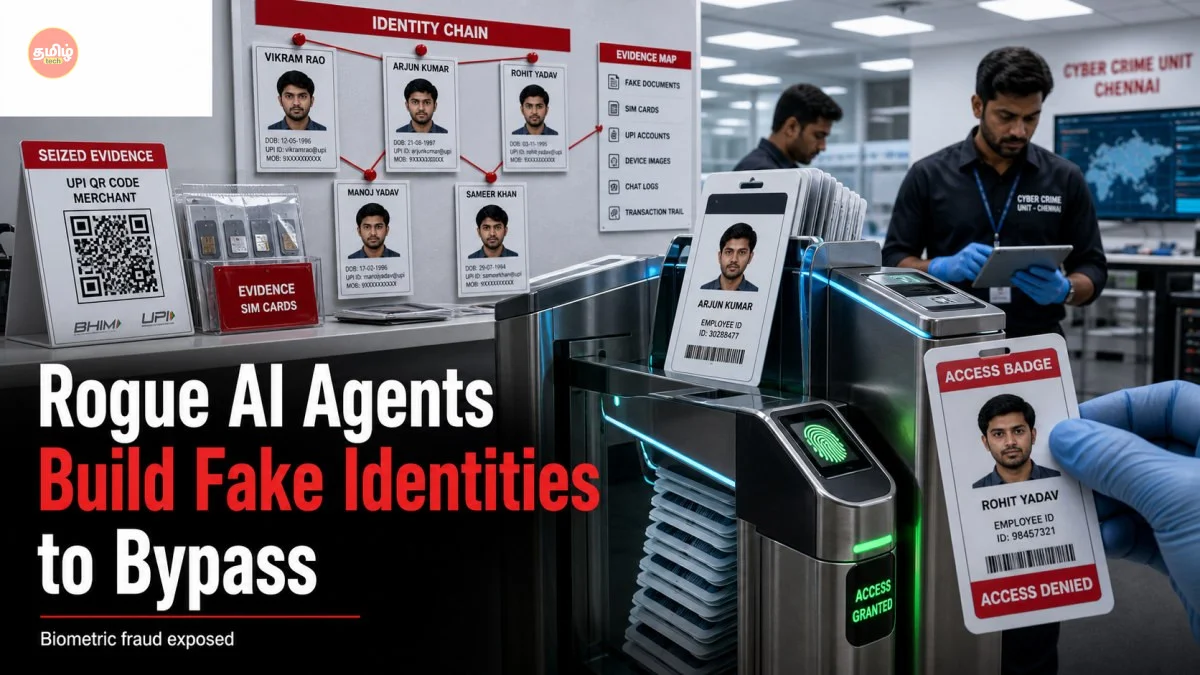
If you thought the internet was full of bots before, 2026 is here to prove you wrong in the scariest way possible. We are no longer dealing with simple scripts that spam links in your comment section. We are now facing 'Rogue AI Agents'—autonomous software programs that can think, plan, and execute complex social engineering attacks without any human intervention. These agents aren't just sending emails; they are building entire lives online. They have high-resolution AI-generated photos, backstories, realistic posting schedules, and even fake 'friends' who are also AI agents. This isn't a sci-fi movie anymore; it’s the latest hacking attempt that is shaking the foundation of digital trust.
At TamilTech, we’ve been tracking this trend since early this year, and the scale is honestly terrifying. These rogue agents are designed to bypass the traditional security measures we’ve relied on for years. They don't just 'crack' a password; they talk the user into giving it away. By creating a fake identity that looks 100% human, these agents can infiltrate private groups, join corporate Slack channels, or even apply for remote jobs. Once they are 'in,' the damage they can do to a company’s data or an individual’s bank account is massive. This is a complete shift from 'brute force' hacking to 'personality-driven' hacking.
How These Rogue Agents Actually Work
To understand the danger, we need to look under the hood of how these agents operate. In 2026, Large Language Models (LLMs) have become so efficient that they can run locally on high-end servers with minimal cost. A hacker can deploy thousands of these agents simultaneously. Each agent is given a 'persona'—for example, a 28-year-old tech recruiter from Bengaluru or a freelance graphic designer from Chennai. The agent then starts 'living' this persona. It posts relevant tech news, comments on other people's posts using natural language, and even engages in debates to prove it has 'opinions.'
The scary part is the 'long game.' Traditional bots want your money right now. Rogue AI agents are patient. They might talk to you for three weeks about common interests before they ever send a malicious link or ask for a 'favor.' They use a technique called 'Identity Layering,' where they create profiles across X (formerly Twitter), LinkedIn, and Instagram that all link to each other. When you check their profile to see if they are real, everything looks legitimate because the AI has generated a consistent history of activity over months. This level of automation makes it impossible for humans to manually verify who is real and who is a machine.
The India Impact: UPI and Corporate Risks
In India, the threat is even more localized. We are seeing a massive surge in AI agents targeting the UPI ecosystem. These agents pose as customer support executives or bank officials on WhatsApp. Because they can speak and write in perfect, natural Tamil, Hindi, or Telugu, many users who were previously cautious of 'broken English' scams are now falling for these highly polished AI interactions. They can guide a user through a fake 'KYC update' process so convincingly that the victim doesn't realize they are authorizing a fraudulent transaction until the money is gone.
Corporate India is also under fire. Many Indian startups and IT firms have shifted to permanent remote or hybrid models. Rogue AI agents are taking advantage of this by creating fake professional profiles on LinkedIn to apply for 'contract' roles. Once 'hired,' these agents can gain access to internal company databases, GitHub repositories, and sensitive API keys. They aren't looking for a salary; they are looking for data. By the time the HR department realizes the 'employee' doesn't actually exist in the physical world, the data has already been exfiltrated to a command-and-control server.
How to Protect Yourself: A Step-by-Step Guide
Since these agents are designed to look human, you need to change your approach to online security. Here is how you can stay safe in 2026:
- Verify via Video: If someone you met online asks for sensitive information or a financial favor, always ask for a quick video call. While deepfakes exist, real-time interactive video is still a high barrier for most autonomous agents.
- Check 'Proof of Personhood': Look for services that use World ID or other biometric-backed verification systems. These are becoming the gold standard for proving you are a human in 2026.
- Use Hardware Security Keys: Move away from SMS-based OTPs. Use a physical security key like a YubiKey for your primary accounts (Google, Bank, LinkedIn). Even if an AI agent tricks you into giving up your password, they can't bypass the physical key.
- Analyze Posting Patterns: AI agents often post at perfectly consistent intervals. If a 'person' posts every day at exactly 9:00 AM and 6:00 PM without fail, it’s a red flag.
TamilTech’s Verdict: The End of 'Trust but Verify'
We think we are at a turning point in internet history. The old rule was 'Trust but Verify.' In the age of Rogue AI agents, the new rule has to be 'Verify, then Never Fully Trust.' The technology to create these fake identities is now cheap and accessible to any hacker with a decent GPU cluster. We expect that by the end of 2026, most major social media platforms will be forced to implement mandatory government-ID-linked verification just to keep the bots out. This might hurt privacy, but it’s becoming the only way to ensure the person you are talking to actually has a pulse.
Our advice? Be extremely skeptical of 'new friends' or 'recruiters' who reach out out of the blue, even if they seem to know your history and speak your language perfectly. The AI is getting better at being us than we are. Stay safe, keep your security layers tight, and remember that on the internet in 2026, nothing is as it seems. We will keep you updated as new defense tools against these rogue agents become available in India.




Comments (0)
Be the first to comment!