


Introduction: A Personal Crisis Amidst Global Spotlight
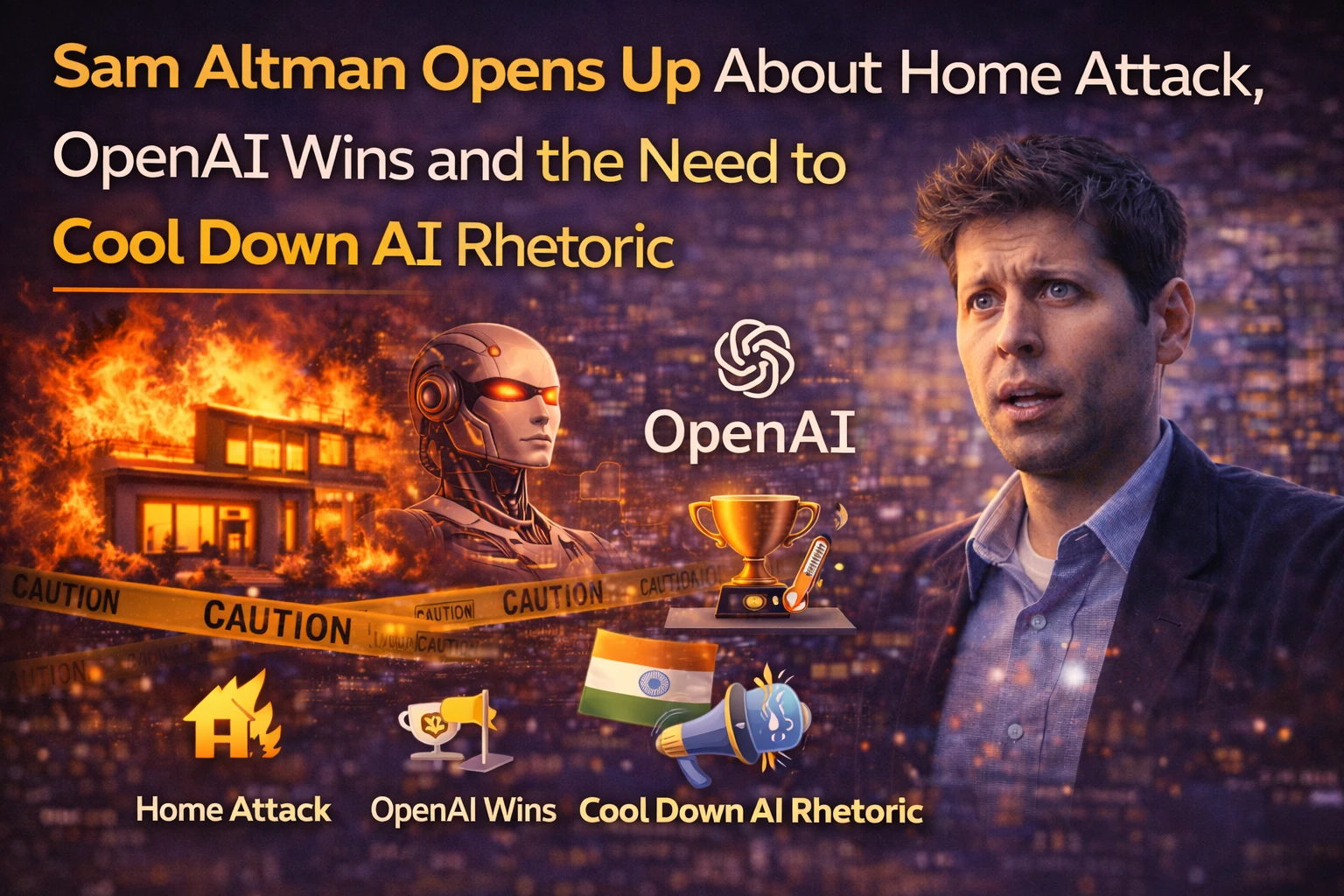
When Sam Altman, the charismatic chief executive of OpenAI, posted a family photo on social media last week, the image sparked more than just warm comments. Behind the smiling faces was a stark reminder that even the most influential tech leaders are not immune to real‑world threats. Just days earlier, Altman’s San Francisco home was broken into, an incident that left him shaken and prompted a heartfelt public statement.
In the ensuing interview with The New York Times, Altman didn’t just recount the details of the break‑in; he used the moment to reflect on OpenAI’s meteoric success, his own personal regrets, and, most importantly, the escalating rhetoric that now permeates the AI industry. His message resonated far beyond Silicon Valley, striking a chord with Indian technologists, policymakers, and everyday users who are watching the AI boom with a mix of excitement and apprehension.
What Happened at Altman’s Home?
According to police reports obtained by local media, the intruders entered Altman’s residence late at night, ransacked a few rooms, and left behind a mess that forced the family to relocate temporarily. No one was physically harmed, but the emotional toll was evident. Altman’s statement, posted on X (formerly Twitter), read: “My family is safe, but this experience reminded me how fragile personal security can be, even for those of us leading tech revolutions.” He added a photo of his wife and children, captioned, “I love them more than anything.”
OpenAI’s Success: From GPT‑4 to Everyday Apps
While the break‑in made headlines, Altman also took the opportunity to celebrate OpenAI’s achievements. The company’s flagship model, GPT‑4, has been integrated into everything from Microsoft’s Office suite to Indian language learning apps such as Kaizen.ai and JaiAI. These tools are now helping students draft essays in Tamil, assist doctors in summarizing patient records, and empower small businesses to generate marketing copy in regional languages.
Altman highlighted three milestones:
- Scale: Over 1 billion monthly active users across ChatGPT, DALL·E, and Whisper.
- Accessibility: Launch of API pricing tiers that cater to startups in emerging markets, including India’s tier‑2 cities.
- Safety: Introduction of “ChatGPT Guardrails” that reduce harmful outputs by 40% compared to GPT‑3.5.
These figures illustrate how OpenAI is no longer a niche research lab but a global platform shaping daily digital interactions.
Personal Regrets: The Cost of Relentless Innovation
Altman’s interview veered into introspection when he spoke about the personal sacrifices required to keep OpenAI at the forefront of AI. He confessed that he often missed family milestones, such as his daughter’s school play, because of “all‑hands” sprint meetings and emergency model roll‑outs.
"I wish I could have been more present," Altman said, “but the responsibility we feel to ensure AI benefits humanity sometimes overshadows the ordinary joys of parenthood.” This candid admission resonated with Indian tech founders who grapple with work‑life balance, especially in a culture where long hours are often glorified.
De‑Escalating Rhetoric: A Call for Civility in the AI Battlefield
The most consequential part of Altman’s message was his plea to cool down the heated discourse surrounding AI. Over the past year, the industry has seen a surge in alarmist statements—from calls to “ban AI” to sensationalist headlines about “killer robots.” Altman warned that such rhetoric fuels fear, hampers constructive policy making, and can even incite physical threats, as possibly exemplified by the break‑in at his home.
He advocated for three concrete steps:
- Transparent Communication: Companies should openly share safety metrics and research findings rather than relying on vague promises.
- Collaborative Governance: Industry players, governments, and civil society must co‑create standards, avoiding a zero‑sum “race to the top” mentality.
- Responsible Media Coverage: Journalists should balance reporting on risks with examples of tangible benefits, especially for developing economies.
These recommendations echo the concerns raised by Indian policymakers, who recently convened a “National AI Ethics Forum” to discuss regulation without stifling innovation.
Implications for the Indian Market
India stands at a unique crossroads in the AI saga. On one hand, the country boasts a massive, multilingual user base eager for AI‑driven solutions; on the other, it faces challenges around data privacy, digital literacy, and regulatory clarity.
1. Startup Ecosystem Boost
OpenAI’s tiered pricing has lowered entry barriers for Indian startups. Companies like Vidyarthi.ai (which provides Tamil-language tutoring) and KrishiGPT (offering farm‑level advisory) have reported a 30% reduction in compute costs, allowing them to scale faster. Altman’s emphasis on safety also pushes these startups to integrate guardrails early, fostering trust among Indian users who are wary of misinformation.
2. Policy Momentum
Following Altman’s call for collaborative governance, the Indian Ministry of Electronics and Information Technology (MeitY) announced a draft “AI Safety Framework” that mirrors OpenAI’s own safety protocols. The draft includes provisions for third‑party audits, similar to the “External Model Audits” that OpenAI recently piloted with European regulators.
3. Consumer Awareness
Indian consumers, especially in urban centers, are becoming more discerning. After the recent home‑break‑in story, many users expressed concerns about the personal data that AI tools might collect. This has spurred a wave of “privacy‑first” AI apps, such as SecureChatGPT, which stores user data only on-device.
What This Means for Indian Tech Users and Industry
Altman’s reflections translate into several actionable takeaways for India’s tech community:
- Prioritize Safety Early: Whether you’re building a chatbot for customer support or a generative art tool, embed OpenAI‑style guardrails from day one. This not only protects users but also positions your product favorably in a market that is beginning to demand accountability.
- Leverage Multilingual Models: OpenAI’s recent updates include better support for Indian languages like Hindi, Tamil, Bengali, and Telugu. Integrating these capabilities can give Indian startups a competitive edge, especially in underserved tier‑2 and tier‑3 markets.
- Engage in Policy Dialogue: Companies should actively participate in MeitY’s consultations. By shaping regulations, businesses can avoid future compliance shocks and help craft balanced rules that encourage innovation.
- Adopt a Balanced Narrative: When marketing AI products, avoid hyperbole that fuels fear. Highlight real‑world benefits—like reduced paperwork for small clinics or personalized learning for students—while being transparent about limitations.
- Invest in Employee Well‑Being: Altman’s personal regrets underscore a broader industry issue: burnout. Indian tech firms should adopt flexible work policies, mental‑health support, and family‑friendly benefits to retain talent.
Conclusion: A Moment of Reflection for a Global Industry
Sam Altman’s candid discussion about a personal security breach, his company’s soaring achievements, and his plea for calmer discourse offers a rare glimpse into the human side of AI leadership. For India, the message is both a warning and an opportunity. By embracing safety, fostering responsible communication, and actively shaping policy, the Indian AI ecosystem can ride the wave of OpenAI’s innovations while safeguarding its people and values.
As Altman reminded us, behind every breakthrough are families, homes, and ordinary lives—both in Silicon Valley and in Chennai, Bengaluru, or Kolkata. Keeping those lives secure should be the ultimate benchmark of any technology’s success.






Comments (0)
Be the first to comment!