


Six years later, US users get what India already had
Here's something interesting: blood pressure monitoring on Samsung Galaxy Watch has been available in India since 2020. Indian users with Galaxy Watch Active 2 and later could track blood pressure for years. US users, meanwhile, were locked out of the exact same feature due to regulatory hurdles — specifically, the FDA hadn't cleared it.
That's now changed. Samsung has started rolling out blood pressure monitoring to Galaxy Watch users in the United States, beginning March 31, 2026. Galaxy Watch 4, Watch 5, Watch 6, Watch 7, Watch 8, and the Watch Ultra — all compatible — are getting the update. If you have a Galaxy Watch running Wear OS 4 or higher, it should start appearing for you.
For Indian users reading this: you've had this for years already. But this US rollout is significant because it signals Samsung is getting more health features globally cleared, and it raises interesting questions about what comes next for India-specific health monitoring features.
Here's exactly how blood pressure monitoring works on Galaxy Watch
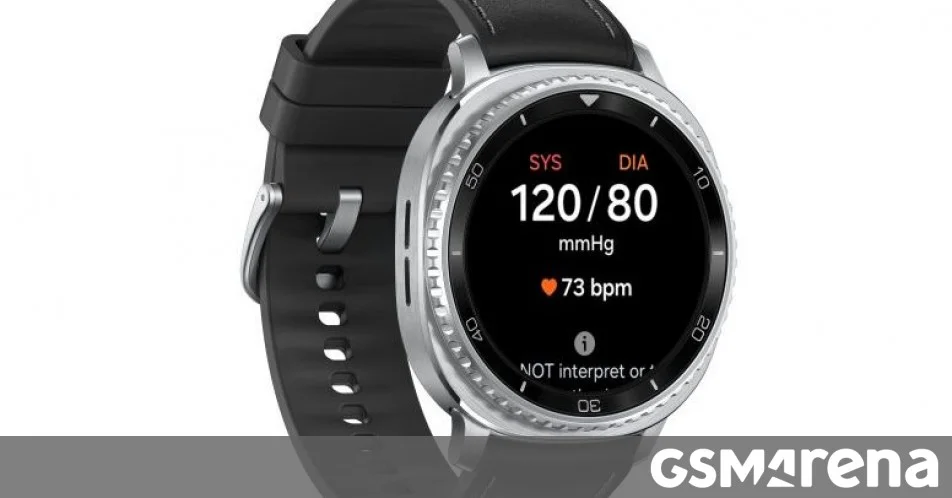
First, let's be clear about what this feature does and doesn't do. The Galaxy Watch doesn't continuously monitor your blood pressure in the background 24/7. When you want a reading, you manually trigger it — similar to how you'd manually take an ECG reading. The watch's optical heart rate sensors then measure both systolic (the higher number, like 120) and diastolic (the lower number, like 80) blood pressure alongside your heart rate. Results appear on the watch screen and are stored in the Samsung Health Monitor app.
The feature requires Samsung Health Monitor — a separate app from Samsung Health — installed on your phone. And here's the part that's getting attention: the watch needs to be paired with a Samsung Galaxy phone. Not just any Android phone. A Samsung phone running Android 12 or higher. So if you're running your Galaxy Watch with a Pixel or OnePlus, blood pressure monitoring isn't available to you.
The calibration requirement — the part nobody mentions clearly
This is the catch. To use blood pressure monitoring on Galaxy Watch, you need to calibrate it using a traditional upper-arm blood pressure cuff. Not once. Every 28 days.
Why? Because optical heart rate sensors measure blood flow through the wrist — they're not the same as the cuff-based oscillometric method that clinical blood pressure devices use. The wrist readings are estimates based on the relationship between your blood flow patterns and actual blood pressure, and that relationship varies person to person and can drift over time. Samsung's calibration process essentially ties the watch's estimates to a known-accurate reference measurement.
The implication: to use blood pressure monitoring, you need to own an upper-arm blood pressure cuff, and you need to remember to redo calibration every four weeks. The cuff isn't included with the watch. For people who already have a blood pressure monitor at home — common in households where someone manages hypertension — this isn't a big deal. For people buying Galaxy Watch specifically for this feature, it adds an extra cost (a decent digital arm cuff costs ₹1,500–₹3,000 in India) and an ongoing maintenance habit.
Samsung's health wearable roadmap and what's coming
Samsung has confirmed that passive blood pressure trend monitoring is coming later in 2026. Currently, readings are on-demand only — you initiate them. The passive version will monitor trends over time without requiring you to manually take readings, giving you a pattern view of how your blood pressure changes across days and weeks.
This would be significantly more useful than on-demand readings. Blood pressure varies throughout the day — it's lower during sleep, spikes during stress or exercise, affected by food and caffeine. A single on-demand reading gives you a snapshot. Trend monitoring across the day gives you meaningful health data.
Samsung's ECG feature and Sleep Apnea detection are already FDA-cleared. Blood pressure monitoring is not FDA-cleared and is explicitly positioned as a "wellness tool" — it cannot be used to diagnose or treat high blood pressure. That's a legally important distinction, and it means the feature should be understood as a tracking and awareness tool rather than a medical diagnostic.
How does this compare to Apple Watch and other wearables?
Apple Watch on newer models (Series 10 and Ultra 2) got FDA-cleared hypertension alerts in September 2025. Apple's implementation passively monitors and alerts you when it detects signs of high blood pressure — no calibration required. That's a meaningfully better implementation for most users: no cuff needed, passive rather than on-demand.
The important distinction: Apple's feature is hypertension detection — it detects patterns that suggest high blood pressure and alerts you to consult a doctor. Samsung's feature attempts to give you actual blood pressure numbers (systolic/diastolic readings). Different approaches with different accuracy profiles and regulatory statuses.
For Indian users choosing between Apple Watch and Galaxy Watch on health features, ECG and sleep apnea are available on both. Blood pressure monitoring is available on Galaxy Watch (requires calibration). Hypertension alerts are available on newer Apple Watch models. If blood pressure tracking is your primary reason for buying a smartwatch, Galaxy Watch has a more complete on-demand measurement experience — if you're willing to do the calibration routine.
What Indian Galaxy Watch users should check
If you already own a Galaxy Watch 4 or later and use Samsung Health Monitor, check for updates. Blood pressure monitoring availability may vary by region — it's been available in India since 2020, but specific models and Wear OS version requirements apply. Galaxy Watch running Wear OS 4 or higher is the current requirement.
For Galaxy Watch users who don't have blood pressure monitoring showing up yet: check that Samsung Health Monitor is updated to the latest version, and that your phone is a Samsung Galaxy device running Android 12 or higher. Non-Samsung phones won't get this feature regardless of updates.
One practical tip for Indian users: if you're already managing blood pressure or have a family history of hypertension, using Galaxy Watch blood pressure monitoring alongside a proper arm cuff gives you a useful combination. The watch gives you convenient trend awareness, the arm cuff gives you accurate readings when you need them. Use them together rather than treating the watch as a replacement for the cuff.
TamilTech's take
The 28-day calibration requirement is genuinely annoying, but it's honest — Samsung is acknowledging that wrist-based blood pressure measurement isn't as accurate as a proper cuff, and requiring calibration is the responsible way to offer the feature without misleading users. Apple choosing to not offer on-demand readings and instead offering pattern-based hypertension alerts is also a legitimate approach. Neither approach is wrong. The difference is in what each company thinks users actually need — Samsung says "give me my numbers," Apple says "alert me if something's wrong." For health-conscious Indian users who are already monitoring blood pressure for themselves or family members, Galaxy Watch's calibrated approach is actually quite practical. The feature works well in India's context where home blood pressure monitoring is already common — many Indian households have an arm cuff due to hypertension prevalence. The Galaxy Watch blood pressure feature makes the most sense as a supplement to that existing habit, not a replacement for it.



Comments (0)
Be the first to comment!