


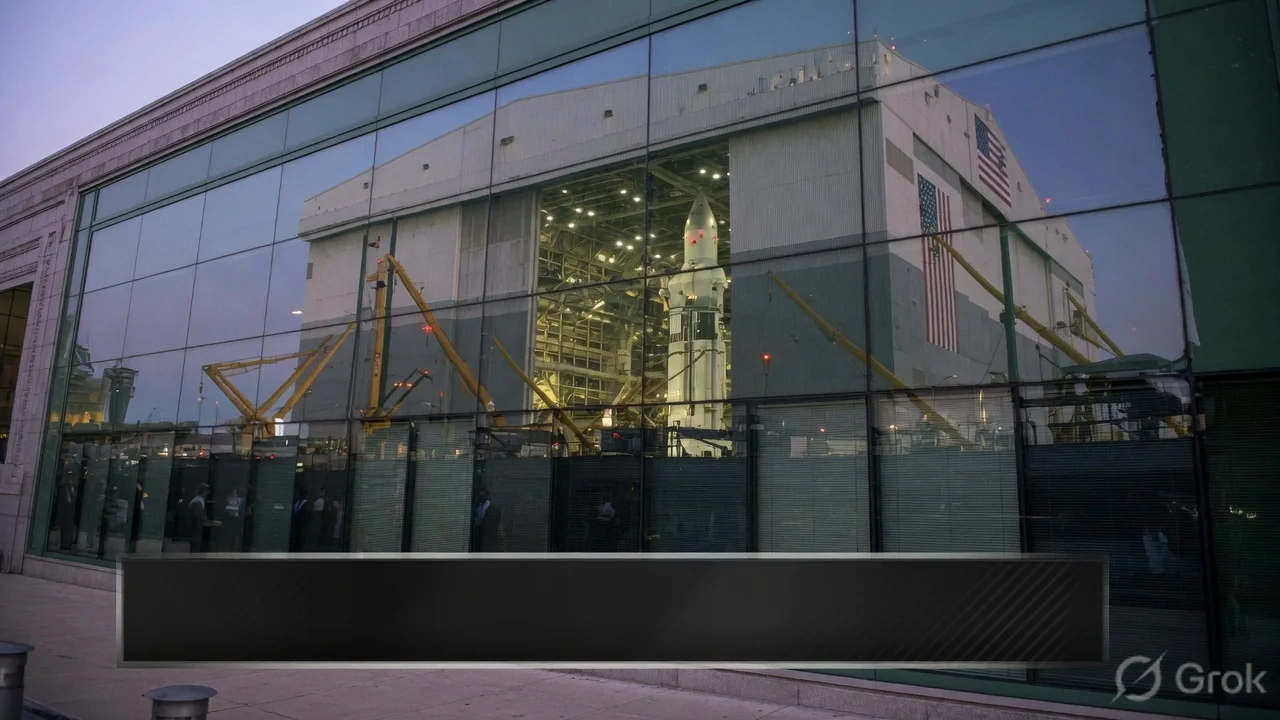
The biggest IPO ever — and it just got filed quietly
Most IPOs get announced with press releases and investor roadshows and a lot of fanfare. SpaceX did the opposite. The company filed what's called a confidential IPO registration with the US Securities and Exchange Commission — meaning the paperwork went in, the SEC review process started, and almost nobody knew about it until reports started coming out.
The numbers attached to this filing are genuinely hard to process. SpaceX is reportedly targeting a valuation of up to $1.75 trillion. The company is looking to raise up to $75 billion from the public offering. For context: the biggest US IPO ever was Alibaba in 2014, which raised $22 billion. $75 billion would be more than three times that. This isn't just a big IPO — if it happens at those numbers, it rewrites the record books entirely.
What is SpaceX and why is it worth this much?
SpaceX was founded by Elon Musk in 2002 with an audacious goal: build reusable rockets and eventually get humans to Mars. In the early years, it nearly went bankrupt three times. Then the Falcon 9 rocket program succeeded, SpaceX became NASA's primary launch partner after the Space Shuttle program ended in 2011, and the business completely transformed.
Today SpaceX is essentially two massive businesses bundled into one company. The first is the rocket and launch business — Falcon 9 and Falcon Heavy rockets carry commercial and government satellites, astronauts to the International Space Station, and military payloads. SpaceX has received over $24 billion in US government contracts since 2008. It's become so dominant in launch services that competitors are struggling to keep up.
The second business is Starlink — the satellite internet network that SpaceX has been building by launching thousands of small satellites into low Earth orbit. Starlink now has over 9 million subscribers globally and generates over $10 billion in annual revenue. Analysts project that number could reach $24 billion by end of 2026. Starlink is the real driver of SpaceX's trillion-dollar valuation — it's essentially a global internet provider that happens to own the satellites, the rockets that launch them, and the ground hardware.
And then there's the xAI merger. In February 2026, SpaceX merged with Elon Musk's AI company xAI — the company behind the Grok chatbot. The combined entity was valued at $1.25 trillion at the time of the merger. Add the IPO premium on top of that and you get to the $1.75 trillion target valuation being reported.
What does a confidential filing mean?
A confidential IPO filing — officially called a draft S-1 registration — allows a company to submit its financial documents and business disclosures to the SEC for review before making them public. This is standard for large companies going public; it gives them time to work through regulatory questions privately before the public scrutiny begins.
Once the SEC completes its review, SpaceX will have to release a public version of its prospectus — that's the document where all the real numbers come out: revenue, profit/loss, risk factors, Starlink subscriber growth, government contract details. That public filing has to happen at least 15 days before the formal IPO roadshow begins. A June 2026 listing timeline means the public documents could appear as early as May.
Until that public filing drops, most of the numbers circulating — the $1.75 trillion valuation, the $75 billion fundraise target — are based on sources familiar with the deal, not official disclosures. Take them as directionally accurate, not confirmed.
Elon Musk's wealth situation after this IPO
Currently Elon Musk's net worth is approximately $840 billion, making him the world's richest person by a significant margin. Most of that wealth comes from Tesla stock — Tesla's market cap is around $1.4 trillion and Musk owns a large stake. SpaceX has been private all this time, so his SpaceX holdings don't show up in public market valuations.
When SpaceX lists, Musk will be the first person in history to simultaneously lead two separate publicly traded companies each worth over $1 trillion. Tesla is already there. SpaceX at $1.75 trillion would be there too. It's an unprecedented situation in corporate history.
Can Indian investors buy SpaceX stock?
This is what most Indian readers will want to know. The honest answer: it's complicated, but not impossible.
SpaceX is reportedly considering listing on Nasdaq. Indian investors can already invest in US-listed stocks through platforms like Groww, INDmoney, Vested, and ICICI Direct International. The Liberalized Remittance Scheme (LRS) allows Indian residents to invest up to $250,000 (approximately ₹2 crore) per year in foreign assets including US stocks.
So technically, if SpaceX lists on Nasdaq, an Indian investor with a Groww or INDmoney international account could buy SpaceX shares. The question is price — if SpaceX IPOs at $1.75 trillion valuation and issues, say, 5% of shares in the offering, each individual share price will depend on how they structure the share count. It could be accessible or it could be the kind of stock where a single share costs several hundred dollars.
SpaceX is also reportedly planning to allocate up to 30% of IPO shares to retail investors — significantly higher than the typical 10-15%. That's a deliberate choice to broaden ownership, and it makes it more likely that regular investors (including internationally) get meaningful allocation rather than the whole offering going to institutional funds.
One important caveat: SpaceX has defense and government contracts that might trigger restrictions on foreign ownership in certain share classes. This is something to watch once the actual prospectus is public. It could limit how much non-US investors can own.
What this means for the space and tech industry
SpaceX going public at a $1.75 trillion valuation would be a watershed moment for the commercial space industry. It would validate the business model — that private companies can build rockets, operate satellite networks, and generate the kind of revenue and profit that justifies public market valuations that rival Apple and Microsoft.
For India specifically, ISRO has been working to increase its commercial launch business through NewSpace India Limited (NSIL), and India has a growing private space sector — Skyroot Aerospace, Agnikul Cosmos, and others are building their own rockets. A SpaceX IPO at these numbers sends a clear signal to Indian investors and entrepreneurs: commercial space is a real business, not just a government science project.
Starlink's India situation is also relevant here. Starlink launched in India in 2023 and has been expanding, particularly in rural and semi-urban areas where fixed broadband doesn't reach. When SpaceX is a public company with quarterly earnings calls and analyst coverage, Starlink India's subscriber numbers and revenue will suddenly be under a much brighter spotlight — which could accelerate both investment and regulatory attention.
What happens next
The confidential filing is in. The SEC review will take several weeks. A public prospectus is expected in April or May 2026. The roadshow — where SpaceX executives pitch institutional investors — would follow. If the June timeline holds, trading could begin around mid-2026.
Between now and then, watch for the public S-1 filing. That's when the real financial data comes out and analysts can properly assess whether the valuation is justified. The $1.75 trillion number is ambitious — it implies SpaceX is worth more than Google parent Alphabet is today. Whether public market investors agree with that assessment is the open question.
TamilTech's take
SpaceX going public has been rumored for years — Musk has repeatedly said Starlink might eventually list separately, or SpaceX might go public once the business was mature enough. The xAI merger and this confidential filing suggest he's decided the time is now. For tech and space enthusiasts, this is genuinely exciting: the company that built reusable rockets, is building a Mars spacecraft, and is beaming internet from space would become publicly investable. For Indian investors specifically, the LRS route to US stocks makes this accessible in theory. Wait for the public prospectus before making any decisions — the numbers floating around right now are sourced, not official. But start paying attention, because when that document drops, it's going to be one of the most-read financial filings in years.





Comments (0)
Be the first to comment!