


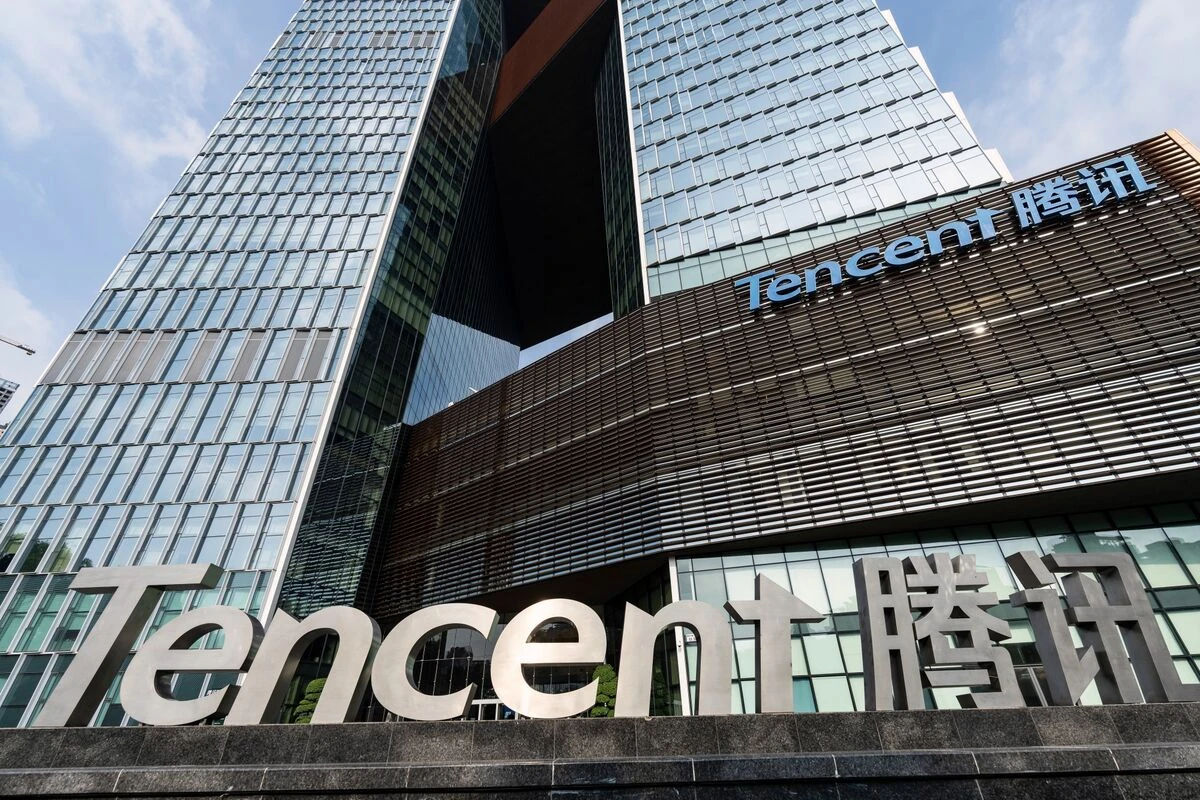
Tencent Seizes Momentum in China's AI Race Against Alibaba
China's artificial intelligence battleground is shifting. For years, Alibaba was considered the frontrunner in China's enterprise AI race — its Qwen models drew global attention, its cloud business powered AI workloads across Asia, and its open-source strategy earned it credibility in developer communities worldwide. But in 2025, Tencent is making a bold move to seize the momentum, and the competition between these two tech titans is reshaping the future of AI in the world's second-largest economy.
With over 1.3 billion WeChat users, a deep gaming and entertainment empire, and quietly powerful AI infrastructure, Tencent is leveraging every advantage it has. The question is no longer whether Tencent can compete in AI — it is whether Alibaba can hold its lead.
The Landscape: China's AI Race in 2025
China's AI ecosystem is among the most competitive in the world. Baidu, the search giant, was first to market with a ChatGPT rival (Ernie Bot). ByteDance launched Doubao, which quickly became China's most downloaded AI app. Huawei built its own AI chips to circumvent US sanctions. And DeepSeek, a relatively unknown startup, stunned the global AI community with its R1 model — a reasoning powerhouse built at a fraction of what Western labs spend.
But the two companies with the most to gain — and the deepest resources — are Tencent and Alibaba. Together, they control significant portions of China's cloud infrastructure, consumer apps, and enterprise software market. Their AI strategies will define the next decade of Chinese tech.
Tencent's Weapons: Hunyuan, WeChat, and Distribution
Tencent's AI push centers on its Hunyuan family of models. First unveiled in 2023, Hunyuan has evolved into a multimodal powerhouse capable of handling text, images, video, code, and voice. In 2025, Tencent released significant upgrades:
- Hunyuan Large — a Mixture-of-Experts (MoE) model rivaling frontier models in reasoning and coding benchmarks
- Hunyuan Turbo — optimized for speed and cost efficiency, ideal for enterprise deployments
- Hunyuan Video — an open-source video generation model that went viral globally, praised for cinematic quality
- Hunyuan 3D — 3D asset generation from text or images, targeting gaming and metaverse applications
But Tencent's real weapon is not a model — it is WeChat. With 1.3 billion monthly active users, WeChat is the operating system of daily life in China. Payments, social networking, government services, food delivery, healthcare — all run through WeChat. Integrating AI natively into WeChat gives Tencent a distribution channel that no competitor, including Alibaba, can replicate.
In 2025, Tencent began rolling out AI features directly inside WeChat — AI-powered search, document summarization, smart replies, and an AI assistant embedded in the super-app. This is not AI for AI's sake. This is AI reaching 1.3 billion people through the app they cannot live without.
Alibaba's Position: Qwen, Cloud, and Open Source
Alibaba is not standing still. Its Qwen model family — developed by Alibaba Cloud's DAMO Academy — has become one of the most respected open-source AI model series in the world. Qwen 2.5 and its variants top multiple international benchmarks, and Alibaba has open-sourced many versions, building a global developer community.
Key Alibaba AI moves in 2025:
- Qwen 2.5-Max — Alibaba's most capable closed model, competitive with GPT-4o on Chinese-language tasks
- Qwen 2.5-Coder — specialized coding model, widely adopted by developers across Asia
- Qwen Long — handles 1 million token context windows, useful for document-heavy enterprise use cases
- Alibaba Cloud AI integration — Qwen models deeply embedded into Aliyun services, used by hundreds of thousands of enterprise customers
Alibaba also integrated AI into its e-commerce core. Taobao and Tmall now use AI for personalized recommendations, AI-powered customer service, and AI-generated product descriptions. Its logistics arm Cainiao uses AI for route optimization across China's massive delivery network.
The DeepSeek Effect: How One Startup Changed Everything
No discussion of China's AI race is complete without DeepSeek. In January 2025, DeepSeek released its R1 reasoning model — and the global AI community was stunned. R1 matched or surpassed OpenAI's o1 on several benchmarks, cost a fraction to train, and was fully open-sourced.
DeepSeek's success had two immediate effects:
- It proved that China could build frontier AI models despite US chip export controls
- It forced Tencent and Alibaba to accelerate their own release cycles and price cuts
Both companies responded aggressively. Alibaba cut Qwen API prices by up to 97% in early 2025. Tencent slashed Hunyuan pricing similarly. The race to the bottom on API costs mirrors what happened in cloud computing — and both companies believe that whoever achieves mass adoption now will dominate the enterprise AI market for years.
Where Tencent Has the Edge
| Advantage | Tencent | Alibaba |
|---|---|---|
| Consumer Distribution | WeChat (1.3B users) | Taobao/Tmall/Alipay |
| Gaming & Entertainment | Dominant (Honor of Kings, etc.) | Limited |
| Video Generation | Hunyuan Video (viral globally) | Catching up |
| Enterprise Cloud | Tencent Cloud (growing) | Aliyun (leader) |
| Open Source Reputation | Growing | Strong (Qwen series) |
| E-commerce AI | Limited | Deep integration |
| Developer Ecosystem | Growing | Established |
Tencent's strongest advantage is consumer reach. When you can push an AI feature to 1.3 billion people through a single app update, you have an unmatched testing ground — and an unmatched monetization surface. Every interaction on WeChat becomes AI training data. Every WeChat Pay transaction becomes a signal for financial AI. Every WeChat search becomes input for a smarter recommendation engine.
The Chip Problem: Both Companies Face the Same Wall
Both Tencent and Alibaba face a constraint that neither can fully solve: US export controls on advanced AI chips. NVIDIA's H100 and A100 GPUs — the standard compute for training frontier AI models — are largely restricted from sale to Chinese companies.
Both companies have responded by:
- Stockpiling older-generation NVIDIA chips (H800, A800) before restrictions tightened
- Investing in domestic alternatives from Huawei (Ascend 910B) and Cambricon
- Optimizing model architectures (like MoE) to train powerful models with less compute
- Partnering with the Chinese government on domestic chip development
The chip constraint is real — but both companies are proving it is not insurmountable. DeepSeek's R1 was a masterclass in efficiency: world-class performance on a budget. Chinese AI labs are becoming experts at doing more with less.
What This Means for Global AI Competition
The Tencent-Alibaba rivalry is not just a Chinese story. It has direct implications for the global AI landscape:
- Open source pressure: Alibaba's Qwen and Tencent's Hunyuan releases put downward pressure on closed model pricing globally
- Multimodal innovation: Chinese labs are producing competitive image, video, and 3D generation models that rival Sora, DALL-E, and Stability AI
- Enterprise AI adoption: Both companies are driving AI adoption in Southeast Asia, the Middle East, and Africa — markets where US companies have less reach
- India implications: Indian enterprises evaluating AI vendors now have competitive Chinese alternatives, especially in cost-sensitive segments
The Road Ahead: Who Wins China's AI Race?
There may not be a single winner. China's AI market is large enough for multiple dominant players. Baidu owns search AI. ByteDance dominates consumer AI apps. Huawei controls the hardware narrative. DeepSeek holds the research credibility crown.
But in the battle between Tencent and Alibaba specifically:
- Tencent wins on consumer distribution — WeChat is an unassailable moat
- Alibaba wins on enterprise cloud — Aliyun is China's AWS
- Tencent is closing the gap on research and open source
- Alibaba is closing the gap on consumer AI integration
The momentum in early 2025 clearly favors Tencent. Its Hunyuan Video success created global buzz, its WeChat AI integration gave it mass-market reach no competitor can match, and its aggressive pricing strategy signals a long-term commitment to winning the AI infrastructure battle.
But Alibaba's Qwen models remain technically respected, its cloud business remains dominant, and its open-source strategy continues to attract the global developer community. This race is not over. In fact, it is just getting started.
Conclusion
China's AI race is one of the most consequential technology competitions of our time. While the world watches OpenAI vs. Google in the West, the Tencent vs. Alibaba battle in China is equally significant — and equally fascinating. Both companies have the resources, the talent, and the strategic intent to build world-class AI. The difference in 2025 is momentum, and right now, Tencent has it.
For developers, enterprises, and investors globally — including in India — this rivalry is worth watching closely. The models coming out of Shenzhen and Hangzhou are not just competing with each other. They are competing with Silicon Valley.

Comments (0)
Be the first to comment!