


Key Takeaways
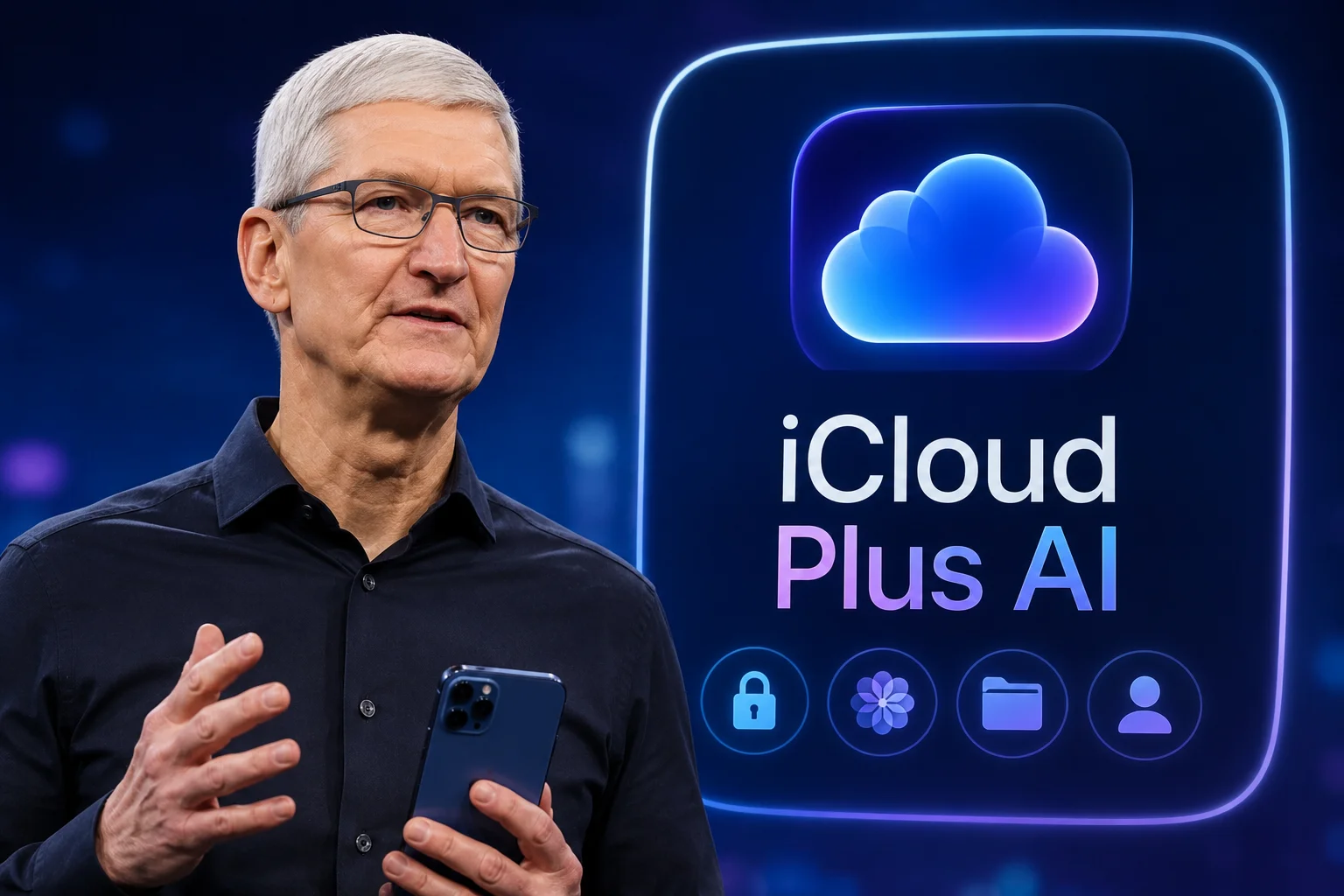
- Tim Cook hinted that while basic Apple Intelligence remains free, 'power user' features will likely move to a paid iCloud+ AI tier by late 2026.
- The rumored subscription could include advanced Siri capabilities, unlimited Private Cloud Compute, and high-end generative image tools.
- Expected India pricing for the AI add-on could range between ₹400 to ₹800 per month, potentially bundled with Apple One.
- The shift follows similar moves by Google and Microsoft, who already charge for premium AI models like Gemini Advanced and Copilot Pro.
Wait, did we see this coming? Honestly, yes. For the past two years, Apple has been giving us a taste of 'Apple Intelligence' for free, but the party might be ending soon. During a recent talk, Tim Cook dropped some not-so-subtle hints that the really 'heavy' AI features—the ones that require massive server power—might soon sit behind a paywall. We are talking about a potential iCloud Plus AI tier that could change how you use your iPhone, iPad, and Mac.
The Evolution of Apple Intelligence: How We Got to 2026
Let’s take a trip down memory lane. Back in 2024, when Apple first announced Apple Intelligence, the focus was entirely on 'on-device' processing. They promised us that our data wouldn't leave our phones. But as AI models grew more complex in 2025 and now in 2026, the hardware on even the latest iPhone 17 Pro Max has its limits. Apple had to rely more on 'Private Cloud Compute'—their own secure servers—to handle the heavy lifting. Running these servers isn't cheap. It costs billions in electricity, hardware, and cooling. For a company that loves its services revenue, it was only a matter of time before they asked us to chip in.
Currently, Apple Intelligence helps us rewrite emails, summarize notifications, and clean up photos. These are great, but they are 'basic' by 2026 standards. The industry has moved toward massive multimodal models that can generate video, write complex code, and act as a full-blown personal assistant. Tim Cook’s recent comments suggest that while the 'basics' will stay free to keep people buying iPhones, the 'Pro' experience will be a subscription. This follows the path of the 'Freemium' model that has become the standard in the tech world today.
What Exactly is the 'iCloud Plus AI' Tier?
So, what are you actually paying for? Based on our analysis at TamilTech, this isn't just about more storage. We expect this new tier to unlock 'Siri Pro.' Imagine a Siri that doesn't just set timers but actually navigates through your apps, books your flight tickets via IRCTC, and manages your complex work spreadsheets. This requires massive cloud-side processing. A free user might get 50 'Pro' requests a month, while an iCloud Plus AI subscriber gets unlimited access. This is very similar to how ChatGPT or Claude operates right now.
Another big feature could be 'Generative Video' and high-resolution 'Image Playground' tools. Right now, on-device generation is fast but often lacks the detail of cloud-based models like Midjourney. By moving these to a paid tier, Apple can offer studio-quality generation without worrying about the massive server costs being 'free.' We also expect 'Priority Access' to new AI models. When Apple releases a new version of their LLM (Large Language Model), paid subscribers will likely get it months before the general public. It’s all about creating a 'VIP' lane for power users who rely on their iPhones for work.
The India Impact: Pricing and the 'Apple One' Bundle
Now, let's talk about the part that matters most to us—the price in India. Currently, iCloud+ starts at ₹75 for 50GB. If Apple introduces an AI-specific tier, they won't just double that price. They will likely position it as a premium 'add-on.' In the US, rumors suggest a $10 to $20 monthly fee. In India, considering Apple’s localized pricing strategy, we could see this landing around ₹499 to ₹799 per month. That’s a significant jump for someone used to paying under a hundred bucks for storage.
However, the real value will come from the 'Apple One' bundle. We expect Apple to introduce an 'Apple One Premier AI' plan in India. This would include Apple Music, Apple TV+, Arcade, 2TB of storage, and full AI features for a bundled price of maybe ₹1,200 to ₹1,500 per month. For a family sharing these services, it starts to make sense. But for the individual user who just wants a smarter Siri, this might feel like a 'Siri Tax.' With UPI making subscriptions so easy in India, Apple is counting on the convenience factor to drive sign-ups among the growing pro-user base in cities like Bengaluru, Chennai, and Mumbai.
Real-World Use Cases: Why Would You Pay?
You might be wondering, "Why should I care? My iPhone works fine." Let’s look at a real-world scenario. Imagine you are a small business owner in Coimbatore. You get hundreds of WhatsApp messages and emails daily. A 'Pro' AI could automatically sort these, draft replies in professional Tamil or English, and even create marketing posters for your Instagram using just a text prompt—all within the native Apple interface. No need to switch between five different apps like ChatGPT, Canva, and Gmail. Everything is integrated.
For students, this could mean an AI that can read through a 100-page PDF of a college lecture and create a personalized study plan and flashcards in seconds. For creators, it’s about having a video editor built into the Photos app that can automatically cut a vlog based on the 'vibe' you describe. These aren't just 'cool' features anymore; in 2026, these are productivity tools. If you can save 2 hours of work every day, paying ₹500 a month starts to look like a very cheap investment.
Comparison: Apple vs. Google vs. Microsoft
Apple isn't alone in this. Google already has the 'Google One AI Premium' plan which gives you Gemini Advanced and 2TB of storage for roughly ₹1,625 per month (though they often have offers). Microsoft has Copilot Pro for ₹1,600 per month. If Apple enters the market at ₹600-₹800, they are actually undercutting the competition. But there’s a catch—Apple’s AI only works on Apple devices. Google and Microsoft work everywhere.
The advantage Apple has is 'Deep Integration.' While Google Gemini is an app you open, Apple Intelligence is baked into the operating system. It knows your calendar, your messages, and your habits. This 'Contextual Awareness' is something third-party apps struggle with due to privacy restrictions. Apple is basically saying, "We give you the best privacy and the best integration, but you have to pay for the server power." It's a compelling argument, but it might alienate users who feel they already paid a premium for the hardware.
TamilTech’s Honest Take: Is it a Trap?
So, what do we think at TamilTech? Honestly, it’s a bit of a double-edged sword. On one hand, the cost of running AI is real, and we can’t expect Apple to provide infinite cloud computing for free forever. On the other hand, when you buy a ₹1,50,000 iPhone, you expect the 'full' experience. Locking the best features of the phone behind a monthly subscription feels a bit like buying a luxury car and then being told you have to pay a monthly fee to use the air conditioning.
Our advice? Don't jump in on day one unless you are a professional who truly needs those tools. The 'Free' version of Apple Intelligence will likely be enough for 80% of users. For the rest, wait and see if the 'Pro' features actually save you time or money. We expect Apple to offer a 1-month or 3-month free trial for new iPhone 18 buyers (coming later this year). Use that trial period to see if Siri Pro actually understands your accent and your workflow before you commit your hard-earned money.
What to Expect Next?
We expect a formal announcement during the iPhone 18 launch event in September 2026. Apple will likely frame this as 'iCloud+ with Apple Intelligence.' Watch out for the 'Apple One' updates as well. If you are currently on a basic 50GB plan, you might get a prompt to upgrade soon. Stay tuned to TamilTech; we will be the first to test these features in an Indian context—testing Siri with Indian accents and checking how it handles local apps like Swiggy and Zomato. The future is smart, but it’s definitely not free.




Comments (0)
Be the first to comment!