


Key Takeaways
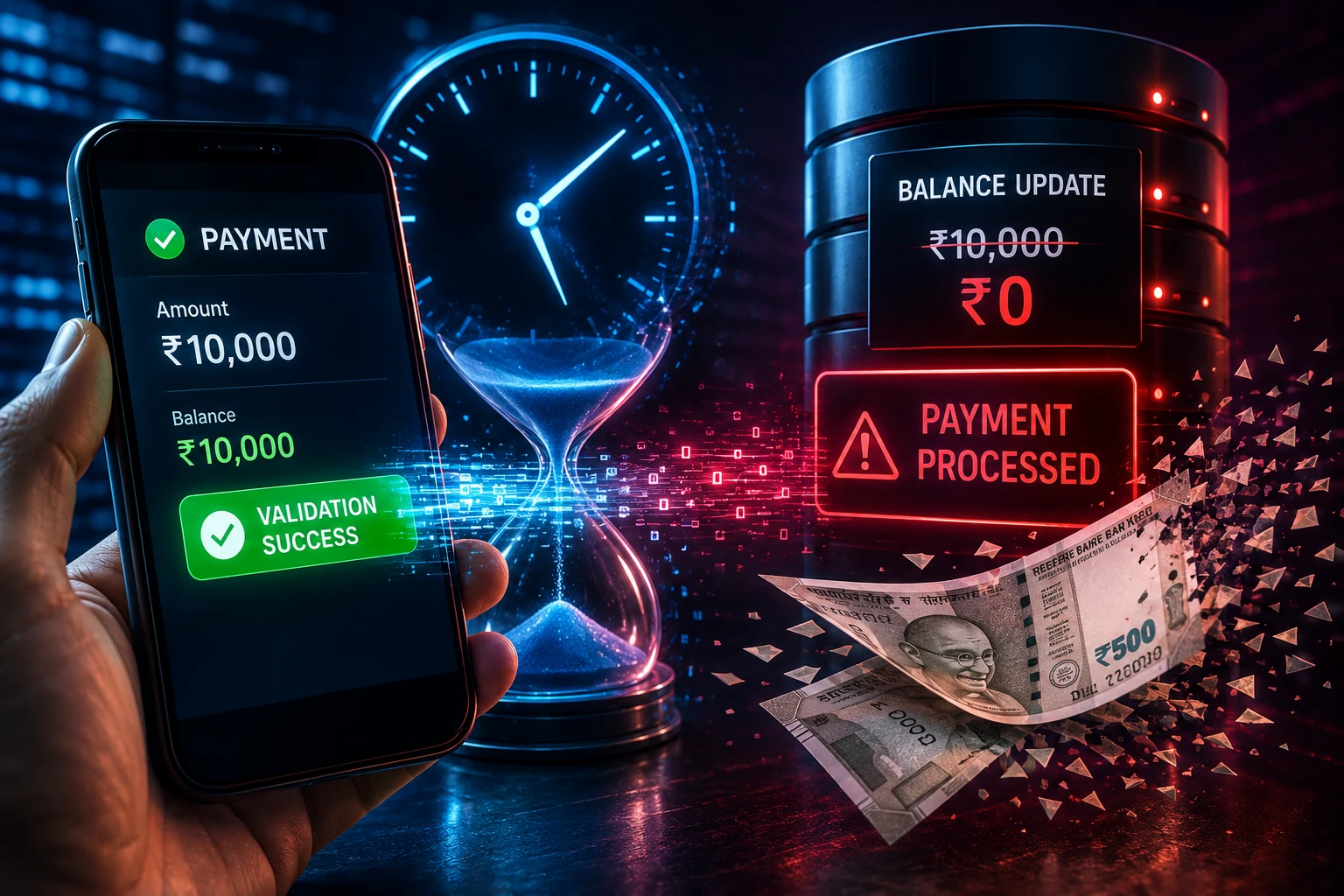
- TOCTOU attacks exploit the time gap between validation and execution in payment systems, potentially allowing attackers to manipulate transaction amounts or recipient details
- UPI and digital wallet platforms are increasingly vulnerable as they handle millions of INR transactions daily with complex multi-step validation processes
- Indian payment processors have implemented real-time validation checks and atomic transaction commits to mitigate these risks in 2026
- Mobile banking apps using JioPhone and basic smartphones face higher TOCTOU risks due to limited processing power and network latency
- RBI and NPCI have issued updated guidelines requiring payment apps to implement transaction integrity checks within 500ms window
What's the News
Recent security audits by Indian fintech companies have revealed concerning TOCTOU vulnerabilities in several popular payment apps. These vulnerabilities allow attackers to intercept and modify payment details between the moment a user validates a transaction and when it's actually processed. The issue has become particularly critical with the surge in UPI transactions crossing 12 billion monthly in 2026.
Details
TOCTOU (Time-of-Check-to-Time-of-Use) attacks occur when there's a timing gap between when a system validates something and when it uses that validated information. In payment systems, this typically happens during:
- Amount validation
- Recipient verification
- Account balance checks
- Transaction limit verification
For example, a malicious actor could change the recipient's UPI ID or modify the transaction amount after the user has confirmed the payment but before the system processes it. The validation happens with one set of data, but the execution uses different, potentially malicious data.
India Impact
The impact of TOCTOU vulnerabilities in India is particularly severe due to several factors:
- UPI's massive scale means even small vulnerabilities affect millions of daily transactions
- Low-cost smartphones and network connections increase the time window for attacks
- The informal economy relies heavily on digital payments, making security breaches more damaging
- Regional language interfaces in payment apps add complexity to validation processes
Several fintech startups have reported TOCTOU incidents where attackers exploited these vulnerabilities to redirect payments to fraudulent accounts, resulting in losses of several crores INR.
Use Cases
Real-world TOCTOU attacks in Indian payment systems include:
- UPI QR Code Swapping: Attackers replace legitimate QR codes with their own after user scans but before payment confirmation
- Wallet Balance Manipulation: Modifying available balance between validation and debit
- Merchant Account Hijacking: Changing merchant details in payment gateway requests
- Auto-pay Subscription Fraud: Altering recurring payment amounts or merchant details
Flipkart and Amazon India have reported increased attempts at TOCTOU attacks during their Big Billion Days sale, where transaction volumes spike dramatically.
Honest Take
While TOCTOU vulnerabilities sound technical, they have very real consequences for everyday Indians. The convenience of UPI and digital payments comes with security responsibilities that both developers and users must understand.
The good news is that the Indian fintech ecosystem is taking this seriously. NPCI has implemented real-time transaction monitoring, and major payment apps are adopting atomic transaction patterns where validation and execution happen atomically, leaving no room for manipulation.
However, as more Indians come online through JioPhone and other affordable devices, the attack surface grows. We need simpler, more robust security that works even on low-end devices with poor connectivity.
My advice: always double-check payment details before confirming, use official apps from trusted sources, and enable two-factor authentication wherever possible. The future of Indian digital payments depends on balancing convenience with security.


Comments (0)
Be the first to comment!