


Uber is back in the self-driving game — in a big way
So here's something I didn't expect: Uber — the company that sold its entire autonomous vehicle development unit back in 2020 — is now one of the most aggressive players in the robotaxi space. Not by building the technology themselves, but by partnering with everyone who is.
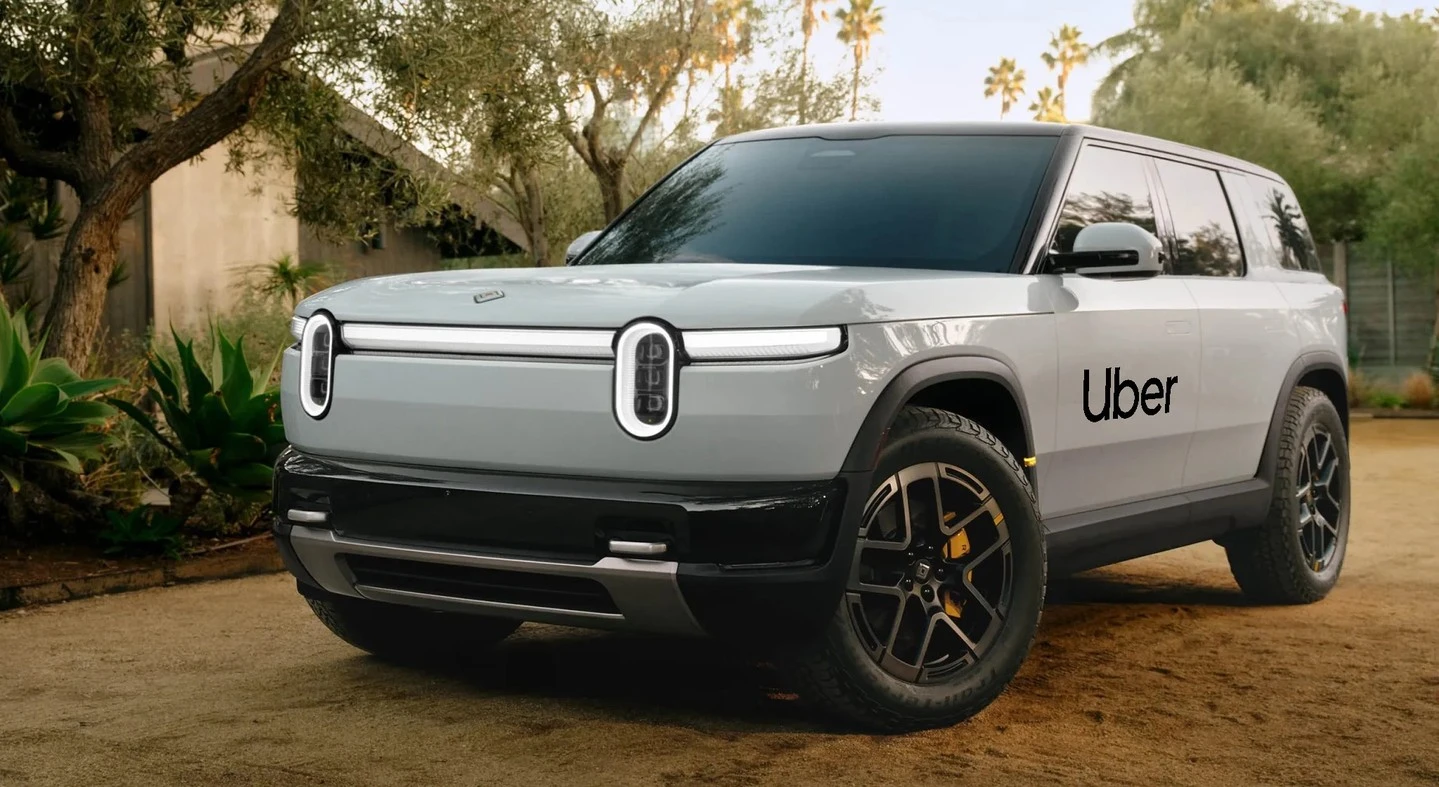
The latest and largest deal: Uber is investing $300 million in Rivian and buying 10,000 fully autonomous R2 robotaxis that will launch in San Francisco and Miami in 2028. Plus, Uber has the option to buy up to 40,000 more starting in 2030. The total deal value could hit $1.25 billion.
This is a genuinely significant moment for both companies. Let me break it down.
What happened to Uber's self-driving ambitions?
Quick context. Uber ATG (Advanced Technologies Group) was once one of the most well-funded autonomous vehicle programs in the world. Then in 2020, Uber sold it — along with its flying taxi unit and other moonshots — to focus on its core delivery and ride-hailing businesses. They kept equity stakes in the companies they sold to, but stepped back from being a developer of self-driving technology.
What they didn't do is step back from autonomous vehicles entirely. Over the past two years, Uber has been quietly signing partnerships with dozens of AV technology companies across robotaxis, delivery, drones, and trucking. They've partnered with Chinese companies to run robotaxis in Europe and the Middle East. They've partnered with UK startup Wayve. And now Rivian.
The strategy is clear: Uber doesn't want to be an AV developer. They want to be the platform that all AV companies plug into. Think of it like the App Store of autonomous transportation.
What is Rivian and why does this matter?
Rivian is an American EV startup — known for the R1T pickup truck and R1S SUV — backed by Amazon and Ford. They've been building out their R2 SUV for the mass market. That R2 platform is what Uber is betting on for robotaxis.
Here's the thing though: Rivian has never built a self-driving system before. The company hasn't started producing the R2 SUV commercially yet. And the factory in Georgia where these robotaxis will supposedly be built? It's still under construction.
This is a big bet on a lot of things that don't exist yet. Which is exactly why the risk analysis on this deal is interesting.
The risk is mostly Rivian's problem
Let's talk about who's taking the bigger risk here. Uber's initial outlay is $300 million — which sounds large but is relatively small for a company Uber's size. And Uber gets 10,000 robotaxis exclusively on its network in return. The risk-reward ratio heavily favors Uber.
Rivian, on the other hand, is doing something it's never done: building an autonomous driving system from scratch while simultaneously trying to scale an EV manufacturing business that's still not profitable. Rivian has already said it no longer expects to hit its profitability goal in 2027 because of how much money it's spending on autonomy. That's a painful admission — and a real signal of how costly this bet is for them.
So Uber gets the upside of 10,000+ driverless cars on its network at relatively low cost. Rivian gets $300 million but has to deliver technology it hasn't built yet, on a timeline that gives them roughly 2 years.
Uber's global AV playbook — and why it's smart
This Rivian deal is actually just the latest in a string of partnerships. Uber has deals with Waymo in the US, Chinese AV companies for Europe and the Middle East operations, Wayve in the UK, and now Rivian. Each partnership adds capacity to Uber's network without Uber having to develop the underlying technology.
It's a remarkably capital-efficient strategy. Developing autonomous driving technology from scratch costs billions and takes decades. Waymo has spent over $35 billion over 15+ years and is only now deploying at meaningful scale. By partnering instead of building, Uber gets the benefit of all these companies' work at a fraction of the cost.
The question is whether Uber's network is actually a meaningful advantage in this deal. If Rivian can build autonomous R2s, do they actually need Uber? Or could they operate their own robotaxi service directly? The exclusivity clause in the deal — Rivian's robotaxis will be exclusively available on Uber's network — suggests Uber negotiated hard on this point.
What this means for India and Indian riders
The 2028 San Francisco and Miami launch is US-focused. So this doesn't directly affect Indian Uber users right now. But the implications for India are worth thinking about longer term.
Uber India is one of the company's largest markets. Indian cities have some of the most complex urban driving conditions in the world — that's both a challenge and an opportunity for autonomous driving. Companies like Waymo and Cruise have explicitly said that Indian urban driving is among the hardest problems in autonomous vehicles, which is why AV deployments will hit US and European cities first.
But Uber's platform strategy means that as AV technology matures globally, Indian cities could eventually see robotaxis on the Uber app — whether through Rivian, Waymo, Chinese AV companies, or Indian startups. The platform is being built now; India joins later.
Closer to home: Ola Electric's parent company Ola has been talking about autonomous vehicles for years. Indian AV startup Minus Zero has been testing in Bangalore. The global investment pouring into robotaxis will accelerate Indian development too, even if the timeline is a decade away for mass deployment in Indian urban conditions.
My honest take
This deal is smarter for Uber than it looks on the surface. $300 million for exclusivity on 10,000+ autonomous vehicles is a good deal if Rivian delivers. And even if Rivian stumbles, Uber's exposure is limited.
For Rivian, this is existential pressure. They need to prove they can build autonomous driving tech while simultaneously scaling EV manufacturing. That's two incredibly hard problems at once. Pushing back their profitability timeline to 2027+ to fund this is a real sacrifice.
The 2028 launch target is ambitious. Waymo has been at this since 2009 and they're only now at scale. Rivian is starting from scratch. I'll believe the 2028 San Francisco launch when I see it — but I do believe the eventual outcome, which is that Uber becomes the dominant platform for robotaxi deployment globally by partnering rather than building.
For Indian tech enthusiasts tracking autonomous vehicles: this is the future arriving in slow motion. The deals being signed today determine whose cars will be on the streets in 2030. Uber just secured a significant piece of that future.

Comments (0)
Be the first to comment!