


What’s the buzz?
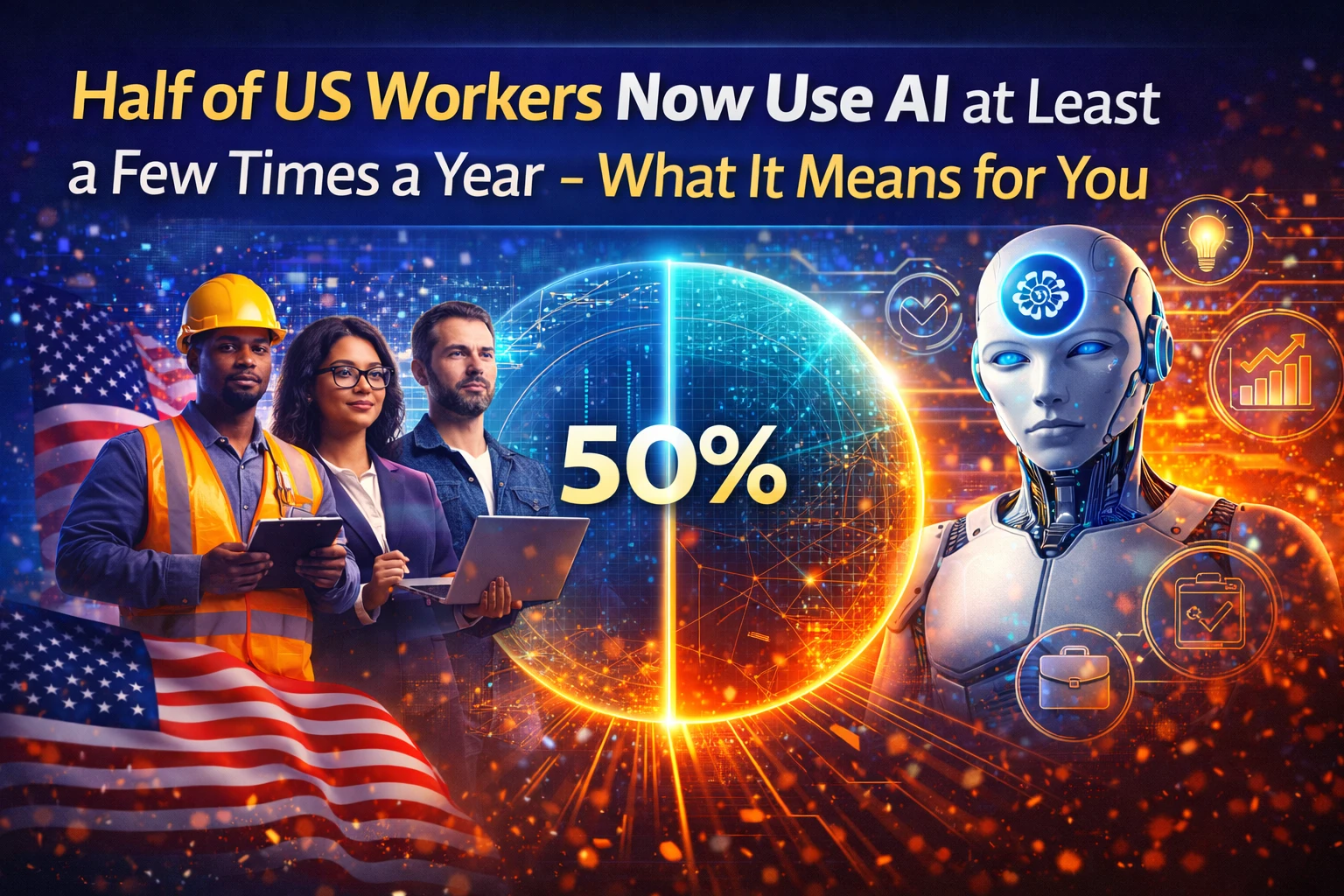
Recent surveys show that one out of every two employed Americans now uses artificial intelligence tools – think ChatGPT, DALL·E, or Copilot – at least a few times a year in their day‑to‑day job. That’s a jump from just 30% a year ago. Even more interesting: senior leaders are far more upbeat about the impact, calling it a "positive force" for productivity.
Numbers that speak
Here’s the quick rundown:
- 50% of employed US adults report using AI at work a few times per year or more.
- Among senior managers and C‑suite execs, the positivity rate climbs to 68% – they believe AI will help them hit targets faster.
- Only 22% of workers say AI has made their job harder or risky.
That means AI is no longer a niche curiosity; it’s becoming a regular utility, much like spreadsheets or email.
Why leaders are cheering
Executives point to three main benefits:
- Speed. Drafting reports, code snippets, or market analyses now takes minutes instead of hours.
- Cost‑efficiency. A single AI licence can replace multiple freelance gigs or manual research tasks.
- Innovation. Brain‑storming new product ideas or visualising concepts with generative AI sparks creativity that was hard to capture before.
Most of them also admit they’re still figuring out the right governance – data privacy, bias checks, and up‑skilling their teams.
What’s the Indian angle?
We might be a few months behind the US curve, but the signs are already there. Indian enterprises are pouring money into AI‑enabled platforms – from Microsoft Copilot for Microsoft 365 (now available in India) to Google Workspace’s AI helpers. A few points to keep in mind:
- Cost. While a US enterprise might spend $30‑$50 per user per month on AI tools, Indian firms are negotiating INR 1,200‑2,500 per seat – still a sizable line‑item for SMBs.
- Skill gap. A recent NASSCOM report says only 15% of Indian IT workers feel confident using generative AI daily. Upskilling programmes are sprouting, but they need to scale fast.
- Regulatory watch. The Data Protection Bill (draft) is pushing for stricter consent when personal data is fed to AI models. Companies will have to build compliance layers sooner rather than later.
TamilTech’s take – the good, the bad, and the next steps
We’re excited because the numbers prove what many of us have felt: AI is finally moving from hype to workhorse. But there are a few caveats:
- Over‑reliance risk. If you let AI write every email, you might lose your own voice and miss subtle compliance cues.
- Bias blind spots. Generative models still echo the data they’re trained on. A sales pitch generated for a regional market could unintentionally use culturally insensitive language.
Our recommendation? Treat AI as a co‑pilot, not a solo driver. Start with low‑stakes tasks – drafting meeting agendas, summarising research papers – and gradually expand as you build trust and governance.
How to get started (quick 3‑step guide)
- Pick a pilot tool. For most office workers, ChatGPT (free tier) or Microsoft Copilot (if you already have Office 365) are the easiest entry points.
- Set a policy. Draft a one‑page AI‑use guideline – cover data privacy, approval workflow, and when a human must double‑check the output.
- Measure impact. Track time saved on a few recurring tasks for a month. If you see a 20‑30% reduction, you’ve got a case for broader rollout.
What’s next?
Expect AI integration to become a KPI in many job descriptions by 2025. Companies that adopt early and set clear guardrails will likely see a talent‑attraction edge – after all, younger professionals love working with the latest tools.
Stay tuned, because the next wave will bring AI‑powered analytics dashboards, real‑time language translation in meetings, and maybe even AI‑driven code reviews that catch bugs before they compile.
Bottom line: if half of US workers are already tapping AI, the question for Indian firms isn’t "if" but "how fast" you’ll hop on board.





Comments (0)
Be the first to comment!