


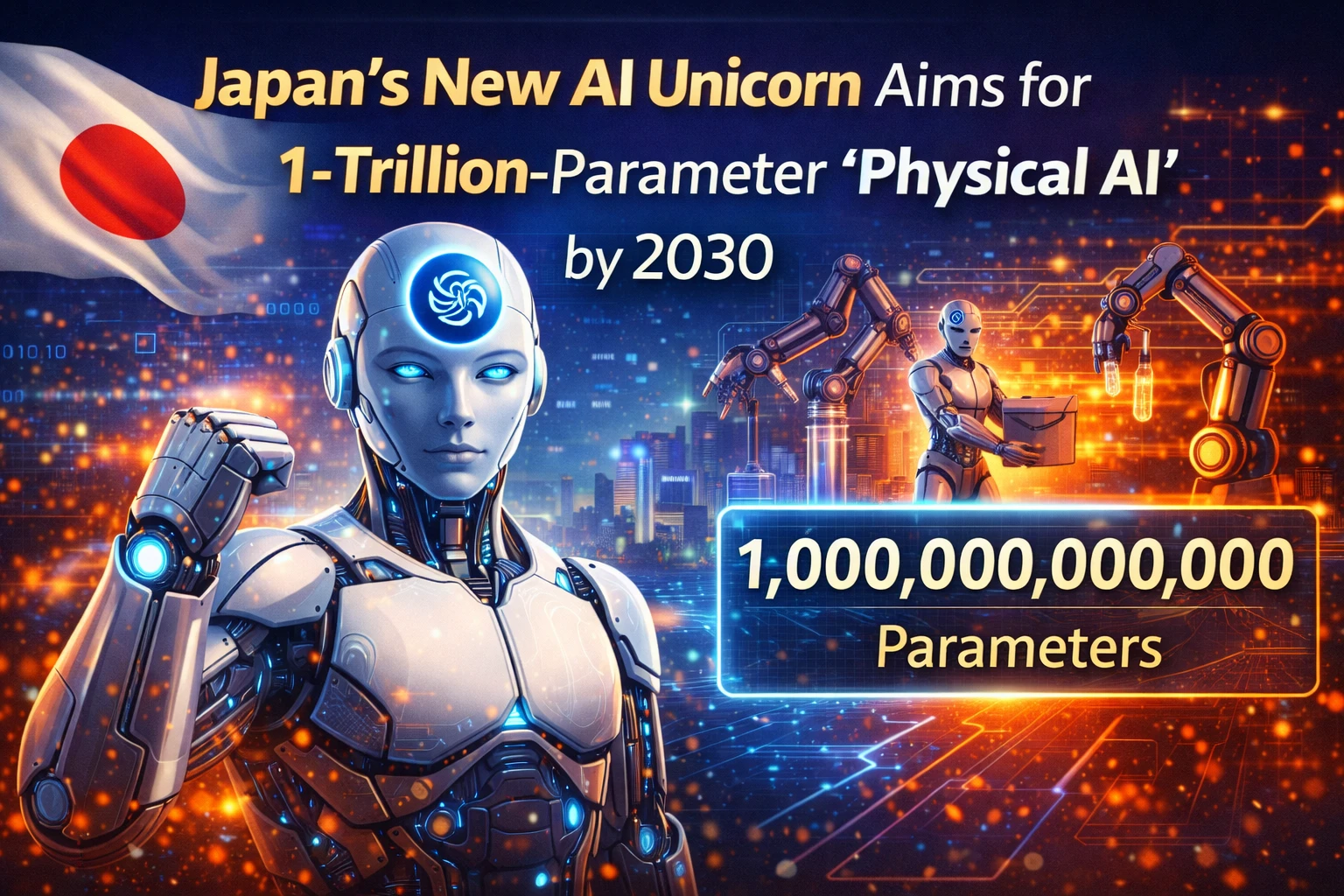
What’s the buzz?
Six Japanese giants – SoftBank, Sony, Honda, Toyota, Panasonic, Fujitsu, Mitsubishi, and two more – have just announced a joint venture called Physical AI Labs. Their mission: create a 1‑trillion‑parameter foundation model that can learn from sensors, robots, and real‑world data, and be ready for commercial use by 2030.
Why 1 trillion parameters?
Most large language models (LLMs) today sit around 100 billion parameters. Scaling to a trillion is not just a vanity metric; it gives the model enough capacity to fuse vision, audio, tactile, and motion data into a single "brain". Think of a robot that can watch a worker assemble a car, feel the torque on a bolt, and then suggest optimal force – all in real time.
Who’s in the room?
- SoftBank Vision Fund – the money‑machine that backs AI startups worldwide.
- Sony – brings expertise in imaging sensors and edge AI chips.
- Honda – adds automotive robotics and manufacturing know‑how.
- Toyota – will contribute its massive data from assembly lines.
- Panasonic – supplies industrial IoT hardware.
- Fujitsu – leads on high‑performance computing.
- Mitsubishi Electric – adds expertise in factory automation.
- Rakuten – brings e‑commerce logistics data.
- NTT Data – will handle cloud‑scale data pipelines.
How will they build it?
The plan is three‑phased:
- Data‑fusion layer (2024‑2026): Collect petabytes of multimodal data from factories, drones, and consumer devices. All data will be anonymised and stored in a secure, sovereign cloud built by Fujitsu.
- Model training (2026‑2028): Use custom AI accelerators from Sony and Panasonic to train the trillion‑parameter net on a dedicated supercomputer cluster located in Osaka.
- Deployment (2028‑2030): Ship the model as a SaaS offering – “Physical AI‑as‑a‑Service” – to manufacturers, logistics firms, and even Indian startups working on agritech robots.
What does this mean for India?
India’s manufacturing sector is on a "Make in India" push, but it still lags in robot adoption. A ready‑to‑use foundation model that understands physical tasks could cut integration time from months to weeks. Imagine a small‑scale auto‑parts maker in Chennai using a cloud‑based AI to optimise CNC machining without hiring a data‑science team.
Indian cloud providers like AWS India, Azure India, and the home‑grown Netmagic are already courting Japanese firms. Physical AI Labs will likely partner with them to host the service locally, which means lower latency for Indian users and compliance with data‑localisation rules.
TamilTech’s take
We think this is a game‑changer, but it’s not a silver bullet. The model’s success hinges on three things:
- Data quality: Real‑world sensor data is noisy. If the training set is biased, the AI will make costly mistakes on the shop floor.
- Cost of inference: Running a trillion‑parameter model in real time needs massive compute. Unless they offer edge‑optimised versions, Indian SMEs might find it pricey.
- Regulation: Safety standards for industrial robots are strict. Any AI‑driven decision‑making will need certification from bodies like BIS.
That said, the partnership brings together the right mix of capital, hardware, and domain expertise. If they can ship a lightweight “physical‑AI core” that runs on a Sony Edge TPU for under $200, we could see a wave of affordable automation in Indian factories.
What to watch next
Stay tuned for the first prototype demo, scheduled for the World AI Conference in Tokyo, October 2024. Expect a live robot arm that can assemble a simple gadget while explaining each step in English and Japanese – a perfect showcase for Indian engineers who love bilingual tech demos.
We’ll keep an eye on pricing, partnership announcements with Indian cloud players, and any open‑source tooling they release. If you’re a startup looking to plug into this ecosystem, start polishing your sensor data pipelines now – the future of “Physical AI” is just around the corner.





Comments (0)
Be the first to comment!