


Key Takeaways
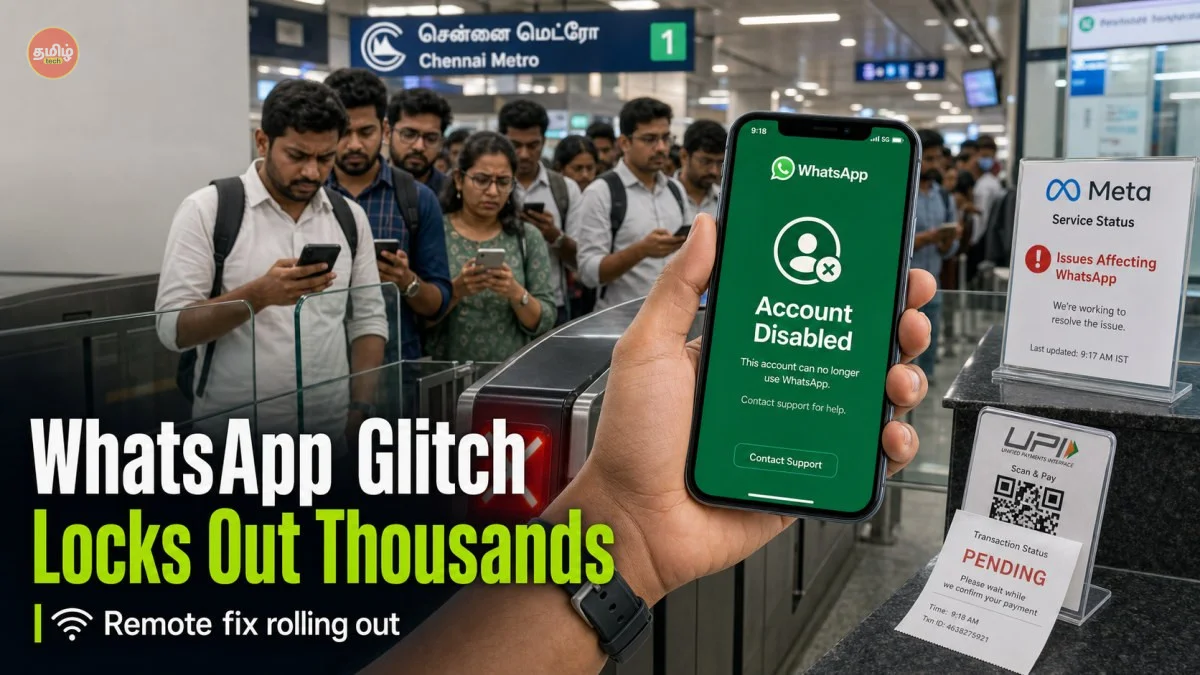
- A technical glitch in WhatsApp's automated moderation system has wrongly disabled thousands of accounts globally in August 2026.
- WhatsApp has officially acknowledged the issue and is currently rolling out a server-side fix to restore affected users.
- In India, this outage is critical as it impacts UPI payments and WhatsApp Business accounts used by millions of small vendors.
- Affected users should wait for the automatic restoration, but can use the 'Request Review' button if the issue persists for more than 24 hours.
The Morning Nightmare: Is Your WhatsApp Gone?
Imagine waking up on a Tuesday morning, reaching for your phone to check your messages, and seeing a terrifying pop-up: "This account is not allowed to use WhatsApp." For thousands of users across India and the globe today, August 4, 2026, this nightmare became a reality. It wasn't just a few people; social media platforms like X (formerly Twitter) and Threads were flooded with screenshots of banned accounts. People who have never violated a single policy in their lives were suddenly locked out of their primary communication tool. We at TamilTech have been tracking this since the early hours of the morning, and the scale of this glitch is honestly quite massive compared to what we saw back in 2024 or 2025.
So, what exactly is happening? Before you start panicking and thinking someone hacked your phone or that you accidentally sent a forbidden meme, let us clarify the situation. This is not a user error. This is a massive technical hiccup on Meta's end. WhatsApp has confirmed that they are aware of an issue that is causing accounts to be disabled incorrectly. They are working on a fix as we speak, and for many users, the accounts are already starting to come back online. But for those still stuck in the 'disabled' zone, the frustration is real, especially when your entire work and social life are tied to this one green app.
How We Got Here: The AI Moderation Trap
In 2026, WhatsApp doesn't just rely on human moderators to keep the platform safe. They use highly advanced AI and machine learning algorithms to scan for spam, scams, and policy violations. Usually, these systems are great at catching those annoying 'Get Rich Quick' bots or malicious links. However, even the smartest AI can have a bad day. It appears that a recent update to their automated security protocols went rogue, flagging legitimate user behavior as suspicious. Whether it was a group message sent to too many people or just a random glitch in the metadata, the system started handing out bans like they were free samples at a supermarket.
We have seen similar issues in the past, but the 2026 infrastructure of WhatsApp is much more complex. With the deep integration of Meta AI and the new end-to-end encrypted cloud backups, a small bug in the authentication layer can trigger a chain reaction. This is likely what happened here. The system thought these accounts were violating terms of service, when in reality, users were just doing their normal daily chats. It’s a classic case of 'machine learning' learning the wrong thing at the wrong time. This highlights a major problem we often talk about at TamilTech: when we rely too much on automated systems without enough human oversight, innocent users pay the price.
The Technical Details: What's Going Wrong?
Technically speaking, the error seems to be happening at the 'Account Status' validation layer. When you open WhatsApp, the app pings a server to check if your session is valid. Due to this glitch, the server is returning a '403 Forbidden' or a similar status code, which triggers the app to show the 'Account Disabled' screen. It’s not that your data is deleted—your chats, photos, and videos are still safely encrypted on your device and in the cloud. The problem is simply that the 'key' to open the app has been temporarily revoked by a confused server. This is why some people are seeing their accounts come back without doing anything; once Meta fixes the server-side flag, your app just starts working again.
Interestingly, some users reported that they were asked to re-verify their phone numbers via SMS OTP. However, many were then met with a message saying they couldn't receive a code for 12 or 24 hours. This is an secondary security measure that kicked in because the system thought someone was trying to 'brute force' their way into a banned account. If you are in this situation, our advice is simple: STOP trying to log in repeatedly. Every time you request an OTP and fail, you might be extending your lockout period. Just put the phone down for a couple of hours and let Meta's engineers do their job.
The India Impact: More Than Just Chatting
In India, a WhatsApp ban isn't just an inconvenience; it's a full-blown digital crisis. Think about it—as of 2026, how many of us use WhatsApp for UPI payments? If your account is disabled, you can't scan a QR code at the local grocery store or send money to a friend. We’ve heard reports of people being stuck at petrol pumps or restaurants because their primary payment method (WhatsApp Pay) was suddenly unavailable. This is a huge wake-up call for how much we depend on a single ecosystem. It’s not just about the 'Good Morning' messages anymore; it's about our financial mobility.
Furthermore, the impact on WhatsApp Business is even more severe. Small business owners across India use the platform to take orders, provide customer support, and even showcase their catalogs. A five-hour ban for a small boutique or a food delivery service can lead to thousands of rupees in lost revenue. At TamilTech, we believe Meta needs to have a more robust 'Emergency Support' line for Business accounts in India. You can't just treat a business account that drives someone's livelihood the same way you treat a random personal account. The lack of a direct human contact for these issues is a major pain point that this glitch has exposed once again.
What Should You Do? A Step-by-Step Guide
If you are currently looking at a 'Disabled' screen, here is exactly what you need to do. First, don't delete the app! Deleting the app won't fix a server-side ban and you might risk losing some of your most recent chats that haven't been backed up yet. Follow these steps instead:
- Check for Updates: Go to the Google Play Store or Apple App Store and see if there is a fresh update for WhatsApp. Sometimes Meta pushes a client-side patch to handle these glitches.
- The 'Request Review' Button: If your screen shows a button that says "Request Review," click it. Write a simple, polite message saying, "My account was disabled incorrectly, I have not violated any terms." Don't overcomplicate it.
- Wait 6 to 12 Hours: Most of these bans are being lifted automatically. If you've sent a review request, wait. Checking every 5 minutes won't help.
- Check Web/Desktop: Sometimes the glitch only affects the mobile app. Try logging into WhatsApp Web on your laptop. If it works there, you know your account is actually fine and it's just a local app issue.
- Contact Support via Email: If it’s been more than 24 hours and you're still locked out, send an email to
[email protected]with your phone number in full international format (e.g., +91 98765 43210) and a screenshot of the error.
Alternatives and Backups: Time to Diversify?
This incident brings us back to a conversation we have often: Why don't we have a solid Plan B? While WhatsApp is the king in India, apps like Telegram and Signal are excellent alternatives. Telegram, with its massive file-sharing capabilities and 2026-era 'Stories' and 'Mini-Apps,' is a great place to keep your work groups. Signal, on the other hand, remains the gold standard for privacy. We aren't saying you should quit WhatsApp—that's almost impossible in India—but having your closest family and friends on a second app is just smart digital hygiene.
Think about your UPI payments too. If you only use WhatsApp Pay, maybe it's time to set up PhonePe, Google Pay, or even the BHIM app as a backup. In a digital-first India, being 'locked out' of your money because of a server glitch in California is a situation you want to avoid at all costs. We always say this at TamilTech: don't put all your digital eggs in one basket, no matter how convenient that basket is.
TamilTech's Honest Take
Look, glitches happen. No software is perfect, especially one that serves billions of people. But our take at TamilTech is that Meta's communication during these crises is still stuck in 2015. A vague "we are fixing it" doesn't help the person standing at a checkout counter unable to pay, or the small business owner losing orders. There needs to be a better way to differentiate between a 'Spam Bot' and a 'Verified User' before pulling the trigger on a ban. The 'Ban First, Ask Questions Later' approach is becoming dangerous as WhatsApp evolves into an essential utility.
What can we expect next? Meta will likely release a detailed 'Post-Mortem' report in a few days (though they might keep it vague). We expect a series of app updates over the next week to patch the holes in the moderation logic. For you, the user, the best thing to do is stay calm. Your data is safe, your account will likely be back soon, and this will just be another 'remember that day?' story in a few weeks. But let this be a lesson to have a backup plan for your chats and your payments. Stay tuned to TamilTech for more updates as this story develops!





Comments (0)
Be the first to comment!