


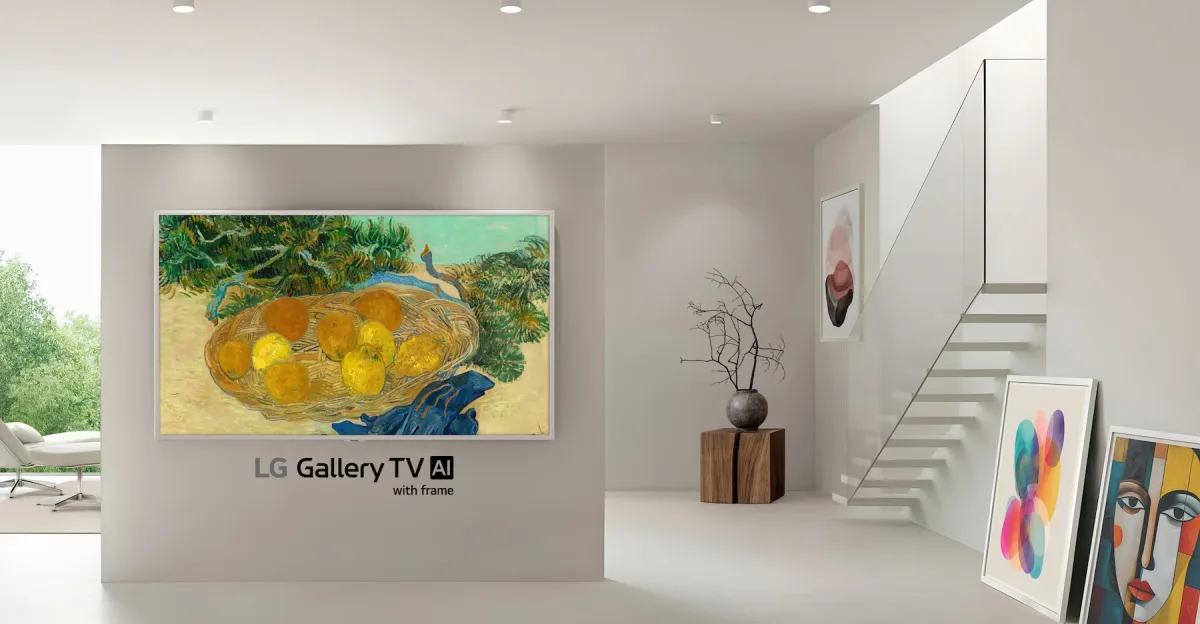
When Samsung first launched the Frame TV in 2017, it sparked a quiet revolution: televisions that could double as wall art. Six years later, LG has taken the baton at CES 2026, unveiling its own version of a picture‑frame TV that promises to blend cutting‑edge display technology with interior‑design sensibility. Dubbed the LG Gallery TV, the new model is more than a copycat; it’s a statement that the market for premium, design‑forward televisions is expanding, and LG is ready to claim a slice of that space.
Why a Frame‑Style TV Matters in 2026
Home entertainment has evolved from bulky CRTs to ultra‑thin OLED panels, but the visual footprint of a TV remains a design challenge. Modern apartments and open‑plan homes often treat the living‑room wall as a canvas. A conventional TV can dominate the space, while a frame‑style TV offers a compromise: high‑quality video when you’re watching, and a curated piece of art when you’re not.
LG’s Journey to the Gallery TV
LG has long been a pioneer in display tech, introducing the world’s first OLED TV in 2013 and continuously refining the technology. Over the past decade, the company has built a reputation for deep blacks, vibrant colours, and thin panels—attributes that make OLED an ideal candidate for a picture‑frame concept. The Gallery TV is the logical next step, leveraging LG’s OLED evo panel, which offers up to 30% higher brightness than previous generations while maintaining the same contrast ratios.
Technical Highlights
- Display: 55‑inch and 65‑inch 4K OLED evo panels with a peak brightness of 900 nits, supporting HDR10, Dolby Vision, and HLG.
- Processor: Alpha 9 Gen 6 AI processor that upscales lower‑resolution content, reduces noise, and optimizes colour accuracy in real time.
- Art Mode: Uses a built‑in ambient light sensor to adjust brightness and colour temperature, ensuring the displayed artwork looks natural under any lighting condition.
- Customizable Bezels: Interchangeable magnetic frames available in matte black, brushed aluminium, and a limited‑edition hand‑painted series.
- Smart Platform: webOS 23 with AI‑driven recommendations, voice control via Google Assistant, Alexa, and LG’s own ThinQ AI.
- Connectivity: HDMI 2.1 (4K@120Hz, VRR, ALLM), Wi‑Fi 6E, Bluetooth 5.3, and a dedicated Ethernet port for stable streaming.
Design Philosophy: From Gallery Wall to Living Room
LG’s design team consulted interior designers and art curators to ensure the Gallery TV feels at home on a gallery wall. The TV can be mounted flush with the wall using a proprietary bracket that hides all cables, creating a “frameless” look. The interchangeable bezels are magnetically attached, allowing users to switch styles without tools—a feature that Samsung’s Frame also offers, but LG claims its magnetic system is more robust and easier to use.
Art Mode and Content Partnerships
Beyond static images, LG has partnered with several art institutions—including the Museum of Modern Art (MoMA) and the National Gallery of Victoria—to provide a rotating library of high‑resolution artworks. Users can subscribe to the LG Art+ service for $9.99/month, gaining access to over 2,000 curated pieces, each optimised for OLED’s colour gamut. The TV also supports personal photo uploads via the LG ThinQ app, turning family memories into wall‑mounted displays.
How It Stacks Up Against Samsung’s Frame
Samsung’s Frame has dominated the niche for almost a decade, but LG’s entry brings several differentiators:
- Brightness: OLED evo’s higher peak brightness means the TV can double as a primary display for HDR gaming and movies without sacrificing art‑mode quality.
- Processor Power: The Alpha 9 Gen 6 AI engine offers superior upscaling, which is crucial for 1080p content still prevalent in many households.
- Software Ecosystem: webOS is widely praised for its intuitive layout and broad app support, whereas Samsung’s Tizen can feel more restrictive for third‑party services.
- Price Point: Early leaks suggest a starting price of $2,199 for the 55‑inch model, roughly $200 less than Samsung’s comparable offering, positioning LG as a slightly more affordable premium option.
Implications for Consumers and the Industry
For consumers, the LG Gallery TV signals that the market for aesthetically‑driven TVs is no longer a niche reserved for the ultra‑wealthy. The price, while still premium, is within reach for design‑conscious millennials who value both form and function. The integration of AI‑enhanced upscaling also means that households with mixed media—streaming services, Blu‑ray collections, and legacy game consoles—can enjoy a consistent visual experience.
From an industry perspective, LG’s move intensifies competition in the high‑end segment, prompting other manufacturers to consider similar form‑factor innovations. We may see a wave of “art‑mode” TVs from brands like Sony, Panasonic, and even newcomers such as TCL, each trying to differentiate through unique partnerships (e.g., exclusive art collections) or novel technologies (e.g., micro‑LED panels).
Potential Challenges and Consumer Concerns
While the concept is alluring, there are practical considerations. OLED panels, despite their advantages, are susceptible to burn‑in if static images are displayed for prolonged periods. LG mitigates this with a pixel‑shift algorithm and a screen‑saver that subtly moves the artwork, but long‑term durability remains a question for users who intend to keep the TV in art mode for many hours daily.
Another hurdle is the need for a stable, high‑speed internet connection to stream high‑resolution artwork without buffering. In regions with limited broadband, the experience could be compromised, potentially limiting adoption outside major urban centres.
Future Outlook: Beyond the Gallery
Looking ahead, LG hints at expanding the Gallery line with larger sizes (up to 77 inches) and a 8K variant slated for 2027. The company is also exploring augmented‑reality (AR) overlays that could allow users to view virtual sculptures or interactive installations directly on the TV surface, blurring the line between digital and physical art.
Moreover, the integration of LG’s ThinQ AI could evolve the TV into a central hub for smart‑home control, with gestures and voice commands enabling users to dim lights, adjust thermostats, or even order groceries while admiring a masterpiece on the wall.
Conclusion
LG’s debut of the Gallery TV at CES 2026 marks a pivotal moment in the convergence of entertainment technology and interior design. By marrying OLED’s visual excellence with a versatile, art‑centric user experience, LG not only challenges Samsung’s long‑standing dominance but also broadens the appeal of premium TVs to a design‑savvy audience. As the line between functional hardware and decorative object continues to blur, consumers can expect their living spaces to become more dynamic, personalized, and visually stunning—one frame at a time.




Comments (0)
Be the first to comment!