


Key Takeaways
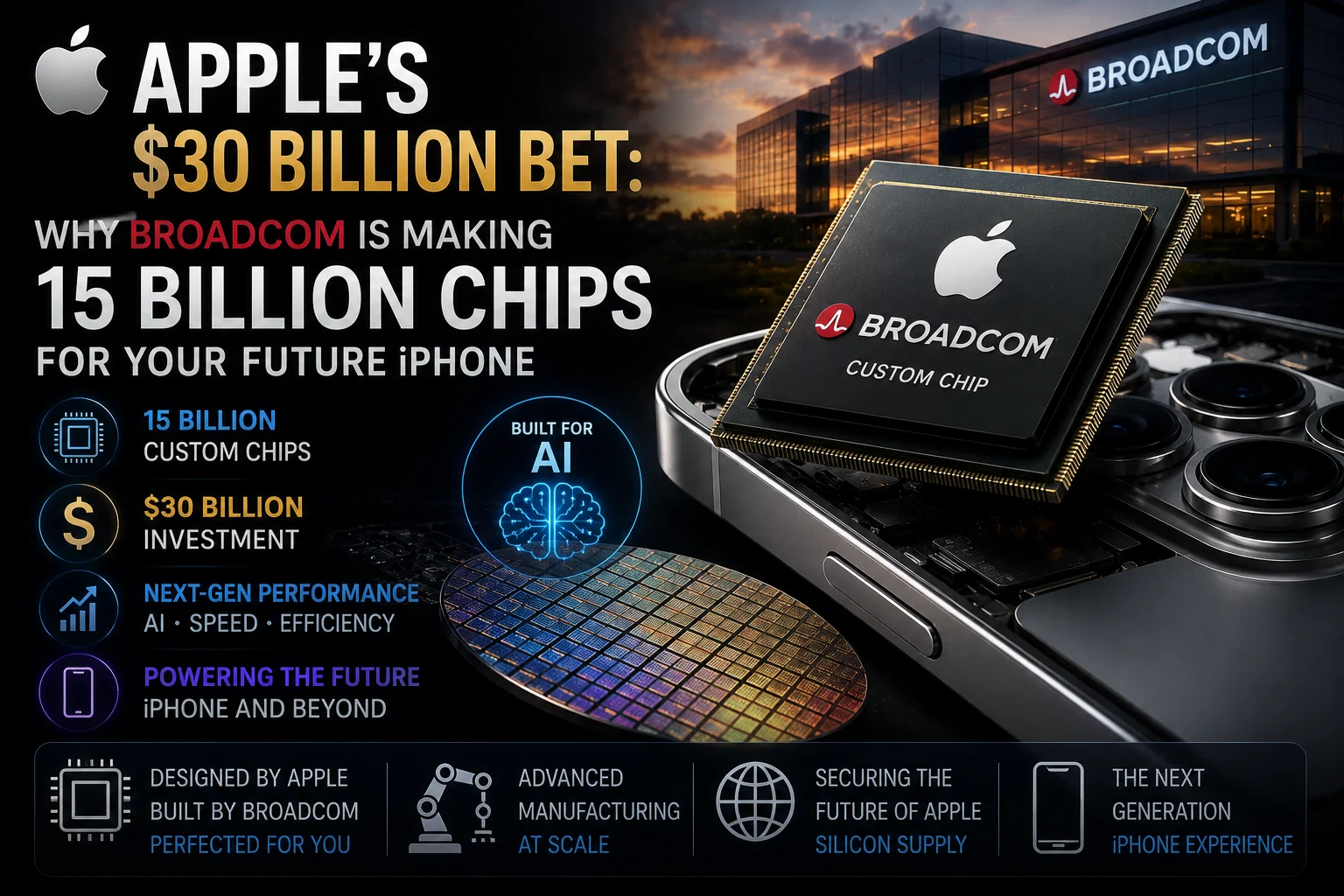
- Apple has finalized a massive deal with Broadcom worth over $30 billion to manufacture 15 billion chips in the US.
- The partnership focuses on 5G Radio Frequency (RF) components and advanced wireless connectivity hardware for future devices.
- This move is a core part of Apple’s long-term $600 billion investment pledge to boost the US economy and domestic manufacturing.
- For users in India, this ensures a more stable supply chain for iPhones and iPads, potentially reducing shipping delays during peak launch seasons.
- The deal signals Apple’s strategic shift to reduce reliance on offshore manufacturing and secure high-end proprietary technology locally.
The $30 Billion Handshake: What Just Happened?
Look, Apple doesn't just spend money; they make statements. In a move that has sent shockwaves through the semiconductor industry in 2026, Apple has officially locked in a deal with Broadcom worth more than $30 billion. This isn't just about buying parts; it's about securing the very soul of the iPhone's connectivity for the next five years. We are talking about 15 billion chips being manufactured right on American soil. If you thought Apple was just about design and software, this deal proves they are playing a much deeper game in the hardware supply chain.
This partnership is part of Apple's massive $600 billion investment pledge that they’ve been working on for a while. By partnering with Broadcom, Apple is ensuring that the critical components that allow your iPhone to talk to 5G towers and Wi-Fi routers are produced under their watchful eye. For a company that hates being dependent on anyone else, this is a massive step toward controlling their own destiny. It’s not just about the money; it’s about the sheer volume—15 billion chips is enough to power every major Apple device launch through the end of the decade.
The Tech Inside: Why Broadcom?
You might be wondering, why Broadcom? Why not just make these chips themselves like they do with the M-series or A-series processors? Well, the answer lies in something called Radio Frequency (RF) components. These aren't your standard processors. We are talking about FBAR filters and other specialized hardware that handle the messy, complex job of picking up wireless signals in a world crowded with interference. Broadcom is the undisputed king of this niche, and their facility in Fort Collins is one of the most advanced in the world.
These chips are the reason your iPhone can maintain a stable 5G connection even in crowded areas or why your Wi-Fi speeds are consistently high. By manufacturing these in the US, Apple is essentially future-proofing its devices. As we move deeper into 2026 and look toward the early stages of 6G development, having a partner like Broadcom who can churn out billions of high-quality filters is a massive competitive advantage. They are basically building a wall around their supply chain that competitors like Samsung or Google might find hard to climb over.
The India Angle: Will Your iPhone Get Cheaper?
Now, let's talk about what this means for us here in India. You’ve probably seen the news about Apple increasing production in India through Foxconn and Tata. So, if the chips are made in the US, does that change anything for the Indian buyer? Honestly, don't expect an immediate price drop. The cost of an iPhone is determined by a lot of factors, including import duties and local assembly costs. However, what this deal does is provide supply chain stability. In the past, we’ve seen delays in iPhone availability in India because of component shortages in Asia. With 15 billion chips secured, those days are likely over.
Moreover, as Apple strengthens its manufacturing ties in both the US and India, we are seeing a more diversified supply chain. The high-end, complex silicon and RF components come from the US, while the final assembly happens in places like Tamil Nadu or Karnataka. This "dual-engine" strategy makes Apple less vulnerable to geopolitical tensions. For the Indian consumer, this means that when the next iPhone 18 or 19 drops, India won't be an afterthought. We will likely be in the first wave of global launches with plenty of stock on the shelves of Apple BKC and Apple Saket.
The Strategic Masterstroke: Moving Away from Qualcomm?
There is a bigger story here that many people are missing. For years, Apple has been trying to distance itself from Qualcomm, especially when it comes to modems and connectivity. While this Broadcom deal focuses on RF components and not the modem itself, it is a clear sign that Apple is building an ecosystem of partners that doesn't include their rivals. By investing $30 billion into Broadcom, they are strengthening a partner that helps them bypass other suppliers. It’s a classic Apple move: find a specialized partner, give them enough money to scale massively, and then integrate that tech so deeply that no one else can match it.
Think about it—if Apple can control the RF filters (via Broadcom) and the main processor (via Apple Silicon), they are only one step away from having a completely in-house connectivity stack. This level of vertical integration is what allows Apple to squeeze out better battery life and faster speeds than Android manufacturers who have to buy off-the-shelf parts from multiple vendors. It’s not just a purchase; it’s a long-term engineering collaboration that will define the performance of Apple devices for years to come.
TamilTech’s Verdict: Is This Good News?
So, what do we think about this? From a tech perspective, it’s a win. When a company invests this much in specialized hardware, the end-user usually gets a better product. Your future iPhones will likely have better signal reception, more efficient 5G usage, and perhaps even some new wireless features we haven't seen yet. From a business perspective, it’s a brilliant defensive move. Apple is shielding itself from the volatility of the global market by locking in US-based production for its most critical components.
However, there is a flip side. By doubling down on expensive US manufacturing, Apple is keeping its hardware costs high. This means the "Pro" models will likely stay at their premium price points for the foreseeable future. We don't see Apple becoming a budget brand anytime soon because of these high-value investments. But hey, if you're paying a premium, you want the best tech inside, right? And with Broadcom making 15 billion of these chips, you’re definitely getting the gold standard of wireless hardware. Expect the impact of this deal to start showing up in the hardware designs starting late this year and into 2027.



Comments (0)
Be the first to comment!