


Key Takeaways
- Apple released major security updates for iOS, iPadOS, macOS Tahoe, watchOS, tvOS, and visionOS on July 28, 2026.
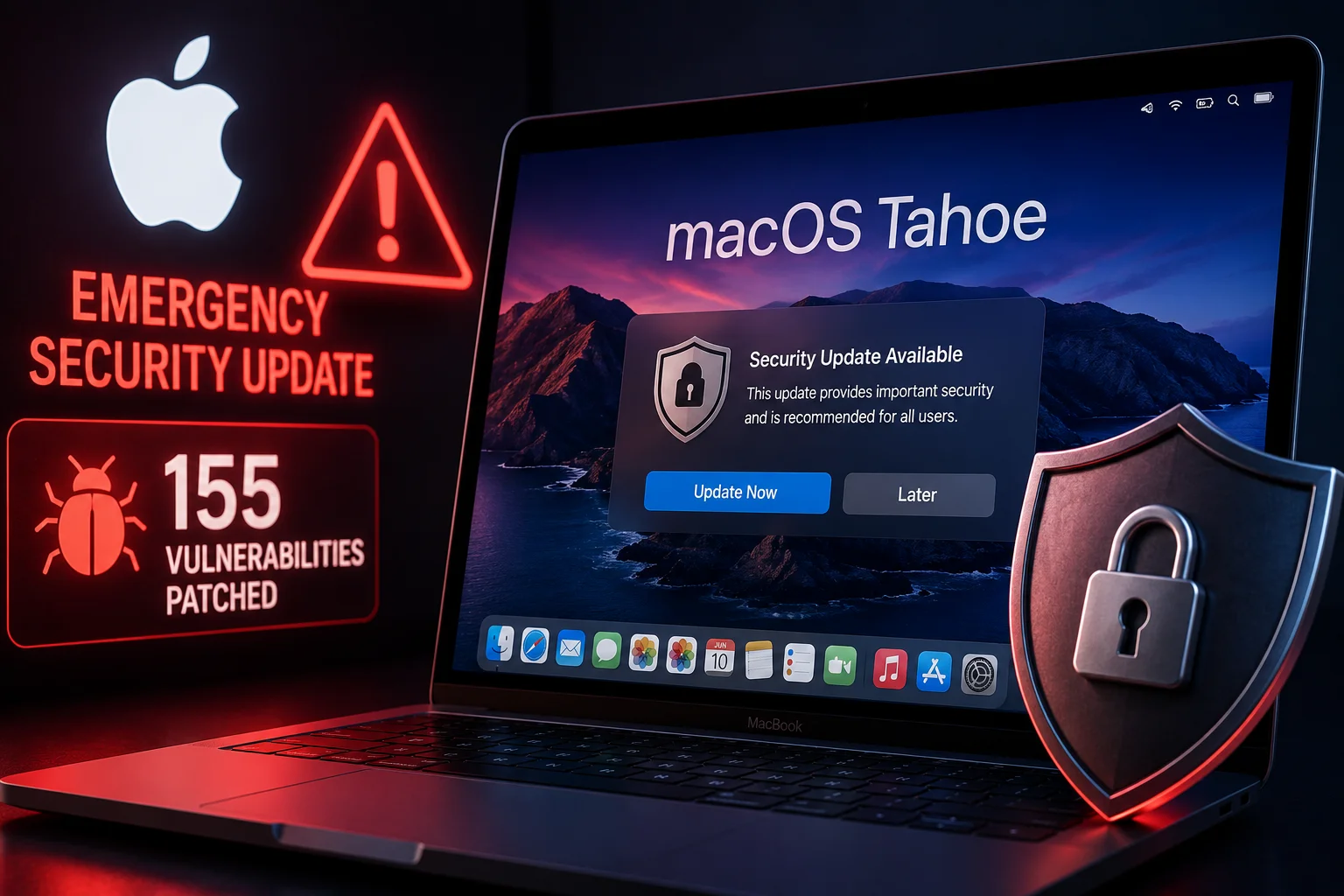
- macOS Tahoe 26.6 sets a record by addressing 155 unique CVE (Common Vulnerabilities and Exposures) security flaws in a single update.
- Critical vulnerabilities in the Kernel and WebKit could allow hackers to execute code remotely or access private user data without permission.
- For Indian users, these patches are vital to protect UPI apps, banking credentials, and personal biometrics stored on Apple devices.
- Update immediately via Settings > General > Software Update on your mobile devices or System Settings on Mac.
If you are using an iPhone, Mac, or even an Apple Watch, stop what you are doing and check for a software update right now. Apple has just dropped a massive bomb of security patches across every single one of its operating systems. We are talking about a scale of fixes we haven't seen in a long time. While we usually get excited about new emojis or UI tweaks, this update is all about the 'invisible' stuff that keeps your digital life from falling into the wrong hands. In 2026, where our entire lives are on our phones, this isn't just a routine update; it's an emergency shield.
The Scale of the Problem: 155 Fixes in macOS Alone
Let's talk numbers because they are staggering. The new macOS Tahoe 26.6 update addresses a whopping 155 CVEs. For those who aren't tech nerds, a CVE is basically a documented security hole that a hacker could potentially use to break into your system. Fixing 155 of them in one go is almost unheard of. It suggests that Apple’s security teams have been working overtime to close gaps in everything from the core Kernel (the brain of the OS) to how the Mac handles images and PDF files. If you've been putting off that 'Restart to Update' notification on your MacBook, this is your sign to stop ignoring it. Whether you are a student or a professional working in a corporate office in Bengaluru or Mumbai, your Mac is currently more vulnerable than it was yesterday if it's not on 26.6.
But it's not just the Mac. iOS and iPadOS have also received significant patches. While they don't hit the triple-digit count like macOS, they fix critical issues in WebKit—the engine that runs Safari and almost every web-view in your apps. In the past, we've seen 'Zero-Click' exploits where a hacker could take over a phone just by sending a specifically crafted message or making a user visit a malicious website. These updates are designed to kill those possibilities before they can be widely exploited in the wild. Apple hasn't confirmed if these were being actively used by hackers yet, but the sheer volume of fixes suggests they aren't taking any chances in 2026.
Why This Matters for the Indian User
You might be thinking, 'I'm just a regular user in India, why would a hacker target me?' Here is the reality: India is one of the biggest targets for financial cybercrime globally. We use our iPhones for everything—from high-value UPI transactions on GPay and PhonePe to managing our stocks on Zerodha or Groww. Many of the vulnerabilities fixed in these updates involve 'Privilege Escalation.' This means an app that shouldn't have access to your sensitive data could bypass Apple's security layers and 'escalate' its permissions to see your messages, photos, or even intercept your OTPs. If you are using your iPhone 17 or older models for banking, these security holes are like leaving your front door unlocked in a busy neighborhood.
Furthermore, with the rise of AI-driven phishing and sophisticated malware in 2026, the 'Sandbox'—which is the protective wall Apple builds around each app—needs to be iron-clad. Some of the fixed CVEs specifically dealt with breaking out of this sandbox. Imagine a simple photo editing app suddenly being able to read your WhatsApp database because of a bug in the OS. That is the kind of nightmare scenario Apple is trying to prevent with this July update. For the millions of Apple users in India, keeping your device updated is the simplest and most effective form of digital hygiene you can practice.
How to Secure Your Devices: Step-by-Step
Updating is easy, but many people forget to check all their devices. Here is how you should handle this rollout. For your iPhone and iPad, go to Settings > General > Software Update. You should see a version waiting for you. Even if you have 'Automatic Updates' turned on, it sometimes takes days for the phone to do it on its own. We recommend doing it manually today. For Mac users, click the Apple Menu > System Settings > General > Software Update and look for macOS Tahoe 26.6. Don't forget your Apple Watch and Apple TV either; those updates are available under their respective settings menus too.
One pro-tip: make sure you are on a stable Wi-Fi connection (like your home JioFiber or Airtel Xstream) because these updates are quite large due to the number of system files being replaced. Also, ensure your device has at least 50% battery or is plugged into a charger. If you are using the Apple Vision Pro (visionOS), the update is equally critical as it patches vulnerabilities related to the sensors and cameras that map your surroundings. You wouldn't want a security flaw allowing an app to 'see' your room without your knowledge, right? This update fixes exactly those kinds of deep-level privacy concerns.
TamilTech's Take: Is Apple Getting Less Secure?
Some people might look at 155 security fixes and think, 'Wow, Apple's software is full of holes!' But at TamilTech, we see it differently. The fact that Apple is finding and fixing these issues is actually a good sign. It shows that their bounty programs and internal audits are working. In 2026, no software is perfect. The danger isn't in having bugs; the danger is in having bugs that stay unpatched for months. Apple is being proactive here. However, we do feel that the sheer number of fixes in macOS Tahoe 26.6 suggests that the initial release of Tahoe might have been a bit rushed. It’s a reminder that even the most premium tech needs constant maintenance.
Our honest advice? Don't wait. Usually, we tell you to wait a day to see if an update kills your battery life, but when it comes to a security patch of this magnitude, the risk of being hacked is much higher than the risk of a slightly faster battery drain. Your privacy and your bank balance are worth more than a few extra minutes of screen-on time. Update your devices tonight, and make sure your family members do the same. Stay safe in the digital world!




Comments (0)
Be the first to comment!