


Key Takeaways
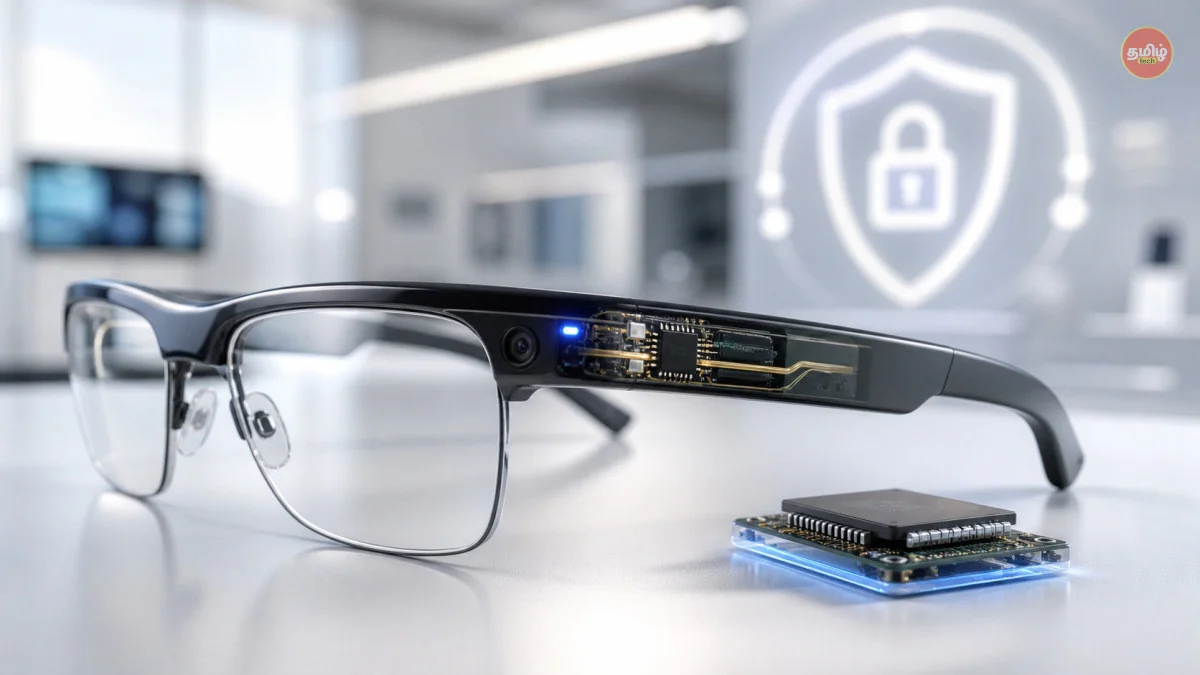
- Apple's 2026 smart glasses utilize a dedicated 'Privacy LED' that is hardwired to the camera, making it impossible to disable via software.
- All image processing happens locally on the device using a custom R3 chip, ensuring no visual data ever reaches Apple's servers.
- The expected price for the base model in India starts at ₹84,900, positioning it against high-end wearable competitors.
- Apple is introducing 'Privacy Zones' where the glasses automatically disable recording in sensitive areas like hospitals or bathrooms using GPS and AI.
The Next Big Thing is on Your Face
Imagine walking down a street in Chennai or Bangalore, and your glasses subtly highlight the best-rated biryani spot nearby or translate a sign in real-time. This isn't science fiction anymore; it's the reality of 2026. While Meta and others have dipped their toes into smart glasses, the elephant in the room has always been Apple. Everyone is asking the same question: Can Apple actually make smart glasses that don't make everyone around you feel like they are being constantly watched? We've seen how Google Glass failed because of the 'Glasshole' reputation, and Apple knows they can't afford that mistake.
The tech world has been buzzing about Apple's move into lightweight wearables after the bulky Vision Pro era. The challenge isn't just about making the tech fit into a slim frame; it's about the social contract. When you wear a camera on your face, you aren't just a user; you're a walking surveillance unit. Apple's approach this year seems to be focused entirely on making the 'non-user' feel safe. If they can solve the privacy puzzle, these glasses could genuinely replace our iPhones for 70% of daily tasks. But if they fail, it's just another expensive gadget that people will be banned from wearing in cafes and cinemas.
How We Got Here: From Bulky Visors to Sleek Frames
To understand where we are in 2026, we have to look back at the privacy disasters of the past. Remember the first Meta Ray-Bans? People were terrified that the tiny LED could be covered with a bit of tape or paint, allowing users to record secretly. Then came the era of 'always-on' AI assistants that listened to every conversation. Apple watched these blunders from the sidelines, taking notes. Their strategy has always been to let others fail first, then come in with a more polished, 'privacy-first' solution. The transition from the heavy Vision Pro to these sleek frames has taken nearly three years of R&D, specifically focusing on miniaturizing the Secure Enclave.
In the past, smart glasses were seen as geeky or intrusive. But as of 2026, the design language has shifted. Apple's glasses look almost indistinguishable from a standard pair of Wayfarers or Clubmasters. This 'stealth' design actually makes the privacy problem worse, not better. If you can't tell they are smart glasses, how do you know if you're being recorded? This is the core problem Apple is trying to solve with hardware-level restrictions that even their own engineers can't bypass. They are betting that their brand's reputation for privacy will be the key differentiator that makes people trust them over Meta or Google.
The Tech Behind the Privacy: R3 Chips and Hardwired LEDs
The secret sauce in Apple's 2026 smart glasses is the new R3 silicon. Unlike previous chips that sent data to the cloud for processing, the R3 is designed for 'Edge AI'. This means when the glasses recognize a face or a QR code, that computation happens entirely on the glasses. No images, no video feeds, and no audio snippets are sent to Apple's data centers. This is a massive win for privacy because even if Apple were subpoenaed by a government, they literally wouldn't have the data to give. Everything stays in your local encrypted storage, which is protected by Optic ID—a version of Face ID that scans your iris from the inside of the lens.
Then there's the 'Physical Privacy Indicator'. Apple has gone beyond a simple glowing light. In the 2026 models, the camera's power circuit is physically linked to a high-intensity pulse LED. If the camera is drawing power, the light MUST be on. There is no software bypass, no 'stealth mode', and if you try to cover the LED with tape, the light sensors inside the frame detect the reflection and disable the camera entirely. It’s a clever bit of engineering that says, 'If I'm recording, the world will know.' This is the kind of hardware-level commitment that sets Apple apart from companies that rely on software toggles which can be hacked or bypassed.
India Impact: Pricing and the 'Creep Factor' in Public Spaces
In India, the reception to smart glasses is always a bit different. We are a country that values privacy but also loves new tech. The Apple Smart Glasses are expected to launch in India at a starting price of ₹84,900 for the non-prescription version, going up to ₹1,10,000 for those needing power lenses. That’s a premium price, but it aligns with the iPhone 17 Pro pricing. For the Indian consumer, the utility will be huge—imagine UPI payments where you just look at a QR code and blink to confirm, or real-time navigation while riding a scooter through chaotic traffic without looking down at a phone.
However, the social challenge in India is real. We have strict norms about filming in malls, religious places, and private gatherings. Apple is reportedly working on 'Geo-fencing Privacy'. Using GPS data, the glasses will automatically disable the camera when you enter specific sensitive zones in India, like government buildings or high-security areas. This could prevent the awkward confrontations that early tech adopters often face. If Apple can convince the Indian public that these glasses aren't 'spy gear', they will have a massive market waiting for them, especially among the Gen-Z and tech-savvy professionals in metro cities.
Real-World Use Case: A Day with Apple Glasses
Let's look at how this actually works in a daily routine. You wake up, put on your glasses, and they instantly unlock your Mac and iPhone via the 'Proximity Link'. While you're making coffee, you see your notifications floating in the air—no need to pick up your phone with messy hands. When you head out, the glasses provide 'Directional Audio' for your calls, so only you can hear the person on the other end, even without earbuds. This is done through bone conduction tech built into the arms of the glasses. It's seamless and feels like you have a digital assistant living in your peripheral vision.
The real magic happens during a meeting or a grocery run. You can ask Siri (now powered by a much smarter LLM in 2026) to 'Remember where I parked' or 'Tell me the price of this item on Amazon'. The glasses scan the environment, find the answer, and show it to you without anyone else knowing you're using a computer. And the whole time, that Privacy LED stays off unless you explicitly start a recording or a video call. This 'passive' use of AR is where the real value lies—it's not about recording the world; it's about augmenting your view of it.
Apple vs Meta: The Battle for Your Face
The competition is fierce. Meta's latest glasses are significantly cheaper, likely starting around ₹35,000 in India, and they offer deep integration with WhatsApp and Instagram. However, Meta’s business model is built on data. They want to know what you’re looking at so they can show you better ads. Apple’s model is the opposite—they want to sell you the hardware and services, so they have no incentive to 'spy' on your visual field. This is the fundamental choice for users: Do you want a cheaper device that tracks your gaze, or a premium device that keeps your data locked down?
Meta has the lead in social features, but Apple has the ecosystem advantage. If you already use an Apple Watch, iPad, and iPhone, the glasses are just another screen in that network. The hand-off feature is incredible—you can start watching a video on your glasses and 'throw' it onto your Apple TV with a flick of your wrist. Meta is trying to catch up with their own hardware ecosystem, but for now, Apple’s integration feels much more natural. The choice really boils down to how much you trust the company behind the lens.
TamilTech’s Honest Take: Is it Worth the Hype?
So, what do we think? At TamilTech, we believe Apple is the only company that can actually make smart glasses 'socially acceptable'. By over-engineering the privacy features, they are addressing the biggest barrier to adoption. While the ₹84,900 price tag is steep, you have to remember that this is a first-generation 'mass-market' product. It’s for the early adopters, the creators, and the professionals who want to stay connected without being glued to a screen. The privacy features aren't just a marketing gimmick; they are a necessity for this product category to survive.
What should you expect next? We expect a 'SE' version of these glasses in late 2027 that might bring the price down to the ₹50,000 range. But for now, if you care about privacy and want the best AR experience, Apple is the way to go. Just be prepared for some stares when you first wear them out in public—even with the privacy light, people are going to be curious. Our advice? If you have the budget and you're tired of looking down at your phone all day, these glasses are going to be a literal eye-opener. The future is looking bright, and finally, it's looking private too.


Comments (0)
Be the first to comment!