


Key Takeaways
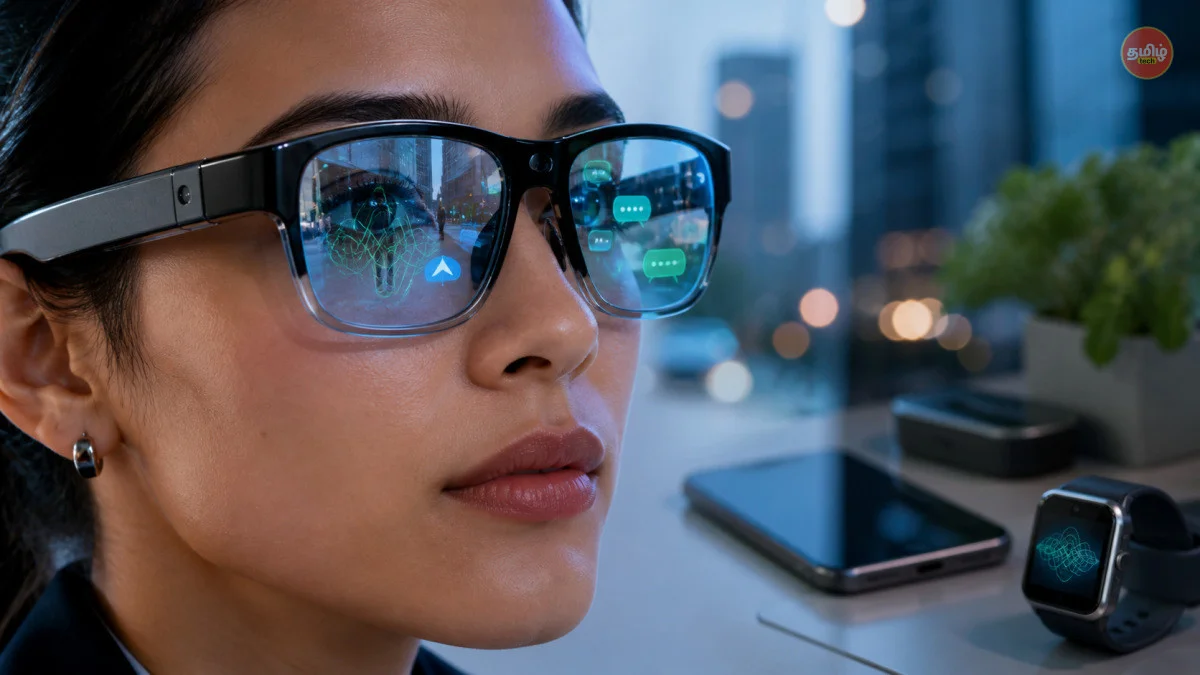
- OpenAI is actively developing ChatGPT integration for smart glasses and other wearables to enable 'embodied AI' in 2026.
- The goal is to allow ChatGPT to see what you see in real-time, providing hands-free assistance for navigation, translation, and daily tasks.
- Hardware partnerships are expected to bring these devices to the Indian market by late 2026, with an estimated starting price of ₹25,000 for basic models.
- The bottom line: We are moving from the 'smartphone era' to the 'wearable AI era' where screens become secondary to voice and vision.
The Smartphone Era is Fading: Why OpenAI Wants Your Eyes
For the last couple of years, we've been glued to our smartphone screens, typing prompts into ChatGPT. But today in 2026, the game is changing. OpenAI’s Greg Brockman has finally confirmed what we’ve all been suspecting: they want to put ChatGPT into your glasses, your rings, and maybe even your clothes. This isn't just about a voice assistant like Siri or Alexa from five years ago; this is about an AI that actually lives in the physical world with you. Imagine walking through a busy street in Mumbai and having your glasses tell you exactly which shop has the best deal on the sneakers you're looking at, without you ever touching your phone.
We at TamilTech have been tracking these developments closely. The shift toward 'embodied AI'—which is just a fancy way of saying AI that has a 'body' or sensors to interact with the real world—is the biggest trend of 2026. OpenAI isn't just looking to build another app; they want to build the operating system for your life. By integrating ChatGPT into smart glasses, they are removing the friction of pulling out a device, unlocking it, and typing. It's about seamless, real-time interaction that feels natural.
What Greg Brockman Revealed About the 2026 Roadmap
During a recent session, Greg Brockman highlighted that the current multimodal capabilities of ChatGPT (the ability to see, hear, and speak) are just the beginning. The real potential lies in 'always-on' wearables. He mentioned that OpenAI is eyeing deep integrations where the AI can process visual data continuously. This means the camera on your smart glasses won't just take photos; it will be 'watching' to understand context. If you're looking at a broken sink, ChatGPT will identify the part that's leaking and overlay a 3D tutorial on how to fix it right on your lens.
This move is a direct challenge to Meta and Apple. While Meta has the Ray-Ban collaboration and Apple has its high-end Vision Pro, OpenAI’s advantage is the sheer intelligence of the GPT-5 and GPT-6 models we are using now in 2026. Brockman's vision is to make the AI proactive. Instead of you asking 'What is this?', the AI will whisper in your ear, 'Hey, you've met this person before at the Bangalore tech meet last year; his name is Rajesh.'
The Tech Behind the Vision: How It Actually Works
To make this work in 2026, OpenAI is leveraging ultra-low latency processing. One of the biggest hurdles in the past was the delay between the camera seeing something and the AI responding. Now, with 5G-Advanced and early 6G trials in India, that delay is almost gone. The glasses send a compressed visual stream to OpenAI’s servers, or in some cases, process it locally using specialized AI chips, and give you an answer in under 200 milliseconds. This is what makes real-time translation possible—you look at a menu in Japan, and the text literally changes to English or Tamil before your eyes.
We are also seeing a shift toward 'Privacy-First Compute.' Since these glasses are always 'watching,' OpenAI is reportedly working on a system where the visual data is processed in a 'black box'—meaning the images aren't stored or seen by humans, only by the AI model to generate the response. This is going to be the make-or-break factor for users in India who are increasingly conscious about their digital privacy and data security.
Impact on the Indian Market: Pricing and Availability
So, when can you buy these? While OpenAI might not launch its own branded 'GPT-Glasses' immediately, they are partnering with various hardware manufacturers. In India, we expect to see these integrations in devices from brands like Samsung, Ray-Ban, and even some budget-friendly Indian startups. Pricing is the big question. For the Indian middle class to adopt this, the 'sweet spot' is around ₹25,000 to ₹35,000. We expect premium versions with AR (Augmented Reality) displays to go up to ₹75,000.
The impact on daily life in India will be massive. Think about a student in a rural village using these glasses to get real-time tutoring in their local language, or a delivery partner navigating the complex lanes of Old Delhi with AR arrows pointing exactly where to go. This isn't sci-fi anymore; the pilot programs are already starting in select regions this year. We believe that by the end of 2026, seeing someone talking to their glasses in a Chennai metro will be as common as seeing someone on a Bluetooth headset today.
Real-World Use Cases: How You’ll Use It Daily
Let’s talk about how this actually changes your day. Suppose you are at a grocery store. You look at a pack of masala, and ChatGPT instantly tells you if it contains ingredients you are allergic to, or if there's a cheaper alternative on the shelf right next to it. For professionals, imagine being in a meeting and having the AI summarize the body language of the participants or reminding you of key stats from a previous email without you looking at a laptop. It’s like having a personal assistant who sees everything you see.
Another huge area is accessibility. For the visually impaired, these ChatGPT-powered wearables are life-changing. The AI can describe the surroundings, read out bus numbers, or even warn about obstacles in real-time with incredible accuracy. This is the kind of tech that actually makes a difference in society, and it’s why we are so excited about OpenAI’s direction this year.
TamilTech’s Take: Is It Worth the Hype?
Look, we’ve seen a lot of tech trends come and go, but this feels different. The smartphone has reached its peak—there’s only so much you can do with a glass slab in your pocket. The move to wearables is the natural next step. However, there are two big 'ifs.' First, the battery life. Nobody wants to charge their glasses every three hours. If OpenAI and their partners can’t get the battery to last a full day, this will fail. Second, the 'creep factor.' People might feel uncomfortable being around someone who is constantly 'recording' with their glasses.
Our honest opinion? This is going to be a slow burn. 2026 will be the year of the early adopters and tech enthusiasts. But within two years, as the designs get slimmer and look like regular spectacles, it will go mainstream. If you’re planning to buy a high-end phone late this year, you might want to save some of that budget for the first wave of OpenAI-integrated smart glasses coming in early 2027. The future is literally right in front of your eyes!




Comments (0)
Be the first to comment!