


Key Takeaways
- Brazil's National Civil Defense platform was officially taken offline on June 20, 2026, following a suspected security breach.
- Unauthorized emergency alerts were broadcast to mobile phones across several Brazilian states, causing widespread panic among citizens.
- The breach highlights a critical vulnerability in 'Cell Broadcast' technology used globally for disaster management.
- India's own 'Sachet' alert system remains secure, but experts suggest a mandatory audit of all government API endpoints to prevent similar incidents.
- The Brazilian government is currently rebuilding the authentication layer of the platform before bringing it back online.
The Morning Chaos in Brazil
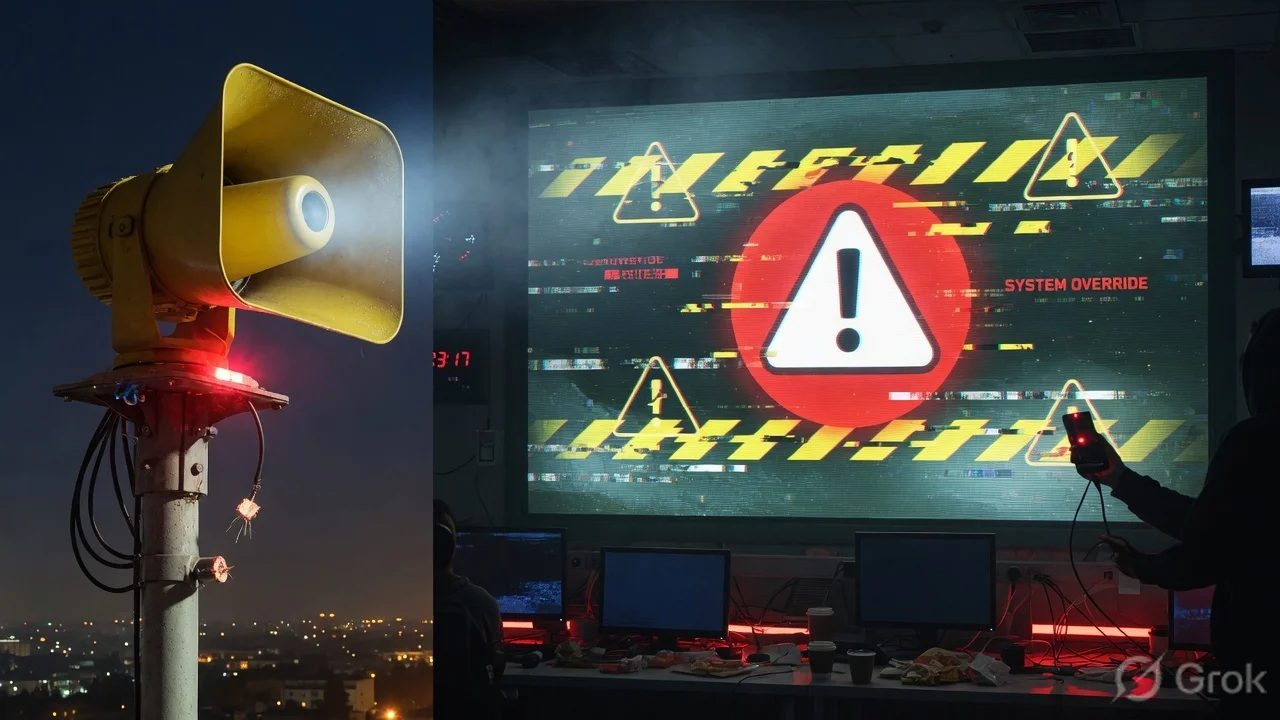
Imagine waking up to a loud, piercing siren from your smartphone. You look at the screen, and it’s a high-priority emergency alert from the National Civil Defense. It warns of an imminent disaster—perhaps a flood or a chemical leak. Naturally, panic sets in. But within minutes, you realize there is no disaster. This was exactly what happened to millions of people in Brazil this week. On June 20, 2026, the Brazilian authorities had to make the tough call to pull their entire national warning platform offline after suspected hackers gained unauthorized access and started sending 'fake' emergency messages to citizens across multiple states.
This isn't just a minor glitch; it is a massive security failure that strikes at the heart of public trust. When a government-backed emergency system is compromised, the 'crying wolf' effect becomes a real danger. If people stop trusting these alerts, they might ignore a real one in the future, leading to potential loss of life. At TamilTech, we’ve been tracking how government infrastructures are becoming the new playground for sophisticated hacking groups in 2026, and this Brazilian incident is a textbook example of why cybersecurity cannot be an afterthought in national safety.
How the Breach Happened: A Technical Look
While the official investigation is still ongoing, our analysis suggests that the attackers didn't necessarily 'hack' the cell towers. Instead, they likely compromised the central platform—the software interface where officials draft and send these alerts. These platforms usually connect to telecom operators via secure APIs (Application Programming Interfaces). If the credentials for this platform are stolen through phishing or if there's a vulnerability in the web portal itself, an attacker can broadcast a message to an entire region with just a few clicks. In this case, the alerts were sent to several states simultaneously, indicating that the breach happened at a very high administrative level within the Civil Defense network.
The Brazilian government’s decision to take the system offline is a 'scorched earth' tactic. By shutting it down, they are preventing further false alarms, but they are also leaving the country without a digital warning system during the downtime. This shows how desperate the situation was. They are currently performing a full forensic audit of their servers. In 2026, with AI-driven cyberattacks becoming common, even a small loophole in a legacy system can be exploited to cause mass hysteria. The attackers didn't ask for ransom; they simply wanted to demonstrate that the system was vulnerable, which is almost more terrifying.
India’s 'Sachet' System: Are We Safe?
Whenever something like this happens globally, the first question we ask at TamilTech is: 'What about India?' India has its own sophisticated emergency alert system called 'Sachet,' managed by the National Disaster Management Authority (NDMA). You might have seen those loud test alerts on your Android or iPhone over the last year. India uses Cell Broadcast technology, which is actually more secure than SMS because it doesn't require your phone number. It broadcasts to every phone connected to a specific tower. However, the 'trigger' for these broadcasts still comes from a central server.
Currently, India's system is considered very robust. The NDMA uses multi-layered authentication and, according to our internal sources, has strict geo-fencing protocols. This means an alert for Chennai can only be triggered from specific authorized nodes. But the Brazil incident is a wake-up call for the Indian government to ensure that 'Two-Factor Authentication' (2FA) is mandatory for every single official who has 'Send' access. If a hacker gets hold of a senior official's login details in India, the same chaos could unfold in cities like Mumbai or Delhi. We believe a regular third-party security audit of the Sachet platform is now a necessity, not an option.
How to Verify an Emergency Alert
In this digital age, you need to know how to distinguish between a real government alert and a potential hack. Here is a quick guide on what to look for when you receive an emergency notification on your phone. First, official alerts in 2026 usually come with a specific 'Class' header, like 'Extreme' or 'Severe.' They often have a unique sound that overrides your silent mode. Second, always cross-check the information on official social media handles or news apps. If you get an alert about a flood but the local weather app shows clear skies, stay calm and wait for a second confirmation.
Another tip is to check the language and links. Real government alerts rarely include clickable links to third-party websites. If an alert asks you to 'click here to see the evacuation map' and leads to a strange URL, it’s a major red flag. In the Brazil case, the messages were reportedly confusing and didn't follow the standard template. We recommend that our followers always keep their phone's OS updated, as Apple and Google frequently push security patches that specifically protect the 'Emergency Alert' subsystem from being hijacked by malicious apps.
TamilTech’s Take: Security vs. Accessibility
Here’s what we think at TamilTech: We are building amazing systems to keep people safe, but we are failing at the most basic level of security—access control. The Brazil incident proves that no matter how advanced your 'Cell Broadcast' technology is, it’s only as strong as the password protecting the 'Send' button. In 2026, we shouldn't be seeing 'unauthorized alerts' from national platforms. This is a massive embarrassment for the Brazilian tech administration. For India, this is a free lesson. We need to move beyond just 'testing' the alerts and start 'stress-testing' the security behind them.
What should you do next? Don't go and disable emergency alerts on your phone. That’s the worst thing you can do. These systems save lives during real disasters. Instead, just be a bit more skeptical. If you receive an alert that seems out of place, don't immediately share it on WhatsApp and spread the panic. Take 30 seconds to verify. We expect the Brazilian government to bring their system back online with much stricter protocols, possibly involving hardware-based security keys for officials. This is the future of national security—protecting the digital sirens as much as we protect our physical borders.

Comments (0)
Be the first to comment!