


Key Takeaways
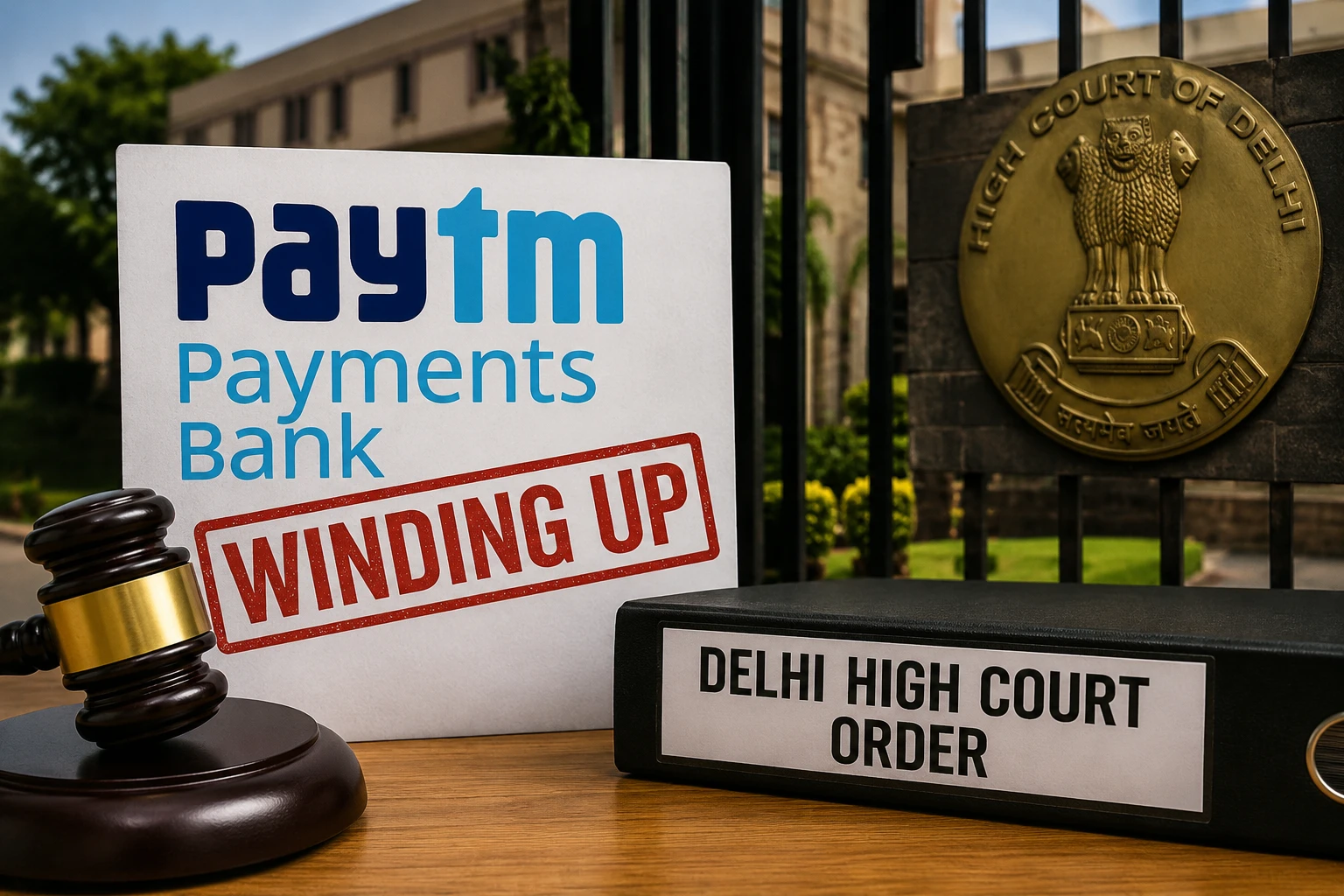
- The Delhi High Court has officially ordered the winding up of Paytm Payments Bank (PPB) following years of regulatory non-compliance.
- As of July 2026, all remaining banking operations under the PPB license must be liquidated and settled.
- The main Paytm app will continue to function as a third-party UPI app (TPAP) using partner banks like Axis, HDFC, and SBI.
- Users with frozen funds or old balances must approach the court-appointed liquidator to claim their money.
The End of the Road for Paytm Payments Bank
It is July 2026, and we are witnessing the final chapter of a saga that started back in early 2024. The Delhi High Court has just passed a definitive order to wind up Paytm Payments Bank. This is not just another restriction or a temporary ban; this is the legal termination of the entity that once led India's digital payments revolution. For many of us who grew up using the Paytm Wallet for everything from tea stalls to electricity bills, this feels like the end of an era. But beyond the nostalgia, there are serious questions about what happens to the money still stuck in those accounts and how this affects the future of fintech in India.
How Did We Get Here? A Timeline of Trouble
If you have been following the news over the last two years, you know this did not happen overnight. It started with the RBI's massive crackdown in February 2024, where they cited 'persistent non-compliance' and 'continued material supervisory concerns.' The central bank was worried about thousands of accounts being linked to the same PAN card and massive KYC (Know Your Customer) lapses. Despite multiple extensions and attempts by the parent company, One97 Communications, to fix these issues, the trust gap with the regulator never closed. In 2025, the internal audit reports were reportedly the final nail in the coffin, leading the RBI to move the court for a formal winding-up process to protect the remaining depositors and the integrity of the financial system.
What Does 'Winding Up' Actually Mean?
In simple terms, winding up is the process of closing a company and selling off its assets to pay back its debts. Since Paytm Payments Bank is a bank, this process is even more strictly monitored. The court will appoint a liquidator who will take control of the bank's remaining assets. Their first priority will be to pay back any remaining depositors who couldn't move their money out in time. This is a massive logistical challenge because, at its peak, PPB had millions of users. If you are one of those people who still has money in a frozen PPB account, you are no longer dealing with a customer support chat bot; you are now part of a legal recovery process.
The Impact on the Paytm App and UPI
Let's clear up the biggest confusion: The Paytm app on your phone is NOT shutting down. The app is owned by One97 Communications, which is a separate entity from the Payments Bank. For over a year now, Paytm has been operating as a Third-Party Application Provider (TPAP), much like PhonePe or Google Pay. When you scan a QR code today, the transaction is likely being processed by partner banks like Axis Bank, HDFC Bank, or Yes Bank. However, the 'Paytm Wallet' feature, which was the heart of the bank, is effectively dead. You can no longer add money to it, and the court order ensures that the wallet infrastructure under the PPB license will be dismantled entirely.
What Should You Do If You Have Money in PPB?
If you haven't moved your funds yet, you need to act fast. Most users migrated their savings and FASTags back in 2024, but if you have a dormant account with a balance, here is the reality: the liquidator will set a window for claims. You will likely need to provide valid identity proof and bank details of a different account to receive your refund. This is no longer as simple as a 'Transfer to Bank' button in the app. This is a legal settlement. For FASTag users, if you are still using an old Paytm FASTag (though most were deactivated by now), it will completely stop working at toll plazas across India immediately following this court order.
The Competition: Who Wins Now?
The vacuum left by Paytm Payments Bank has been aggressively filled by PhonePe and Google Pay. While Paytm is trying to reinvent itself as a pure-play service app (selling insurance, tickets, and acting as a UPI front-end), it has lost the 'ecosystem' advantage it once had. Traditional banks like SBI and HDFC have also beefed up their own apps to compete. We are seeing a more consolidated market now, where compliance is being taken much more seriously than 'growth at any cost.' The lesson for other fintech startups is clear: you can innovate as much as you want, but you cannot bypass the RBI's rulebook.
TamilTech's Honest Take: A Warning for the Future
At TamilTech, we have always said that convenience should never come at the cost of security. Paytm's downfall was not a lack of technology, but a lack of transparency. For the average Indian user, this is a wake-up call. Don't keep your entire life savings in a single fintech wallet. Always have a secondary account in a traditional, well-regulated bank. While the Paytm app will survive as a UPI tool, the dream of it becoming India's biggest digital bank is officially over. It is a sad day for Indian innovation, but a necessary one for the safety of our financial system. What do you think? Are you still using the Paytm app, or have you moved on to other alternatives? Let us know in the comments.

Comments (0)
Be the first to comment!