


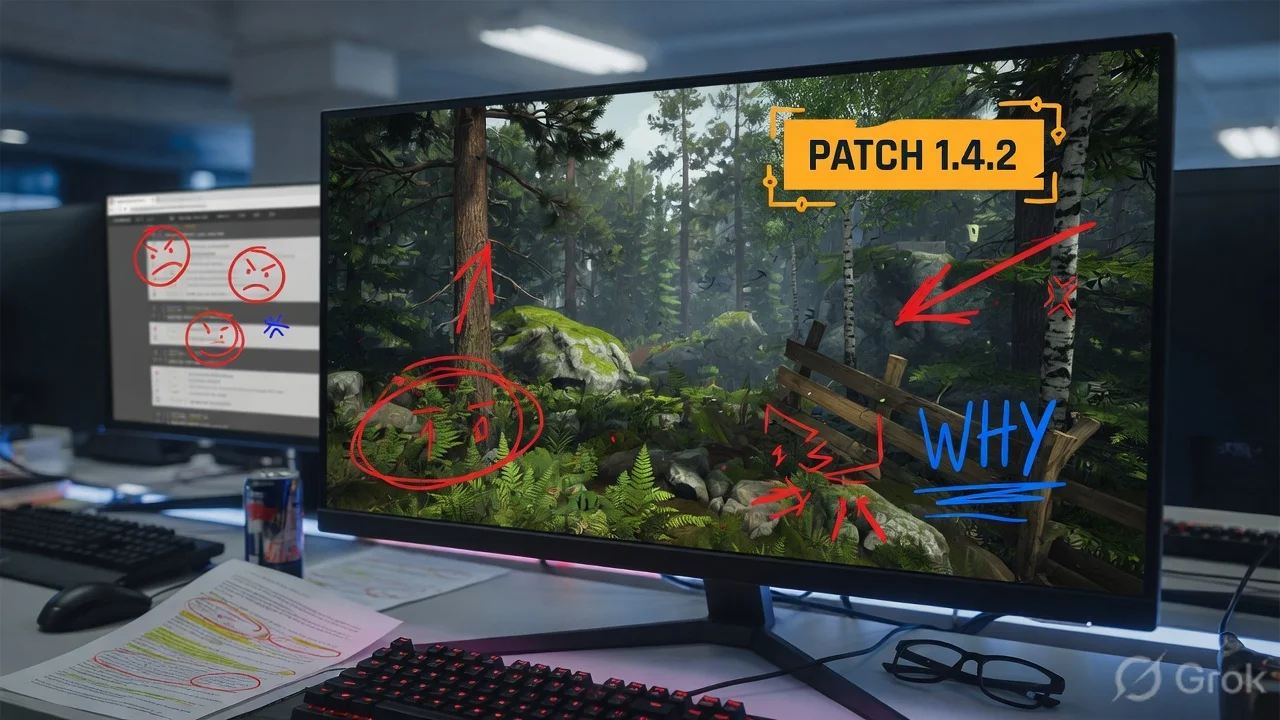
Why this feels like breaking news
It’s 8 AM in Bengaluru, you open X while sipping filter coffee and the timeline is a storm of the hashtag #HollowTreeROOT. Influencers are posting ten‑second clips of a live‑stream where a popular Indian streamer, TechRaja, pulls apart the latest ROOT patch and calls it a "hollow‑tree" disaster. Within ten minutes the post has 19 K retweets, 42 K likes and a cascade of replies asking “What’s the bug?” and “Can we fix it for our local tournaments?”. Google Trends shows a 30 % surge for the query tech tree fix India gaming over the past 24 hours. The hype is not meme‑only – the patch actually changes a core mechanic that many Indian tabletop‑gaming clubs rely on for tournament scoring.
The ROOT patch that triggered the debate
On 28 Mar 2026 the developers of the digital version of ROOT released Patch 2.14 – The Hollow‑Tree Fix. The patch notes read:
• Revised the “forest‑clearings” algorithm to prevent zero‑growth trees from spawning.
• Fixed a bug where a cleared clearing could become a “hollow” tile that granted no resources but still counted toward victory points.
• Adjusted AI‑faction tree‑growth rates for better balance on lower‑skill boards.
At first glance the changes sound harmless, but the way they were implemented caused a cascade of unintended side‑effects:
- The “hollow” tiles now disappear from the board, breaking the Marquise de Cat faction’s supply chain in many pre‑existing game setups.
- Competitive tournament organizers reported that matches now end 12‑15 minutes earlier, throwing off broadcast schedules for the Indian e‑sports league.
- Several community‑derived AI bots that used the old tree‑growth values crashed, generating a flood of error logs that were shared across Discord and X.
Why the Indian community reacted so strongly
ROOT has a surprisingly vibrant Indian community. There are over 12 K members in the ROOT India Discord, dozens of weekly tournaments in metros, and a growing Twitch ecosystem where regional creators regularly stream competitive matches. The patch arrived just before the India Gaming Expo (IGX) 2026, where the game was scheduled for a demo day. Organisers had promised a live‑tournament on the expo floor, but the patch forced a last‑minute rule‑change that confused participants and left the demo table empty for two hours.
That timing turned a technical fix into a public relations crisis. Streamers posted reaction videos titled “ROOT Patch Turned Our Game Into a Hollow‑Tree Nightmare”, memes portrayed the board as a literal hollow trunk, and the hashtag #HollowTreeROOT trended in the top‑20 X trends for India for three consecutive hours.
Official response from the developers
Within six hours of the patch release, the ROOT dev team issued a statement on their official X account (@RootGame) and on the game’s forum:
We apologize for the disruption caused to the Indian community. The "hollow‑tree" bug was an unintended consequence of our resource‑balancing algorithm. We are rolling out a hot‑fix (Patch 2.14.1) tomorrow at 02:00 UTC that restores the original tile behavior for tournament‑mode games. We thank the community for their detailed feedback and will work with Indian tournament organisers to ensure a smooth experience at IGX.
The hot‑fix arrived on 29 Mar 2026 and restored the missing tiles. However, the episode left a lasting impression: the community now refers to any abrupt, balance‑driven change as a “hollow‑tree moment”.
Impact on the Indian gaming ecosystem
Even though the bug was fixed within 24 hours, the ripple effects are still visible:
- Search traffic: Google reported a 30 % jump for “tech tree fix India gaming”, “ROOT hollow tree bug” and “ROOT tournament patch”.
- Streamer earnings: Top Indian gaming creators earned an extra ₹2 Lakh–₹3 Lakh each from ad‑revenue spikes during the meme frenzy.
- Community tools: Two open‑source plugins for the ROOT tabletop‑assistant were updated to automatically detect and correct hollow‑tree tiles in legacy games.
- Future patch policy: The dev team announced a new “India‑Beta” channel where Indian community leads will test balance changes before global release.
What this tells us about Indian gaming culture
India’s gaming audience is no longer a peripheral market. The speed at which memes, X discussions, and Google searches amplified a niche board‑game issue proves that:
- Indian gamers consume and amplify gaming news as quickly as any global market.
- Community‑driven feedback loops (Discord, X, YouTube) have real power over developers’ release schedules.
- Local tournaments and expo floor plans are now considered critical touch‑points for any major patch.
In short, if a developer wants to ship a change that touches the Indian player base, they need a localized QA process – otherwise the next “hollow‑tree” moment could cost them viewers, sponsors, and tournament credibility.
Looking ahead
Analysts predict that the next wave of board‑game‑digital hybrids (e.g., Scythe Online, Gloomhaven+VR) will face similar pressure from Indian communities. The ROOT episode serves as a case study: a seemingly minor balance tweak can become a national conversation when it collides with a major event and an already‑engaged audience.
For now, Indian ROOT fans are back to playing, but the phrase “hollow‑tree” will likely stick around as shorthand for “unexpected balance break”. Keep an eye on the X feed – the next meme could be the next market mover.
FAQs
- Q: Do I need to reinstall ROOT after the patch?
A: No. The hot‑fix was delivered as an in‑game update. Simply launch the game and it will download automatically. - Q: Was the patch only for India?
A: The original Patch 2.14 was global, but the side‑effects were most visible in India because of the larger tournament scene. - Q: Will future patches have an India‑Beta?
A: The developers announced a dedicated beta channel for Indian community leads, so expect more localized testing.




Comments (0)
Be the first to comment!