


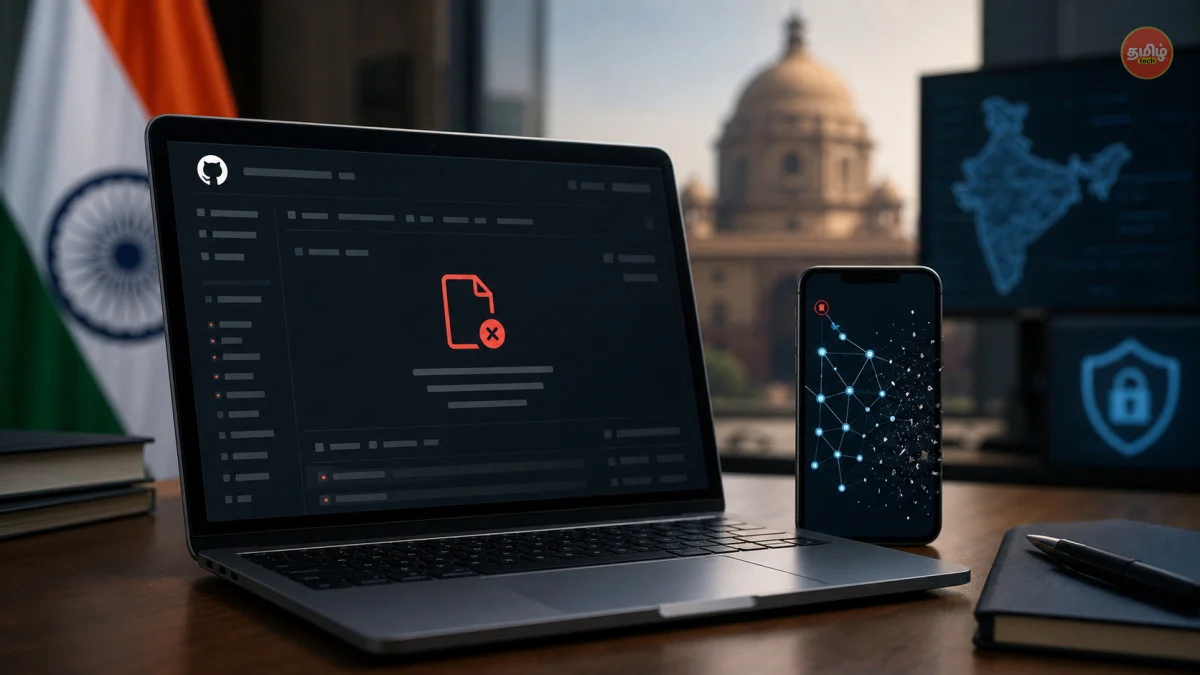
Key Takeaways
- GitHub has officially removed the BitChat repository following a direct legal order from India's Ministry of Home Affairs (MHA) in July 2026.
- The takedown was issued under Section 69A of the IT Act, citing concerns over national security and untraceable communication.
- BitChat is a decentralized, peer-to-peer (P2P) messaging protocol that does not use central servers, making it nearly impossible for agencies to monitor.
- This move affects over 150,000 Indian users and developers who were part of the BitChat ecosystem as of mid-2026.
- The bottom line: While privacy is vital, the Indian government is tightening its grip on 'dark' communication tools that lack interceptable backdoors.
The Big Takedown: What Happened?
So, here is the latest update that is shaking the Indian developer community. GitHub has just pulled the plug on BitChat. If you try to access the repository today, you will likely see a 404 error or a legal notice. This was not a random decision by GitHub; it came straight from the Ministry of Home Affairs (MHA). The Indian government is getting really serious about apps that offer total anonymity without any accountability. BitChat has been on the radar for a while, and in July 2026, the hammer finally fell.
You might be wondering why GitHub complied so quickly. Well, GitHub has a clear policy: if a local law is being violated and a valid government order is presented, they have to act to keep their services running in that country. For India, this is part of a larger trend where the government is looking to eliminate 'blind spots' in digital communication. BitChat was one of the biggest blind spots because of how it was built. It was not just an app; it was a protocol that allowed people to talk without anyone—not even the creators—knowing who was saying what.
What Exactly is BitChat?
To understand why the MHA is worried, you first need to understand what BitChat actually is. Most of us use WhatsApp, Telegram, or Signal. While these are encrypted, they still rely on some level of central coordination. BitChat is different. It is a decentralized, peer-to-peer (P2P) messaging system. Think of it like BitTorrent but for chatting. There is no central server in a basement in California or Delhi. Every user’s phone acts as a tiny part of the server network.
This architecture means there is no 'Master Key' that the government can ask for. In 2026, as we see more sophisticated cyber threats, tools like BitChat are a double-edged sword. On one hand, it is the ultimate tool for privacy-conscious individuals and activists. On the other hand, security agencies argue that it provides a safe haven for anti-social elements to coordinate without being tracked. Since BitChat doesn't store metadata—like who you talked to or when—it is a nightmare for investigators trying to prevent crimes before they happen.
The Legal Angle: Section 69A and the IT Rules
The order was issued under Section 69A of the Information Technology Act. If you have been following tech news in India, you know this is the same section used to ban TikTok and hundreds of other apps over the last few years. It gives the government the power to block public access to any information in the interest of India's sovereignty, integrity, and defense. The MHA's argument is that BitChat’s 'untraceable' nature poses a direct threat to national security.
In 2026, the IT Rules have become even more stringent. Any platform providing messaging services in India is technically required to have a 'traceability' feature to identify the first originator of a message if requested by a court or competent authority. BitChat, by its very design, cannot comply with this. It is physically impossible for the developers to add a backdoor without destroying the entire P2P nature of the app. This fundamental clash between the software's code and India's law is what led to this takedown.
Impact on Indian Developers and Users
This isn't just about one app being gone; it is a huge signal to the open-source community in India. If you are a developer working on privacy-focused tools, you now have to think twice. Will your code be the next one to get a takedown notice? We have seen a surge in Indian developers contributing to decentralized tech, but this move might push them to host their code on alternative platforms like GitLab or self-hosted servers outside Indian jurisdiction. However, even then, the government can order ISPs to block those specific URLs.
For the average user in India, this means one less option for truly private communication. While Signal remains the gold standard for most, BitChat was the go-to for those who didn't even want to share their phone numbers. Now, if you already have the app installed, it might still work for a while because of its P2P nature, but you won't be getting any updates, security patches, or new features. Using an outdated messaging app is a massive security risk because hackers can exploit old bugs that are never fixed.
Privacy vs. Security: The Real Debate
Let’s get real for a second. This is the classic debate that never ends. You want your messages to be private so your bank details, personal photos, and private rants stay safe. But the government wants to be able to catch people planning something dangerous. Both sides have valid points. In the Indian context of 2026, the government is leaning heavily toward security. They argue that in a country as large and digitally connected as India, 'absolute anonymity' is a luxury we can't afford if it puts lives at risk.
However, we at TamilTech think there needs to be a middle ground. Banning the repository on GitHub is like trying to stop a river with a small wooden gate. The code is already out there. People have forked it, downloaded it, and shared it on Telegram groups. Takedowns often create a 'Streisand Effect'—where trying to hide something only makes it more popular. We might see a sudden spike in people looking for BitChat APKs from unofficial sources, which is actually more dangerous because those APKs could be bundled with malware.
What Should You Do Now?
If you were a BitChat user, it is time to look for alternatives that are still legal and supported in India. Signal is still the best balance between privacy and usability. If you want something even more hardcore, look into Session, which doesn't require a phone number. But remember, any app you use should be regularly updated. Don't go hunting for BitChat clones on random websites; you are just asking for your phone to be hacked.
For developers, this is a wake-up call to understand the legal framework of the country you are operating in. Compliance is not just a 'corporate' thing anymore; it affects open-source projects too. We expect more such takedowns in the second half of 2026 as the government audits more P2P and encrypted platforms. Stay tuned to TamilTech, and we will keep you updated on which apps are safe to use and which ones are hitting the blocklist.





Comments (0)
Be the first to comment!