


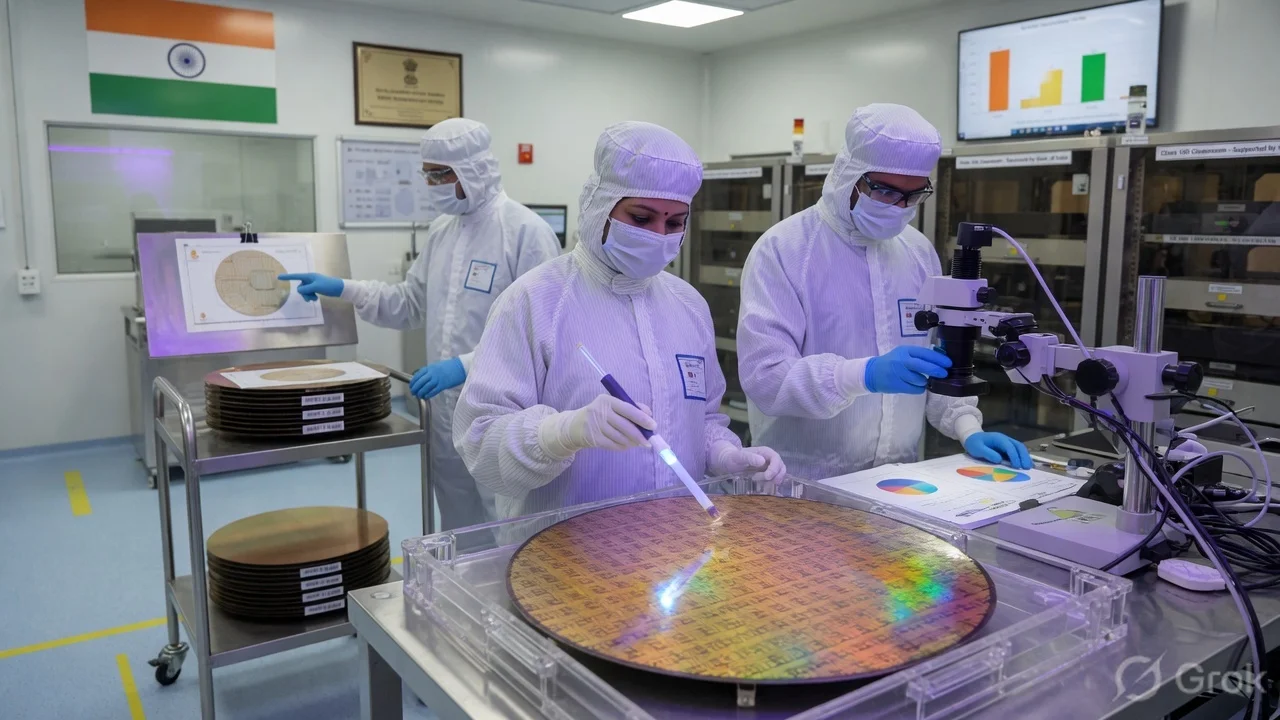
Key Takeaways
- The Indian government will match Venture Capital (VC) funding 1:1 for semiconductor design startups under the new Semicon 2.0 policy.
- Unlike the previous grant-based model, the government will now take an equity stake in these companies, becoming a literal shareholder.
- The focus is shifting toward 'Fabless' chip design companies, aiming to reduce India's reliance on imported intellectual property.
- This policy update aims to create at least 100 domestic semiconductor design startups by 2026-27 with a total outlay expected to exceed ₹76,000 crore.
The New Era of Indian Silicon: Why Semicon 2.0 Matters
For the last couple of years, we’ve been hearing a lot about 'Make in India' for chips. We saw the big announcements from Micron and the Tata-PSMC deal. But those were mostly about the 'Fabs'—the massive, multi-billion dollar factories that actually manufacture the silicon wafers. While that is huge, the real 'brain power' and the highest profit margins in the tech world lie in Chip Design. Think of companies like Nvidia or Qualcomm; they don't always make their own chips, but they design the architecture that runs our world. That is exactly where Semicon 2.0 comes in. Today, in July 2026, the government has decided that it doesn't just want to be a silent spectator or a donor; it wants to be a partner in India's tech future.
The shift from Semicon 1.0 to 2.0 is a massive strategic pivot. Earlier, the government gave out Design Linked Incentives (DLI) as grants. You hit a milestone, you got some cash. But the feedback from the industry was clear: startups need more than just a one-time check; they need a sustainable ecosystem and massive capital. By matching VC funding, the government is essentially saying, 'If a professional investor trusts your chip design, we trust it too.' This is a game-changer for Indian engineers who have spent decades working for foreign giants like Intel or AMD and now want to start their own companies right here in Bengaluru, Chennai, or Hyderabad.
How the VC Matching and Equity Model Actually Works
Let’s break down the math because this is where it gets interesting. In the traditional startup world, a founder goes to a VC firm, pitches an idea, and gets, say, ₹50 crore in exchange for 10% of the company. Under the Semicon 2.0 framework, if a recognized VC commits ₹50 crore to a chip design startup, the Indian government will step in and match that amount. This means the startup suddenly has ₹100 crore to play with, without the founder having to give away double the equity to private players. However, there is a catch—and it's a smart one. The government will now take an equity stake in the company. Instead of a free subsidy, the government becomes a shareholder.
Why is the government picking up equity? There are two main reasons. First, it ensures 'skin in the game.' If the government owns a piece of the company, it is incentivized to help that company succeed through better policies, easier export norms, and government procurement. Second, it’s about the return on investment. If one of these Indian chip startups becomes the next Nvidia or MediaTek, the Indian taxpayer actually profits from that success. Those returns can then be pumped back into the next generation of tech research. It’s a move away from the 'subsidy culture' toward an 'investment culture,' which is exactly what the high-stakes semiconductor industry needs.
The 'Fabless' Focus: Putting India's Brainpower to Use
You might be wondering, why focus so much on design instead of just building more factories? Building a high-end semiconductor fab costs upwards of $10 billion and takes years to stabilize. But a chip design house (often called 'Fabless') can be started with much less capital but requires immense intellectual talent. India already has this talent. Almost every major chip in your smartphone today was likely designed, at least in part, by engineers sitting in India working for multinational corporations. Semicon 2.0 is designed to encourage these engineers to stop building IP for others and start building it for India.
By focusing on Fabless startups, India is targeting the 'Intellectual Property' (IP) layer of the stack. When we design the chip here, we own the rights to it. Whether it’s a chip for an EV battery management system, a 6G modem, or an AI accelerator, owning the design means we aren't just the 'factory' for the world—we are the 'architects.' This is crucial for national security too. In a world where supply chains can be weaponized, having indigenous chip designs for our defense and telecommunications infrastructure is no longer a luxury; it’s a necessity. The 2026 roadmap for Semicon 2.0 specifically prioritizes chips for automotive, power electronics, and IoT devices.
What This Means for the Indian Tech Ecosystem
For the average consumer, this might seem like high-level policy, but the impact will trickle down to your pocket sooner than you think. When we design and manufacture chips locally, the bill of materials (BoM) for electronics goes down. We are talking about cheaper smartphones, more affordable electric scooters, and even lower costs for home appliances. Currently, India imports billions of dollars worth of semiconductors every year. By 2026, with Semicon 2.0 in full swing, we are looking at a future where 'Designed in India' becomes a common label on the motherboards of our gadgets.
Moreover, this creates a massive job market for high-end VLSI (Very Large Scale Integration) engineers. We aren't just talking about assembly line jobs, but high-paying R&D roles. The government’s move to match VC funding also brings in global expertise. When a global VC firm like Sequoia or a domestic one like Chiratae invests alongside the government, they bring mentorship, global networking, and business discipline that a purely government-run program might lack. It’s a hybrid model that combines the speed of the private sector with the muscle of the state.
TamilTech’s Take: Is This the Right Move?
We’ve seen many government schemes come and go, but Semicon 2.0 feels different. At TamilTech, we think the 'Equity Model' is a bold and necessary step. For too long, Indian startups have struggled with the 'Valley of Death'—that phase where they have a great prototype but no money to scale to mass production. By doubling the available capital through matching funds, the government is effectively building a bridge over that valley. However, the success of this plan depends on one thing: speed. The semiconductor world moves at the speed of light. If the government’s process for picking equity and releasing funds involves too much red tape, these startups will be obsolete before the check clears.
Our honest opinion? This is the most realistic path for India to become a global tech superpower. We can't out-manufacture China overnight, but we can certainly out-design many other nations given our massive engineering talent pool. If you are a student or a young engineer reading this in 2026, our advice is simple: focus on VLSI, embedded systems, and chip architecture. That’s where the future—and the money—is going to be. Semicon 2.0 isn't just a policy; it's an invitation for India to finally own the silicon it consumes. We are excited to see which Indian startup becomes the first 'Semiconductor Unicorn' under this new regime!





Comments (0)
Be the first to comment!