


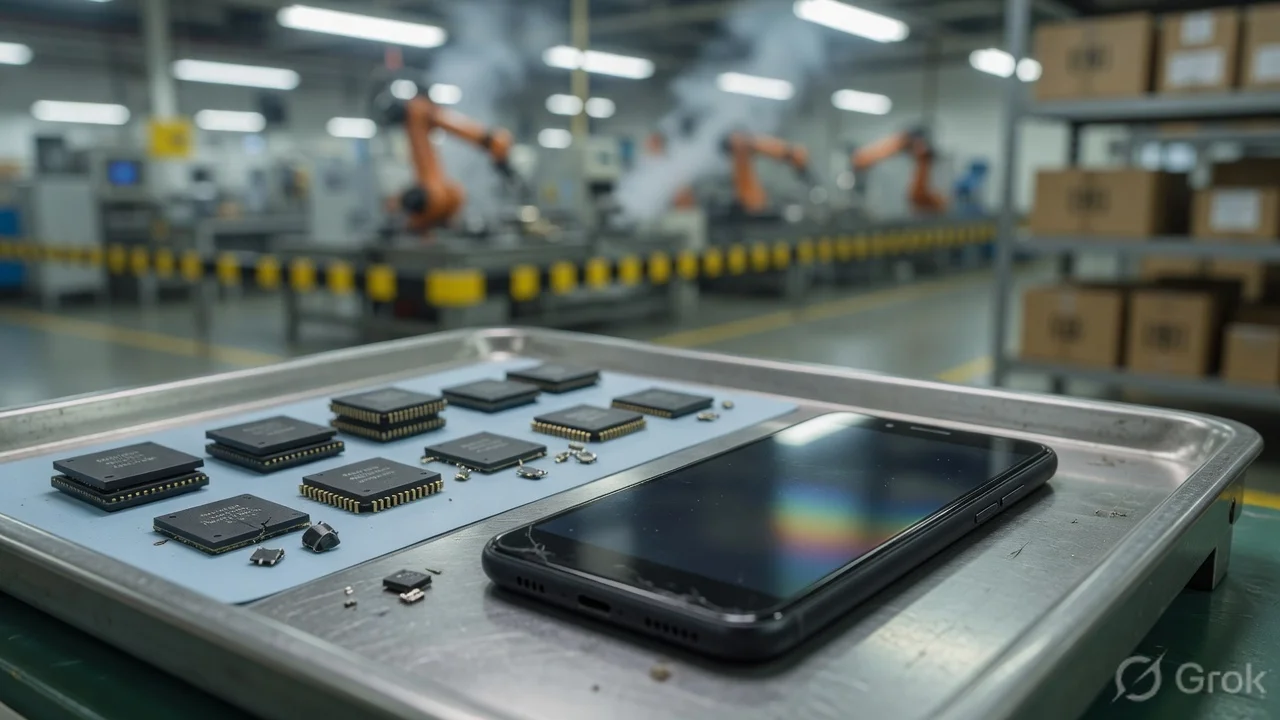
Key Takeaways
- Smartphone RAM and storage prices in India have surged by 25-30% in the first half of 2026 due to global AI server demand.
- On-device AI models now require a minimum of 12GB RAM to function smoothly, making 6GB and 8GB phones obsolete for power users.
- The sub-₹15,000 segment is shrinking as brands struggle to pack high-speed LPDDR5X memory at low price points.
- If you are buying a phone today, prioritize UFS 4.0 storage and at least 12GB of physical RAM to future-proof for the 2027 AI updates.
The RAMocalypse is Here
So, here is the situation: if you have been planning to upgrade your phone this July 2026, you might have noticed something weird. Prices that used to stay stable are suddenly jumping, and those 'value-for-money' deals under ₹20,000 are disappearing faster than a flash sale. This isn't just regular inflation. We are currently in the middle of a massive global memory crunch, and India is feeling the heat more than anyone else. The culprit? Artificial Intelligence. Not the kind that lives in the cloud, but the 'On-device AI' that brands like Samsung, Google, and Apple are pushing into every single handset.
I have been talking to industry insiders and looking at the supply chain data, and the numbers are honestly wild. The demand for high-bandwidth memory (HBM) and DDR5 RAM for AI data centers has sucked the oxygen out of the room for mobile manufacturers. Brands that used to brag about 8GB RAM are now realizing that for 2026’s AI features—like real-time 4K video generative filling and offline LLMs—8GB is the new 4GB. It is barely enough to keep the OS running, let alone the cool AI tricks you see in the ads.
How Did We Get Here?
To understand why your next phone might burn a hole in your pocket, we have to look back at 2024 and 2025. Back then, AI was a gimmick. Fast forward to 2026, and it is the core of the user experience. Whether it is the new Siri, Gemini 2.0, or localized Indian AI models that work without the internet, they all need one thing: massive amounts of fast memory. The problem started when major memory chip makers like Samsung and SK Hynix shifted their production lines to serve the high-margin AI server market. Why sell a cheap 8GB module for a budget phone when you can sell a high-performance stack to Nvidia for ten times the profit?
This shift has created a massive supply gap for the mobile industry. In India, where the ₹15,000 to ₹25,000 segment is the most competitive, this is a disaster. Brands are now forced to make a tough choice: either increase the price by ₹3,000-₹5,000 or cut corners on the display and camera to keep the RAM high. This is why you are seeing 'New' 2026 models with specs that actually look worse than 2025 models in some areas, just so they can squeeze in that 12GB or 16GB of LPDDR5X RAM needed for AI.
The "AI Tax" on Your Wallet
Let's talk real numbers. In early 2025, you could easily find a solid 12GB RAM phone for around ₹22,000. Now, in July 2026, that same configuration is pushing ₹28,000. That ₹6,000 difference is what I call the 'AI Tax'. It is not just the RAM; it is the storage too. AI models are huge. They don't just sit in the cloud anymore; they live on your phone. This means the system partition on a 2026 smartphone now takes up nearly 40GB to 60GB just for the AI weights and OS. If you buy a 128GB phone today, you are basically starting with only half the space available for your own photos and apps.
For the Indian consumer, this is a massive shift in buying behavior. We are seeing a 'premiumization' of the market not because people have more money, but because the 'budget' experience has become frustratingly slow. If you try to run 2026-era apps on a 6GB RAM phone, you will face constant app crashes and lag. The system just can't keep up with the background AI processing that now handles everything from battery management to photo enhancement. This has pushed the 'sweet spot' for a reliable smartphone in India up to the ₹30,000 mark.
Real-World Impact: Why You Need 12GB+
You might be thinking, "I don't use AI, I just use WhatsApp and Instagram." But that's where you're wrong. In 2026, even your keyboard and camera app are powered by local AI. When you take a photo, the phone is running thousands of calculations per second to recognize objects, adjust lighting, and even 'generate' missing details. All of this happens in the RAM. If the RAM is full, the camera app takes 3 seconds to open. You miss the shot. That is the reality of a memory-starved phone in 2026.
We tested a few 8GB RAM phones launched recently against 16GB models. The difference in 'Cold Start' times for apps like Swiggy or Amazon was nearly 40%. More importantly, the 8GB models couldn't keep more than 3 apps in the background. In a country like India, where we constantly switch between UPI apps, WhatsApp, and browsers, this is a massive pain point. The 'Memory Crunch' isn't just a spec-sheet problem; it is a daily usability problem that will make your phone feel old within six months.
What Should You Do? TamilTech’s Advice
Look, I'll be honest with you. If you are using a phone from 2024 or 2025 that still works fine, hold onto it for a bit longer. But if you must buy a phone now in July 2026, do not settle for anything less than 12GB of physical RAM. Ignore the 'Virtual RAM' or 'RAM Expansion' marketing—that is just using slow storage to pretend it's fast memory, and it doesn't help with AI performance. It's a gimmick that brands use to hide the fact that they are cutting costs.
Also, pay close attention to the storage type. UFS 3.1 is officially dead for 2026. You need UFS 4.0 or the newer UFS 5.0 to ensure the AI models can load quickly. If a brand is offering 16GB RAM but with UFS 2.2 storage, stay away! It's like putting a Ferrari engine in a bullock cart. My recommendation? Look for deals on 2025 flagships that are now on clearance. Often, a last-year flagship with 12GB RAM and a top-tier processor will outperform a 2026 mid-ranger that is struggling with the current memory prices.
The Road Ahead: Will Prices Ever Drop?
Everyone is asking: when will this end? Unfortunately, the outlook for the rest of 2026 isn't great. Memory manufacturers are still prioritizing AI servers, and with the rumored launch of the next generation of AI-heavy iPhones and Pixels later this year, the demand is only going to go up. We might see some relief in mid-2027 when new factories in the US and India finally start mass production, but for now, the 'High Price, High RAM' era is our new reality.
Expect brands to start offering more 'Lite' versions of their AI features for cheaper phones, but let's be real—the experience won't be the same. The gap between a ₹20,000 phone and a ₹50,000 phone has never been wider than it is today. In the past, you paid for a better camera or a premium build. Today, you are paying for the very ability of the phone to function smoothly in an AI-first world. Stay smart, check the specs carefully, and don't let the marketing slogans fool you.






Comments (0)
Be the first to comment!