


What’s the headline?
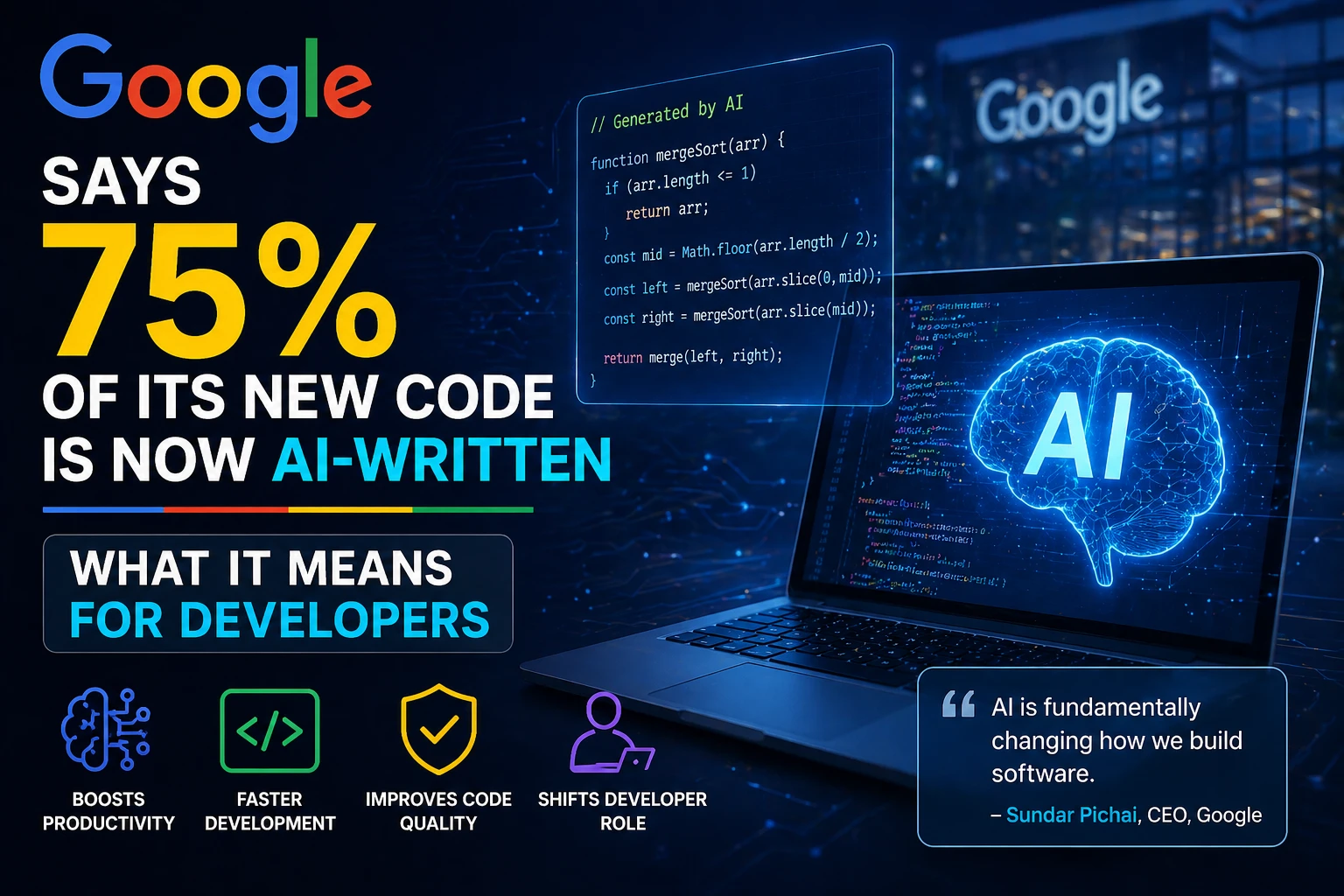
Google announced that 75% of the fresh code being created inside its walls is now churned out by artificial‑intelligence tools and then double‑checked by human engineers. Last fall the figure was 50%, so the jump happened in less than a year.
How does it work?
Google’s engineers use internal large‑language‑model (LLM) systems – think of them as super‑charged code assistants that can write functions, suggest APIs, and even debug. A developer types a brief description, the model spits out a code snippet, and the engineer reviews, tweaks, and merges it. The whole loop can be under a minute for simple tasks.
The numbers behind the claim
According to the internal metrics shared by Google, out of roughly 1.2 million code changes pushed to production each month, about 900 000 are AI‑generated. The rest are still hand‑crafted, but even those often contain AI‑suggested edits.
Why is Google pushing this hard?
Speed. The company says AI‑generated code cuts development time by 30‑40% on average. It also helps fill talent gaps – Google hires thousands of engineers each year, but the demand for specialized skills (like Kubernetes or TensorFlow) outpaces supply. An AI assistant can write boilerplate, generate test cases, and even suggest performance‑optimised patterns.
Impact on Indian developers
We in India have been watching Google’s AI push for a while – from Gemini to the new Codey model. Here’s why the 75% figure matters to us:
- Tool availability: Google Cloud’s Vertex AI Studio now ships with the same LLMs that power internal code generation. Small startups in Bangalore can plug them into CI pipelines without building their own model.
- Cost angle: Google bills AI‑generated code assistance per token. For a typical micro‑service, you might spend ₹5‑10 per 1,000 lines – a fraction of a senior developer’s monthly salary.
- Skill shift: Junior devs will spend less time on repetitive scaffolding and more on architecture, security, and product thinking. That means interview focus will move from “can you write a CRUD API?” to “how do you design a scalable system?”
TamilTech‑ஓட கருத்து
We think this is a double‑edged sword. On one hand, AI can democratise access to high‑quality code – a fresh graduate in Coimbatore can spin up a serverless function in minutes. On the other hand, over‑reliance may erode deep‑rooted coding fundamentals. The real value will come from the human‑in‑the‑loop: reviewing security, handling edge‑cases, and ensuring the code respects local compliance (think data‑locality rules for Indian users).
What should Indian devs do right now?
- Sign up for Vertex AI free tier – you get $300 credit for the first 90 days, enough to experiment.
- Try the
codey‑assistantCLI:gcloud beta ai codey generate --prompt "Create a REST endpoint in Go that returns JSON of user profile" - Integrate the generated snippet into your repo and run
git diffto see what changed. Make it a habit to review every line – this is your safety net. - Set up a code‑review bot that flags any AI‑generated file without a human sign‑off. It keeps the audit trail clean.
Potential pitfalls
Security is the biggest worry. An LLM trained on public code can inadvertently copy vulnerable patterns. Google claims its internal models are filtered for known CVEs, but you still need static analysis tools (like SonarQube) to catch anything missed.
What’s next?
Google says the next milestone is 90% AI‑assisted code by 2025, with deeper integration into Android Studio, Chrome DevTools, and even Google Workspace macros. For us, the question is not “Will AI replace developers?” but “How will developers work with AI to ship better products faster?”
Bottom line
AI‑generated code is no longer a novelty at Google – it’s the new normal. Indian developers can ride this wave by adopting the tools early, sharpening the review skills, and focusing on the higher‑level problems that AI can’t solve yet.





Comments (0)
Be the first to comment!