


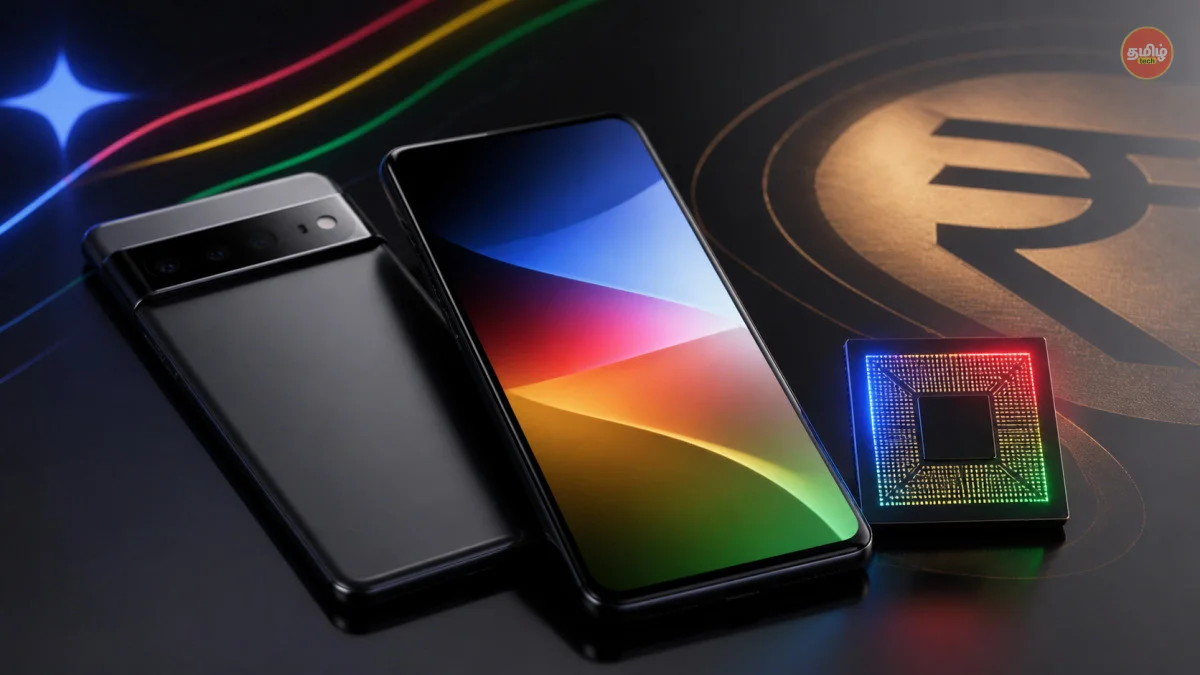
Key Takeaways
- The new Tensor G6 chip will be manufactured on TSMC's 2nm process, significantly reducing heating and battery drain issues.
- Google Pixel 11 Pro is rumored to feature a 50MP under-display selfie camera, eliminating the punch-hole cutout entirely.
- Expected India pricing starts at ₹79,999 for the base Pixel 11 and goes up to ₹1,24,999 for the Pro XL variant.
- The series will ship with Android 17 and an upgraded Gemini 3.0 AI assistant with offline multimodal capabilities.
The Hype is Real: Google Pixel 11 is Coming
It feels like just yesterday we were debating whether the Pixel 10 was worth the upgrade, but here we are in August 2026, and the floodgates for the Google Pixel 11 series have finally opened. If you’ve been following TamilTech, you know we’ve been critical of Google’s hardware choices in the past—specifically those heating issues that made the phones feel like a pocket heater during a Chennai summer. But from what we are seeing in these latest leaks, Google might finally be listening to us. The Pixel 11 isn't just a minor refresh; it looks like a complete overhaul of the internal architecture.
The leaks suggest that Google is moving away from its previous design philosophy to focus on raw efficiency and AI integration that actually works without killing your battery. We are looking at three models this year: the standard Pixel 11, the Pixel 11 Pro, and the massive Pixel 11 Pro XL. There's also some chatter about a 'Fold 3' joining the lineup, but the focus today is on the slab phones that most of you will actually buy. Let’s dive into what makes these devices tick and whether they can finally take the crown from Samsung and Apple in the Indian market.
The Heart of the Matter: Tensor G6 on 2nm
For years, the Tensor chips were essentially modified Samsung Exynos processors, which was the root cause of the thermal throttling and modem issues. But for the Pixel 11, the Tensor G6 is a different beast altogether. Based on the leaked schematics, this chip is being built on TSMC’s cutting-edge 2nm process node. This is a massive jump. Why should you care? Because a smaller nanometer process means more transistors packed into a smaller space, leading to better performance and, more importantly, much lower power consumption. In plain English: your phone won't get hot while recording 4K video or playing heavy games like Genshin Impact or the latest AAA mobile titles of 2026.
The Tensor G6 isn't trying to beat the Snapdragon 8 Gen 5 in raw benchmarks. Instead, Google is doubling down on the TPU (Tensor Processing Unit). This year, the TPU is designed to handle Gemini 3.0 locally. This means you can do real-time voice translation, advanced photo editing, and even video generation directly on the device without needing an active internet connection. For those of us in India who occasionally deal with spotty network zones while traveling, this offline AI capability is going to be a game-changer.
Display and Design: Goodbye Punch-Hole?
One of the most exciting leaks is about the display on the Pixel 11 Pro. Google is reportedly testing a 50MP under-display camera (UDC). We’ve seen this tech before from other brands, but it usually resulted in blurry selfies. However, Google is supposedly using its computational photography magic to clean up the image, making the camera invisible behind the 6.7-inch LTPO 4.0 OLED panel. The base Pixel 11 will likely stick to a traditional punch-hole, but it will get a brightness boost to 3,000 nits, making it perfectly readable even under the harsh afternoon sun in Mumbai or Delhi.
The design language is evolving too. The iconic 'Camera Bar' is getting a more refined, integrated look. It’s no longer a separate strip but blends seamlessly into the titanium frame. Yes, you heard that right—Google is finally moving to Grade 5 Titanium for the Pro models to keep the weight down while increasing durability. The back glass will feature a new 'Satin Frost' finish that is supposedly 5x more resistant to fingerprints and smudges than the previous generation. It’s about time, because nobody likes a greasy-looking ₹1 lakh smartphone.
Camera Evolution: More Than Just Megapixels
Google has always been the king of still photography, but video has been their Achilles' heel. With the Pixel 11, they are introducing 'Video Boost 3.0'. This isn't just a filter; the Tensor G6 will process every frame of a 4K 60fps video in real-time using AI to enhance dynamic range and reduce noise. The main sensor is rumored to be a custom 1-inch type Sony sensor for the Pro models, which will provide natural bokeh and incredible low-light performance without needing 'Night Sight' to kick in every single time. It’s the kind of hardware upgrade we’ve been begging for.
The telephoto lens is also getting an upgrade to 10x optical zoom, with 'Super Res Zoom' reaching up to 100x. While 100x zoom is often a gimmick, Google’s AI upscaling is usually the best in the business, so we expect usable shots even at 30x or 50x. For the selfie lovers, the 50MP front camera on the Pro (even if it's under the display) will support 4K 60fps recording with HDR10+, making it a top choice for vloggers and Instagram creators in India.
India Pricing and Market Impact
Now, let’s talk about the part that matters most: the price. Google has been aggressive with its 'Made in India' initiative, and by late 2026, a significant portion of the Pixel 11 units sold here will be locally manufactured. This helps avoid some of the heavy import duties. We expect the Pixel 11 to start at ₹79,999 for the 256GB variant. The Pixel 11 Pro might land at ₹1,09,999, and the Pro XL will likely touch ₹1,24,999. While these aren't 'budget' by any means, they are competitive when you compare them to the projected prices of the iPhone 18 or the Galaxy S27.
In the Indian context, Google is also expanding its service center network. By the time the Pixel 11 launches in October 2026, they plan to have walk-in service centers in over 30 major cities. This was a major pain point for Indian users who were hesitant to buy a Pixel due to repair concerns. Combined with the 7 years of OS and security updates, the Pixel 11 is shaping up to be a long-term investment rather than just a two-year gadget.
TamilTech’s Honest Take: Should You Wait?
So, here is what we think at TamilTech. If you are currently using a Pixel 9 or an older device, the Pixel 11 is going to feel like a massive leap, primarily because of the TSMC-made Tensor G6. The thermal efficiency alone is worth the wait. However, if you just bought a Pixel 10, you are probably fine for another year unless you absolutely need that under-display camera or the 1-inch sensor. Google is finally maturing as a hardware company, and the Pixel 11 looks like the culmination of everything they’ve learned over the last decade.
The competition is stiff, but Google’s advantage has always been the software. With Android 17, the integration between the OS and the hardware is expected to be tighter than ever. We are talking about a phone that anticipates your needs—whether it's booking a cab via an AI agent or automatically summarizing your long work emails. The Pixel 11 isn't just a phone; it’s becoming a true personal assistant. Keep an eye out for the official launch in October, but for now, these leaks give us plenty of reasons to be excited.






Comments (0)
Be the first to comment!